验证数据展示
产品信息
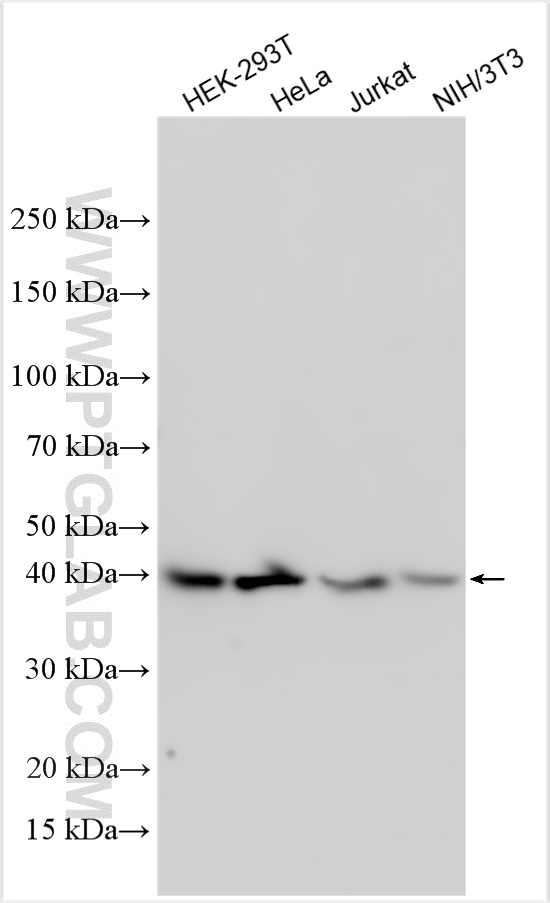
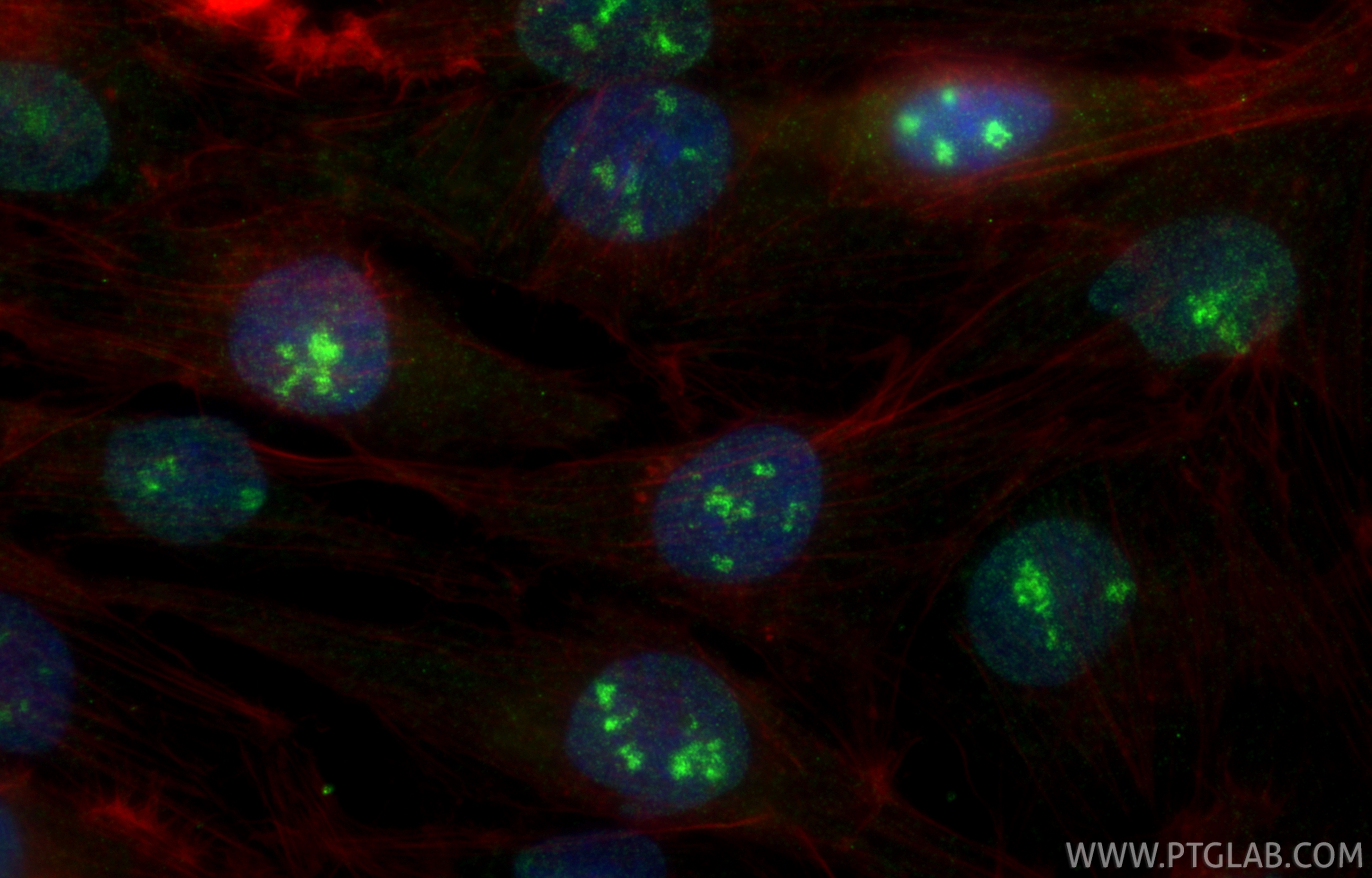
32161-1-PBS targets UBFD1 in WB, IF/ICC, Indirect ELISA applications and shows reactivity with human, mouse samples.
| 经测试应用 | WB, IF/ICC, Indirect ELISA Application Description |
| 经测试反应性 | human, mouse |
| 免疫原 |
CatNo: Ag36361 Product name: Recombinant human UBFD1 protein Source: e coli.-derived, PGEX-4T Tag: GST Domain: 1-270 aa of NM_019116 Sequence: MAAAGAPDGMEEPGMDTEAETVATEAPARPVNCLEAEAAAGAAAEDSGAARGSLQPAPAQPPGDPAAQASVSNGEDAGGGAGRELVDLKIIWNKTKHDVKFPLDSTGSELKQKIHSITGLPPAMQKVMYKGLVPEDKTLREIKVTSGAKIMVVGSTINDVLAVNTPKDAAQQDAKAEENKKEPLCRQKQHRKVLDKGKPEDVMPSVKGAQERLPTVPLSGMYNKSGGKVRLTFKLEQDQLWIGTKERTEKLPMGSIKNVVSEPIEGHEDY 种属同源性预测 |
| 宿主/亚型 | Rabbit / IgG |
| 抗体类别 | Polyclonal |
| 产品类型 | Antibody |
| 全称 | ubiquitin family domain containing 1 |
| 别名 | Ubiquitin domain-containing protein UBFD1, Ubiquitin Family Domain Containing 1 , Ubiquitin-binding protein homolog |
| 计算分子量 | 309aa, 33 kDa |
| 观测分子量 | 40 kDa |
| GenBank蛋白编号 | NM_019116 |
| 基因名称 | UBFD1 |
| Gene ID (NCBI) | 56061 |
| RRID | AB_3742534 |
| 偶联类型 | Unconjugated |
| 形式 | Liquid |
| 纯化方式 | Antigen affinity Purification |
| UNIPROT ID | O14562 |
| 储存缓冲液 | PBS only, pH 7.3. |
| 储存条件 | Store at -80°C. The product is shipped with ice packs. Upon receipt, store it immediately at -80°C |
背景介绍
UBFD1 (Ubiquitin Family Domain Containing 1) is a polyubiquitin-binding protein containing ubiquitin-like structural domains that are widely involved in protein degradation and cell signaling. This protein shows aberrant expression in a variety of cancers, especially in estrogen receptor (ER)-positive breast cancer, where high expression of UBFD1 is closely associated with poor prognosis of patients, and is considered as a potential prognostic biomarker and therapeutic target. In addition, UBFD1 was also found to be associated with MYC-mediated tumor aggressiveness in T-cell acute lymphoblastic leukemia (T-ALL), which functionally involves the endoplasmic reticulum-associated degradation (ERAD) pathway. UBFD1 is also expressed in inner ear hair cells and ear epithelial cells, suggesting that it may play a role in hearing-related diseases.