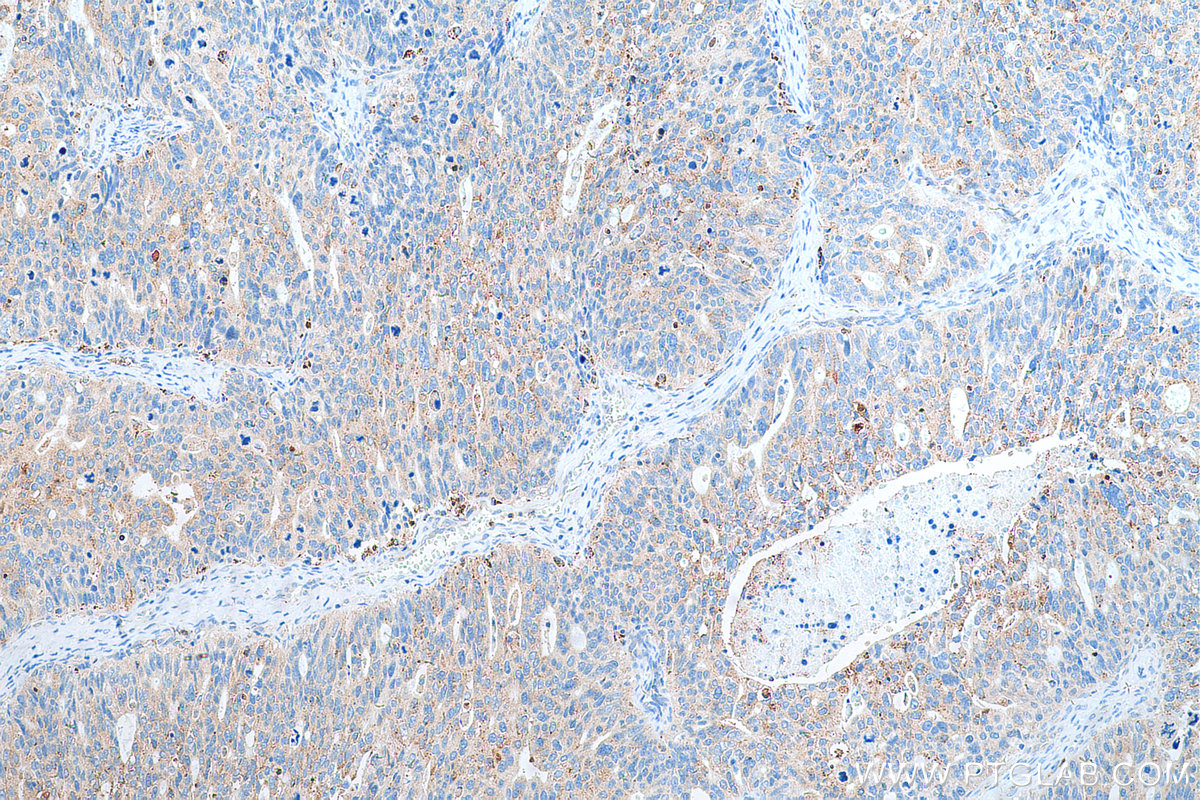
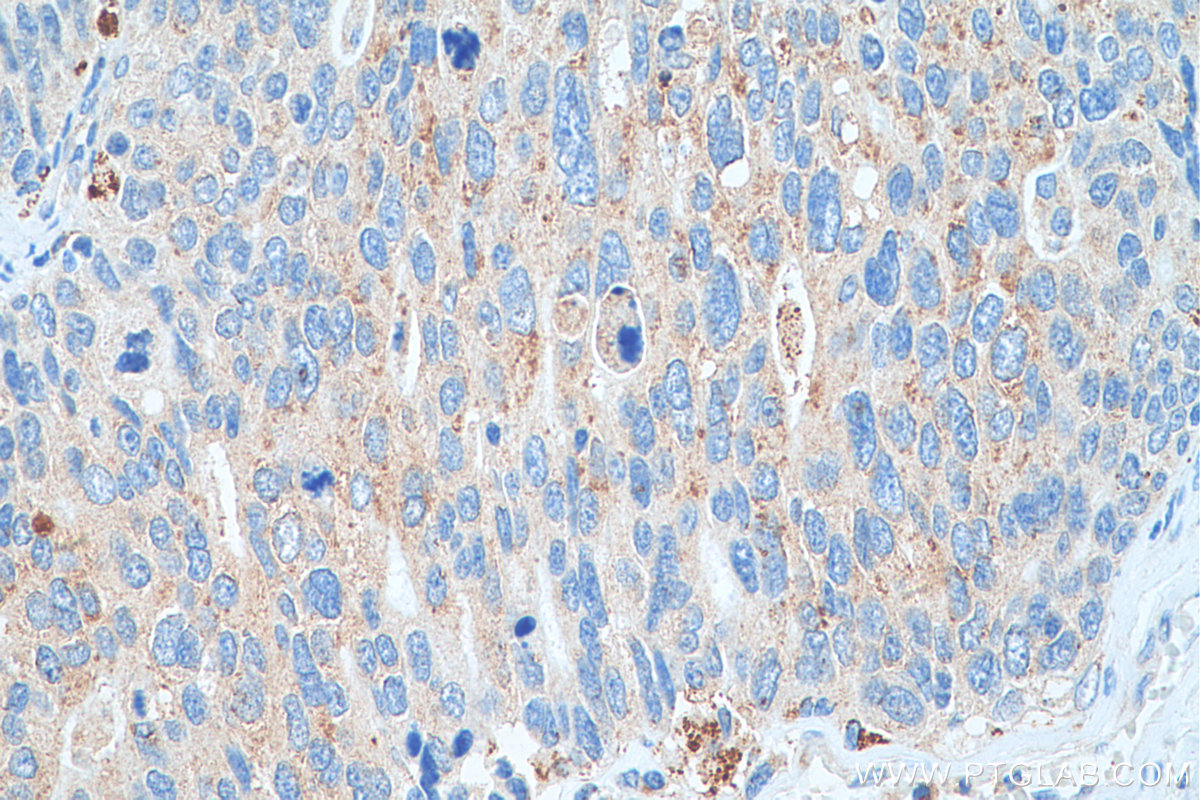
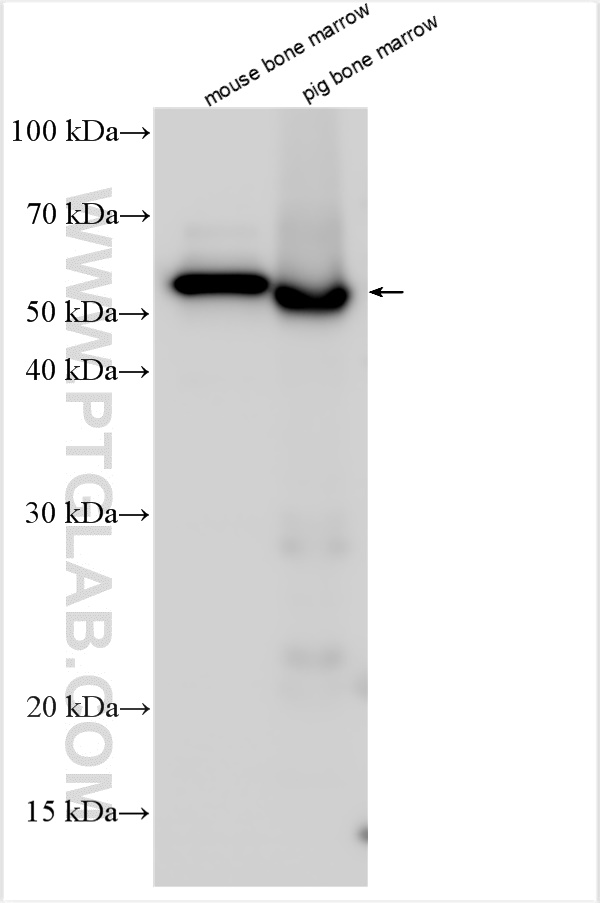
验证数据展示


产品信息
29755-1-PBS targets Eosinophil peroxidase in WB, IHC, Indirect ELISA applications and shows reactivity with human, mouse, pig samples.
| 经测试应用 | WB, IHC, Indirect ELISA Application Description |
| 经测试反应性 | human, mouse, pig |
| 免疫原 |
CatNo: Ag30561 Product name: Recombinant human EPX protein Source: e coli.-derived, PET28a Tag: 6*His Domain: 580-673 aa of NM_000502 Sequence: LSQPRNLAQLSRVLKNQDLARKFLNLYGTPDNIDIWIGAIAEPLLPGARVGPLLACLFENQFRRARDGDRFWWQKRGVFTKRQRKALSRISLSR 种属同源性预测 |
| 宿主/亚型 | Rabbit / IgG |
| 抗体类别 | Polyclonal |
| 产品类型 | Antibody |
| 全称 | eosinophil peroxidase |
| 别名 | EPX, EPX/ PERE |
| 计算分子量 | 81 kDa |
| 观测分子量 | 55 kDa |
| GenBank蛋白编号 | NM_000502 |
| 基因名称 | EPX |
| Gene ID (NCBI) | 8288 |
| RRID | AB_3086154 |
| 偶联类型 | Unconjugated |
| 形式 | Liquid |
| 纯化方式 | Antigen affinity purification |
| UNIPROT ID | P11678 |
| 储存缓冲液 | PBS only, pH 7.3. |
| 储存条件 | Store at -80°C. The product is shipped with ice packs. Upon receipt, store it immediately at -80°C |
背景介绍
EPX, also known as eosinophil peroxidase, is a cationic heme‑containing peroxidase enzyme that is predominantly stored in the specific granules of eosinophilic granulocytes. Encoded by the EPX gene located on human chromosome 17q13.1, the enzyme is synthesized as a single‑chain precursor that undergoes proteolytic cleavage to form a heavy and a light chain, which remain covalently associated in the mature protein. Upon eosinophil activation by immunological or inflammatory stimuli, EPX is secreted into the extracellular milieu where it catalyzes the hydrogen peroxide‑dependent oxidation of halides (bromide, chloride) and thiocyanate to generate potent cytotoxic oxidants, such as hypobromous acid and hypothiocyanous acid. These reactive species are essential for the eosinophil's effector function against helminthic parasites and certain bacteria, but they also exert profound pro‑inflammatory and tissue‑damaging effects when released inappropriately. Indeed, elevated EPX levels and activity have been implicated in the pathogenesis of allergic asthma, atopic dermatitis, and other eosinophilic disorders, making the enzyme not only a useful diagnostic biomarker but also an emerging therapeutic target for modulating eosinophil‑driven inflammation.