验证数据展示
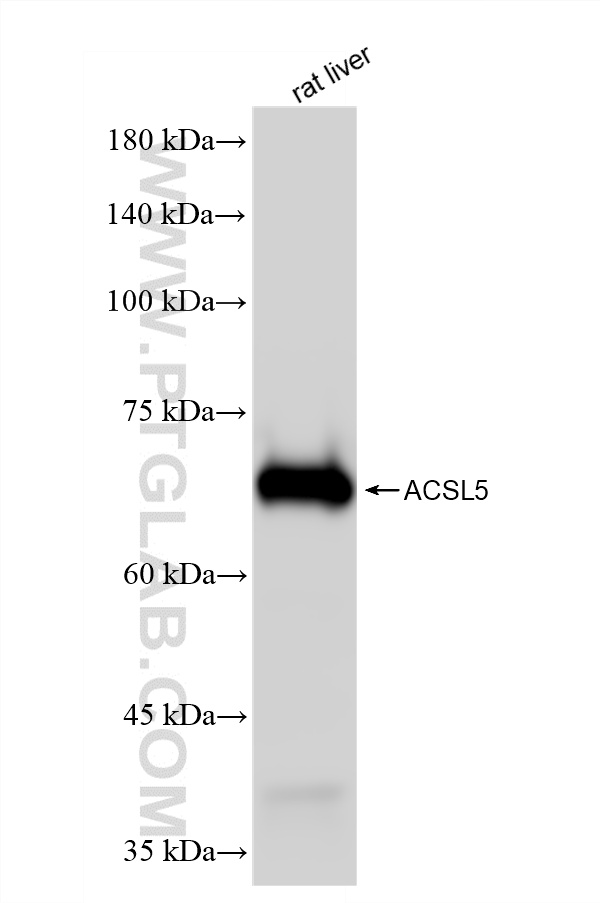
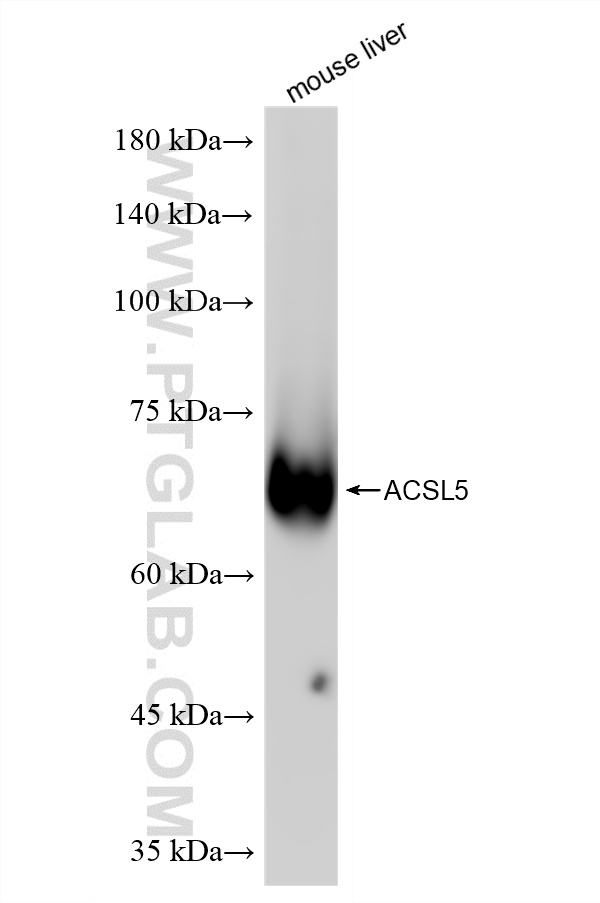
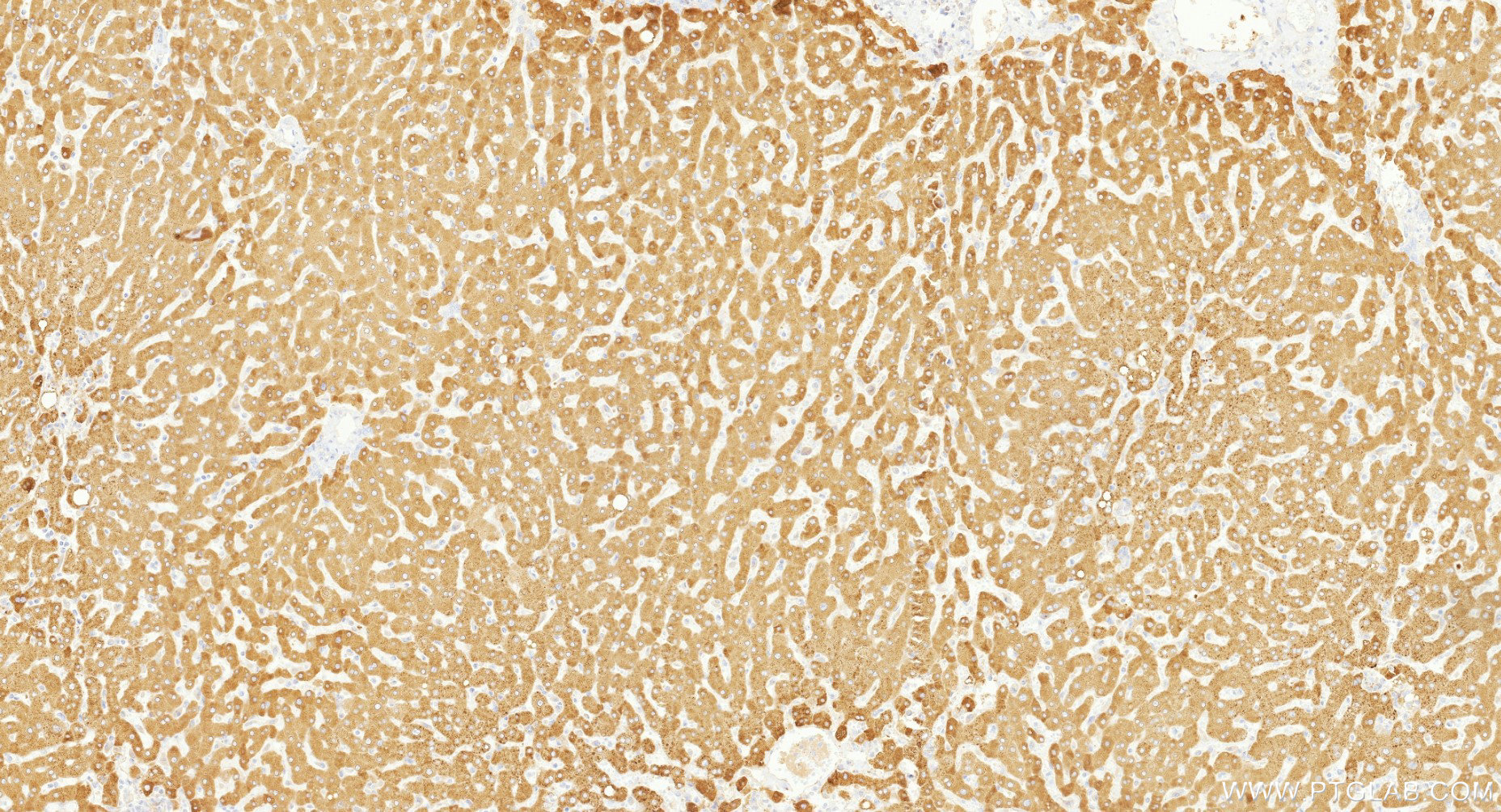
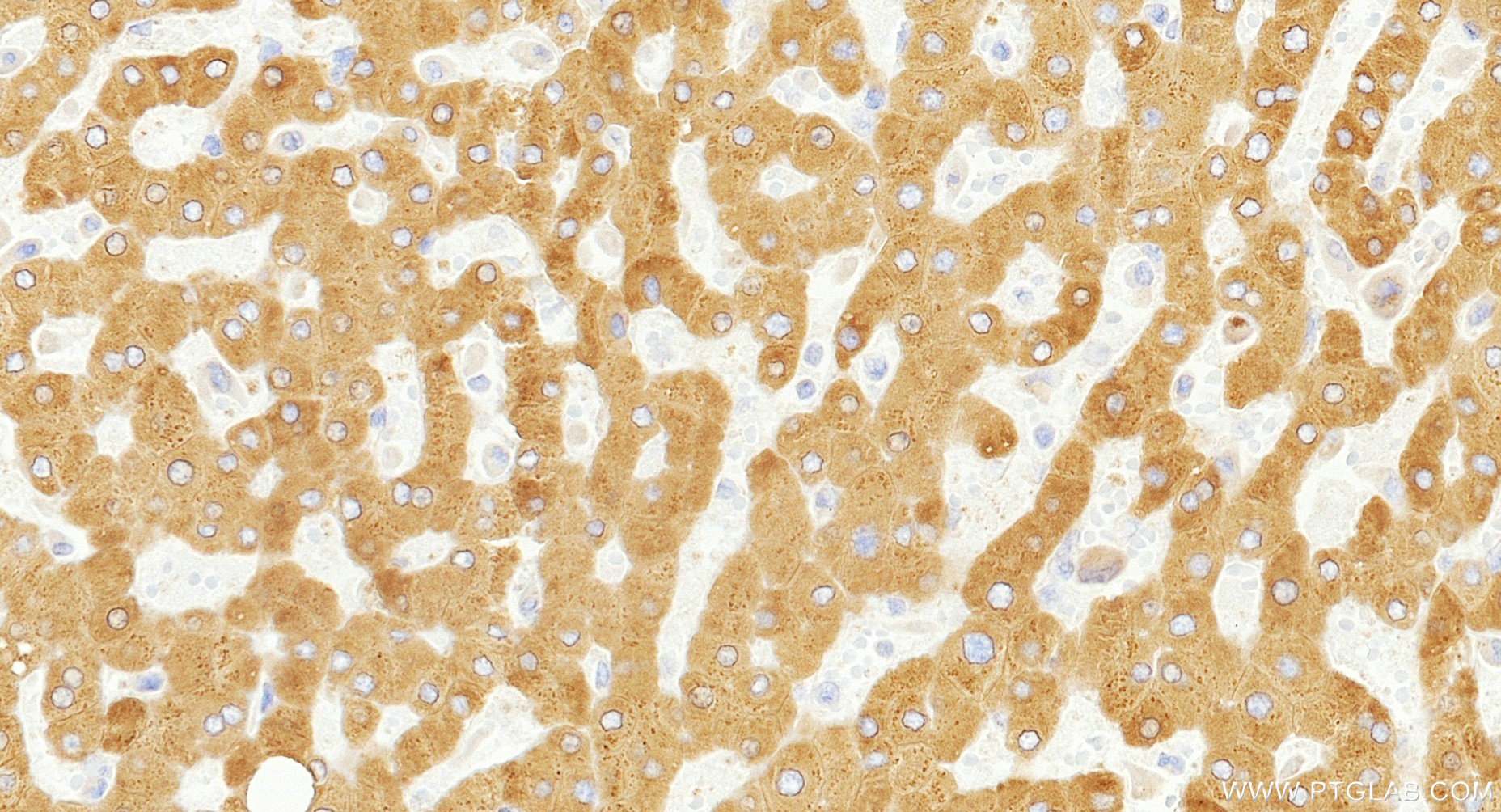
经过测试的应用
| Positive WB detected in | rat liver tissue, mouse liver tissue |
| Positive IHC detected in | human liver tissue Note: suggested antigen retrieval with TE buffer pH 9.0; (*) Alternatively, antigen retrieval may be performed with citrate buffer pH 6.0 |
推荐稀释比
| 应用 | 推荐稀释比 |
|---|---|
| Western Blot (WB) | WB : 1:5000-1:50000 |
| Immunohistochemistry (IHC) | IHC : 1:500-1:2000 |
| It is recommended that this reagent should be titrated in each testing system to obtain optimal results. | |
| Sample-dependent, Check data in validation data gallery. | |
产品信息
86982-1-RR targets ACSL5 in WB, IHC, ELISA applications and shows reactivity with human, mouse, rat samples.
| 经测试应用 | WB, IHC, ELISA Application Description |
| 经测试反应性 | human, mouse, rat |
| 免疫原 |
CatNo: Ag8258 Product name: Recombinant human ACSL5 protein Source: e coli.-derived, PGEX-4T Tag: GST Domain: 388-739 aa of BC007985 Sequence: DIRLLADDMKTLKPTLFPAVPRLLNRIYDKVQNEAKTPLKKFLLKLAVSSKFKELQKGIIRHDSFWDKLIFAKIQDSLGGRVRVIVTGAAPMSTSVMTFFRAAMGCQVYEAYGQTECTGGCTFTLPGDWTSGHVGVPLACNYVKLEDVADMNYFTVNNEGEVCIKGTNVFKGYLKDPEKTQEALDSDGWLHTGDIGRWLPNGTLKIIDRKKNIFKLAQGEYIAPEKIENIYNRSQPVLQIFVHGESLRSSLVGVVVPDTDVLPSFAAKLGVKGSFEELCQNQVVREAILEDLQKIGKESGLKTFEQVKAIFLHPEPFSIENGLLTPTLKAKRGELSKYFRTQIDSLYEHIQD 种属同源性预测 |
| 宿主/亚型 | Rabbit / IgG |
| 抗体类别 | Recombinant |
| 产品类型 | Antibody |
| 全称 | acyl-CoA synthetase long-chain family member 5 |
| 别名 | ACSL 5, Arachidonate--CoA ligase, EC:6.2.1.15, EC:6.2.1.3, FACL5 |
| 计算分子量 | 76 kDa |
| 观测分子量 | 65-70 kDa |
| GenBank蛋白编号 | BC007985 |
| 基因名称 | ACSL5 |
| Gene ID (NCBI) | 51703 |
| RRID | AB_3745254 |
| 偶联类型 | Unconjugated |
| 形式 | Liquid |
| 纯化方式 | Protein A purification |
| UNIPROT ID | Q9ULC5 |
| 储存缓冲液 | PBS with 0.02% sodium azide and 50% glycerol, pH 7.3. |
| 储存条件 | Store at -20°C. Stable for one year after shipment. Aliquoting is unnecessary for -20oC storage. |
背景介绍
ACSL5 (acyl-CoA synthetase long-chain family member 5) is a gene encoding an enzyme that activates long-chain fatty acids into acyl-CoA esters, thereby directing them toward lipid synthesis or β-oxidation. It is predominantly expressed in the small intestine, uterus, and spleen, with minimal presence in normal brain tissue. ACSL5 has gained clinical attention for its marked upregulation in malignant gliomas, where it promotes fatty-acid-driven tumor growth, and its mutations are linked to congenital diarrhea (DIAR13). Additionally, its expression levels are being explored as prognostic markers in colorectal cancer and as modulators of apoptotic signaling.
实验方案
| Product Specific Protocols | |
|---|---|
| IHC protocol for ACSL5 antibody 86982-1-RR | Download protocol |
| WB protocol for ACSL5 antibody 86982-1-RR | Download protocol |
| Standard Protocols | |
|---|---|
| Click here to view our Standard Protocols |