验证数据展示
产品信息
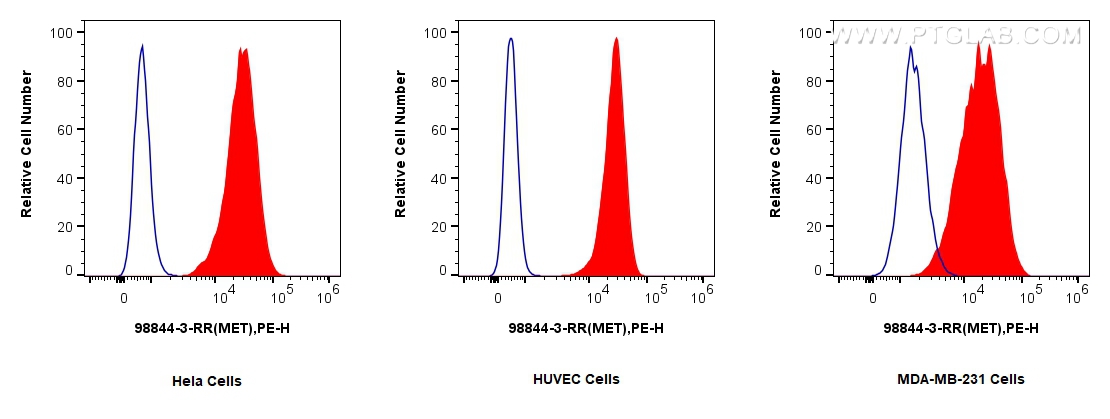
98844-3-PBS targets c-Met in FC applications and shows reactivity with human samples.
| 经测试应用 | FC Application Description |
| 经测试反应性 | human |
| 免疫原 |
CatNo: Eg0230 Product name: Recombinant human MET protein Source: mammalian cells-derived, pHZ-KIsec-C-6*HIS Tag: C-6*HIS Domain: 25-932 aa of BC130420 Sequence: ECKEALAKSEMNVNMKYQLPNFTAETPIQNVILHEHHIFLGATNYIYVLNEEDLQKVAEYKTGPVLEHPDCFPCQDCSSKANLSGGVWKDNINMALVVDTYYDDQLISCGSVNRGTCQRHVFPHNHTADIQSEVHCIFSPQIEEPSQCPDCVVSALGAKVLSSVKDRFINFFVGNTINSSYFPDHPLHSISVRRLKETKDGFMFLTDQSYIDVLPEFRDSYPIKYVHAFESNNFIYFLTVQRETLDAQTFHTRIIRFCSINSGLHSYMEMPLECILTEKRKKRSTKKEVFNILQAAYVSKPGAQLARQIGASLNDDILFGVFAQSKPDSAEPMDRSAMCAFPIKYVNDFFNKIVNKNNVRCLQHFYGPNHEHCFNRTLLRNSSGCEARRDEYRTEFTTALQRVDLFMGQFSEVLLTSISTFIKGDLTIANLGTSEGRFMQVVVSRSGPSTPHVNFLLDSHPVSPEVIVEHTLNQNGYTLVITGKKITKIPLNGLGCRHFQSCSQCLSAPPFVQCGWCHDKCVRSEECLSGTWTQQICLPAIYKVFPNSAPLEGGTRLTICGWDFGFRRNNKFDLKKTRVLLGNESCTLTLSESTMNTLKCTVGPAMNKHFNMSIIISNGHGTTQYSTFSYVDPVITSISPKYGPMAGGTLLTLTGNYLNSGNSRHISIGGKTCTLKSVSNSILECYTPAQTISTEFAVKLKIDLANRETSIFSYREDPIVYEIHPTKSFISGGSTITGVGKNLNSVSVPRMVINVHEAGRNFTVACQHRSNSEIICCTTPSLQQLNLQLPLKTKAFFMLDGILSKYFDLIYVHNPVFKPFEKPVMISMGNENVLEIKGNDIDPEAVKGEVLKVGNKSCENIHLHSEAVLCTVPNDLLKLNSELNIEWKQAISSTVLGKVIVQPDQNFT 种属同源性预测 |
| 宿主/亚型 | Rabbit / IgG |
| 抗体类别 | Recombinant |
| 产品类型 | Antibody |
| 全称 | met proto-oncogene (hepatocyte growth factor receptor) |
| 别名 | MET, AUTS9, c Met, c-Met (Cytoplasmic), EC:2.7.10.1 |
| 计算分子量 | 1390 aa, 155 kDa |
| GenBank蛋白编号 | BC130420 |
| 基因名称 | MET |
| Gene ID (NCBI) | 4233 |
| 偶联类型 | Unconjugated |
| 形式 | Liquid |
| 纯化方式 | Protein A purification |
| UNIPROT ID | P08581 |
| 储存缓冲液 | PBS only, pH 7.3. |
| 储存条件 | Store at -80°C. The product is shipped with ice packs. Upon receipt, store it immediately at -80°C |
背景介绍
c-Met (also named MET or HGFR) is a receptor tyrosine kinase that transduces signals from the extracellular matrix into the cytoplasm by binding to the HGF ligand. c-Met regulates many physiological processes including proliferation, scattering, morphogenesis, and survival. The primary single-chain precursor protein is post-translationally cleaved to produce the alpha and beta subunits, which are disulfide-linked to form the mature receptor. Overexpression and/or mutation of c-Met has been reported in various human malignancies, including lung cancer, breast cancer, head and neck cancer, gastric cancer, colorectal cancer, bladder cancer, uterine cervix carcinoma, esophageal carcinoma, c-Met could serve as an important therapeutic target (PMID: 26036285).