验证数据展示
产品信息
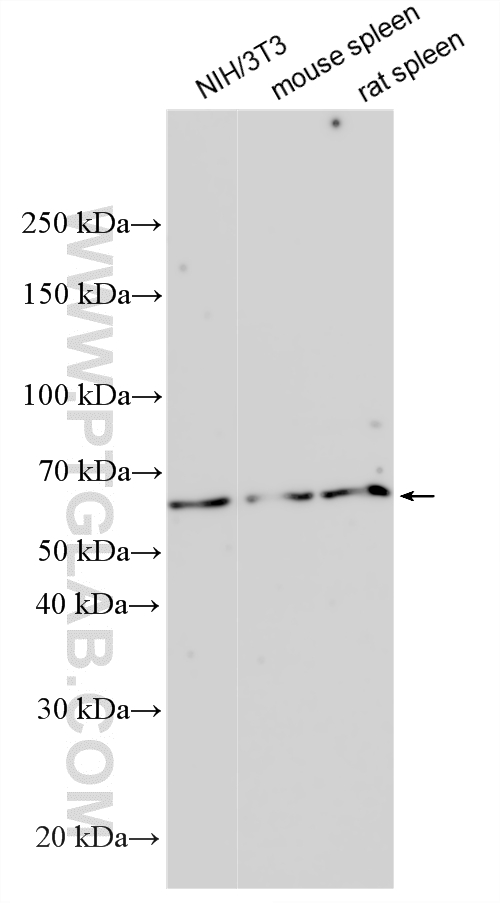
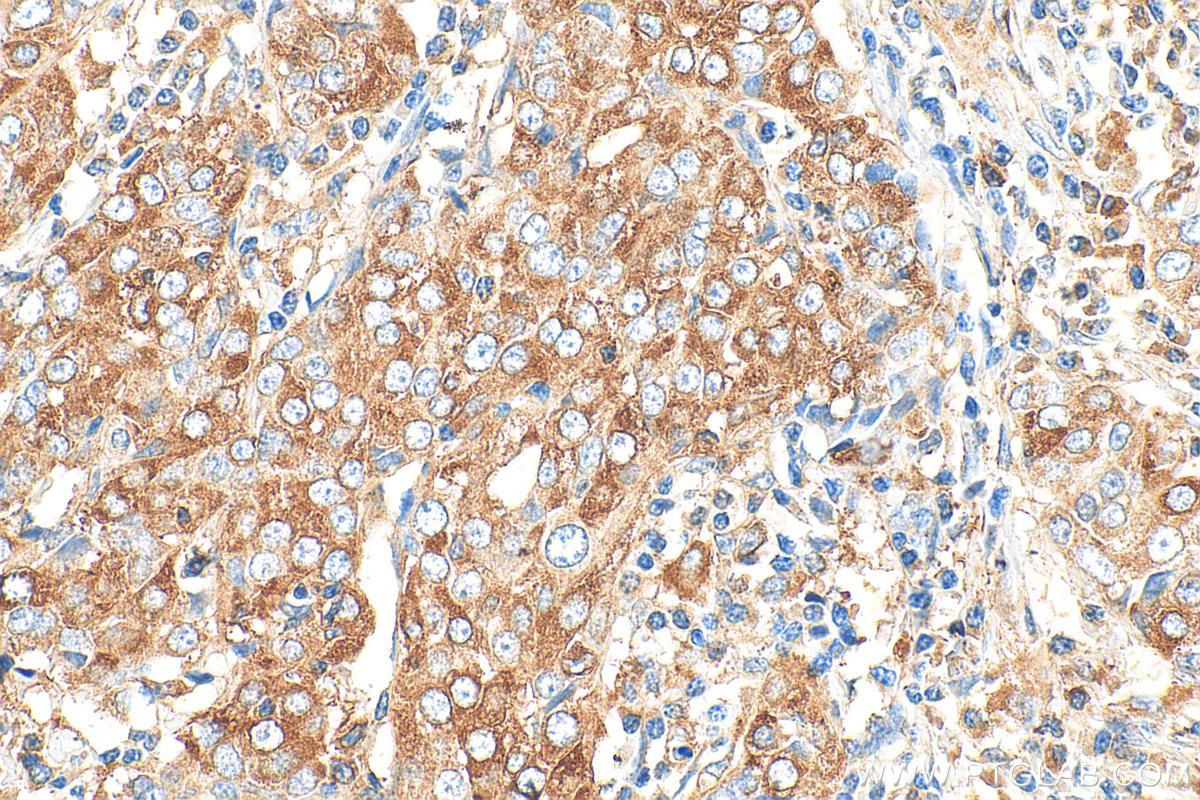
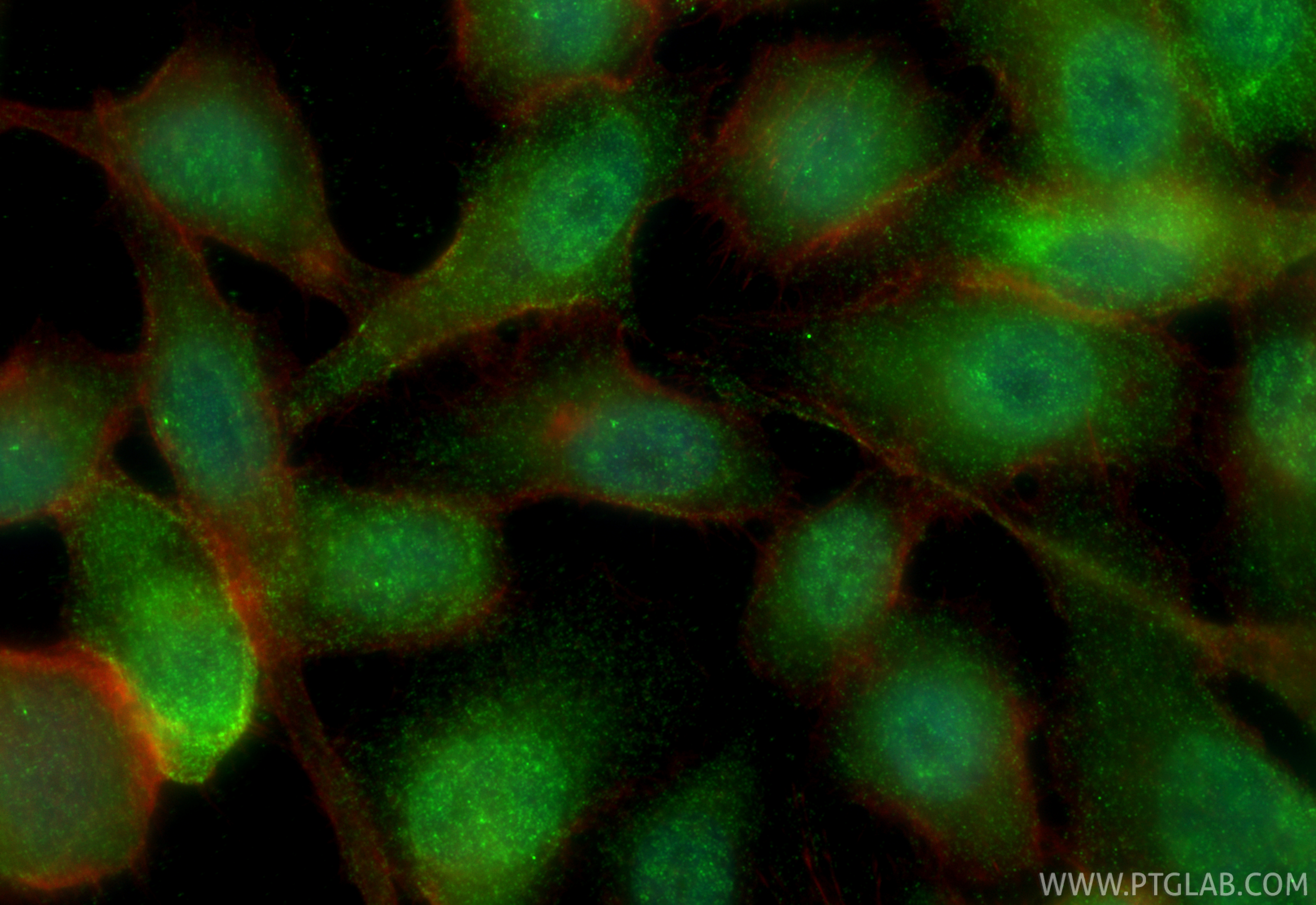
33483-1-PBS targets WDSOF1 in WB, IHC, IF/ICC, Indirect ELISA applications and shows reactivity with human, mouse, rat samples.
| 经测试应用 | WB, IHC, IF/ICC, Indirect ELISA Application Description |
| 经测试反应性 | human, mouse, rat |
| 免疫原 |
CatNo: Ag35559 Product name: Recombinant human WDSOF1 protein Source: e coli.-derived, PGEX-4T Tag: GST Domain: 249-597 aa of BC112042 Sequence: TQRNCIRTIQAHEGFVRGICTRFCGTSFFTVGDDKTVKQWKMDGPGYGDEEEPLHTILGKTVYTGIDHHWKEAVFATCGQQVDIWDEQRTNPICSMTWGFDSISSVKFNPIETFLLGSCASDRNIVLYDMRQATPLKKVILDMRTNTICWNPMEAFIFTAANEDYNLYTFDMRALDTPVMVHMDHVSAVLDVDYSPTGKEFVSASFDKSIRIFPVDKSRSREVYHTKRMQHVICVKWTSDSKYIMCGSDEMNIRLWKANASEKLGVLTSREKAAKDYNQKLKEKFQHYPHIKRIARHRHLPKSIYSQIQEQRIMKEARRRKEVNRIKHSKPGSVPLVSEKKKHVVAVVK 种属同源性预测 |
| 宿主/亚型 | Rabbit / IgG |
| 抗体类别 | Polyclonal |
| 产品类型 | Antibody |
| 全称 | WD repeats and SOF1 domain containing |
| 别名 | DCAF13, DDB1 And CUL4 Associated Factor 13, DDB1- and CUL4-associated factor 13, HSPC064, WD repeat and SOF domain-containing protein 1 |
| 计算分子量 | 597 aa, 67 kDa |
| 观测分子量 | 60 kDa |
| GenBank蛋白编号 | BC112042 |
| 基因名称 | WDSOF1 |
| Gene ID (NCBI) | 25879 |
| RRID | AB_3742988 |
| 偶联类型 | Unconjugated |
| 形式 | Liquid |
| 纯化方式 | Antigen affinity Purification |
| UNIPROT ID | Q9NV06 |
| 储存缓冲液 | PBS only, pH 7.3. |
| 储存条件 | Store at -80°C. The product is shipped with ice packs. Upon receipt, store it immediately at -80°C |
背景介绍
WDSOF1 (WD repeat and SOF1 domain-containing 1, also known as DCAF13) functions as a substrate receptor subunit for the CRL4-DDB1 E3 ubiquitin ligase complex. It contains WD40 repeat clusters and is primarily localized in the nucleolus, where it participates in the processing of 40S ribosomal RNA precursors and the regulation of the estrogen receptor. Recent research has revealed its indispensable role in uterine development: its deficiency leads to the downregulation of estrogen target genes, an increase in H3K9me3 levels, failure of embryo implantation, and complete infertility in female mice. Furthermore, WDSOF1 is located at 8q22.3, a genomic region frequently amplified in tumors. It is highly expressed in various cancers, including liver and breast cancer, and is associated with poor prognosis, positioning it as an oncogenic factor and a potential therapeutic target.