验证数据展示
产品信息
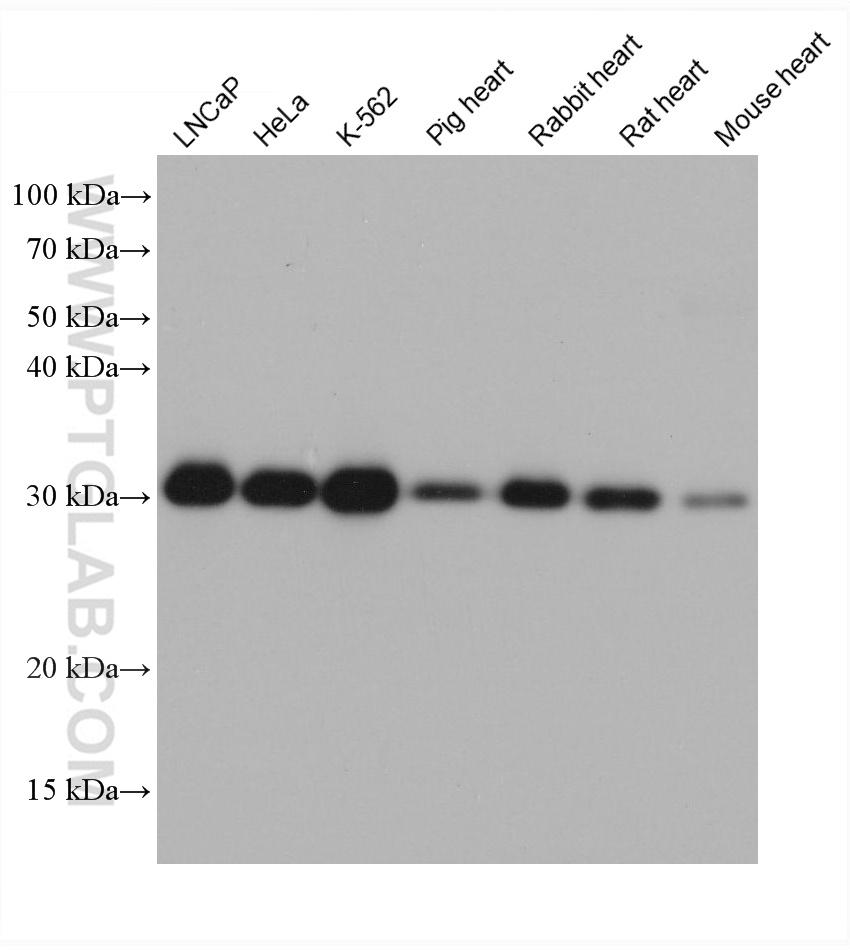
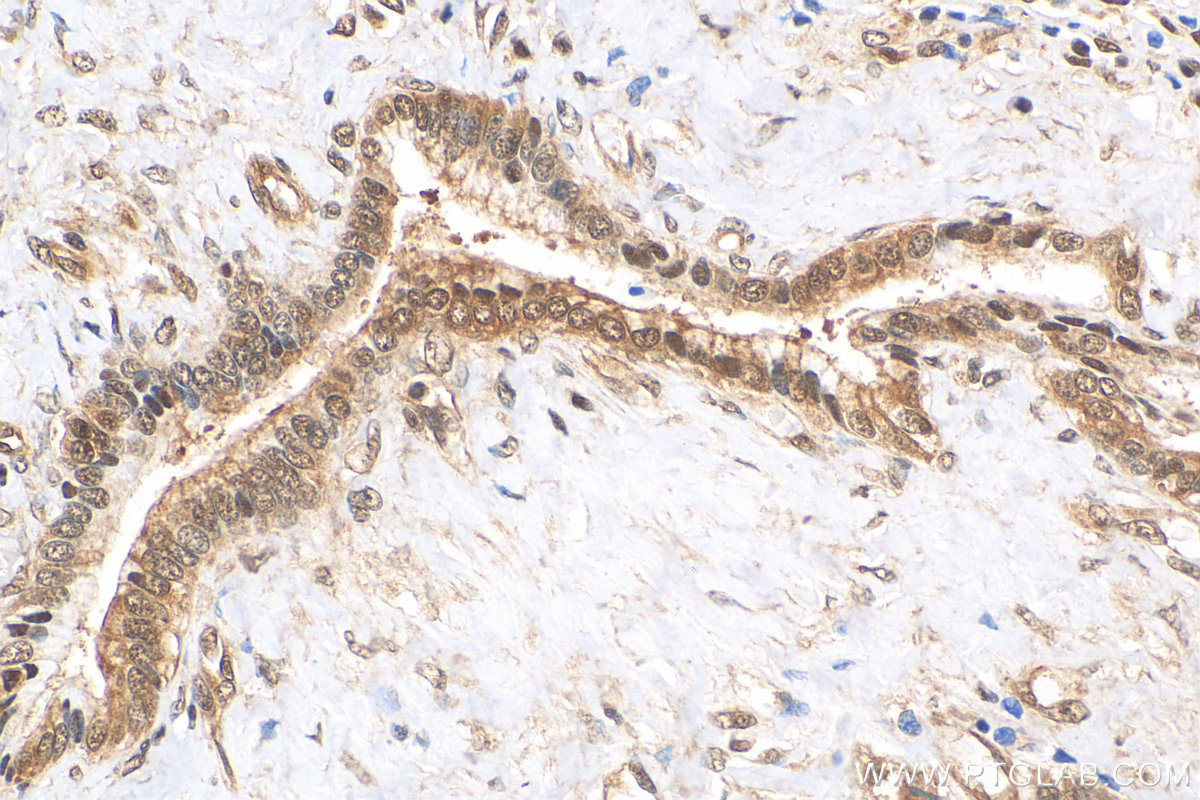
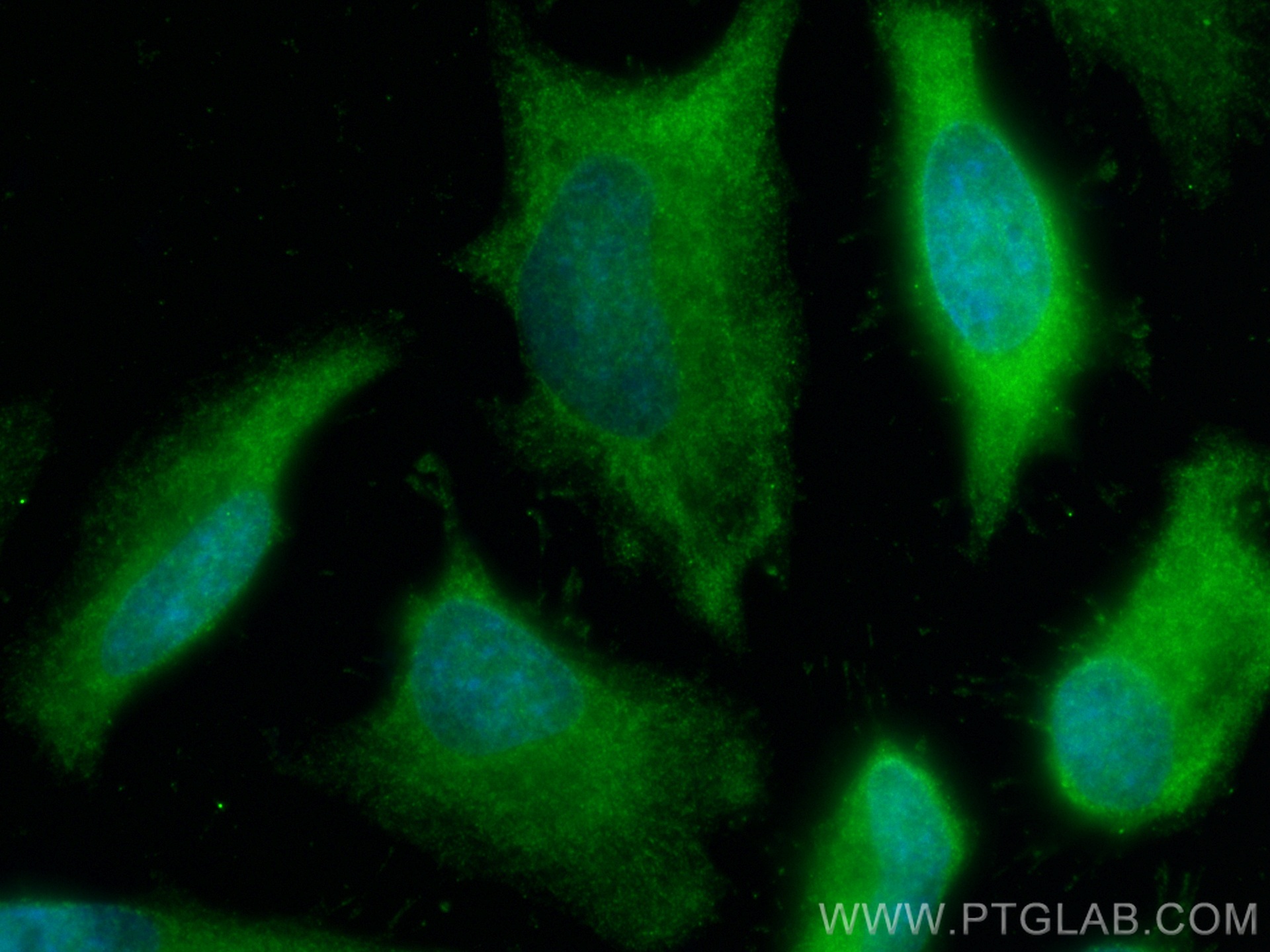
68203-1-PBS targets PSMA4 in WB, IHC, IF/ICC, Indirect ELISA applications and shows reactivity with human, mouse, rat, pig, rabbit samples.
| 经测试应用 | WB, IHC, IF/ICC, Indirect ELISA Application Description |
| 经测试反应性 | human, mouse, rat, pig, rabbit |
| 免疫原 |
CatNo: Ag32626 Product name: Recombinant human PSMA4 protein Source: e coli.-derived, PET28a Tag: 6*His Domain: 1-237 aa of BC056249 Sequence: MEAIGHAGTCLGILANDGVLLAAERRNIHKLLDEVFFSEKIYKLNEDMACSVAGITSDANVLTNELRLIAQRYLLQYQEPIPCEQLVTALCDIKQAYTQFGGKRPFGVSLLYIGWDKHYGFQLYQSDPSGNYGGWKATCIGNNSAAAVSMLKQDYKEGEMTLKSALALAIKVLNKTMDVSKLSAEKVEIATLTRENGKTVIRVLKQKEVEQLIKKHEEEEAKAEREKKEKEQKEKDK 种属同源性预测 |
| 宿主/亚型 | Mouse / IgG2b |
| 抗体类别 | Monoclonal |
| 产品类型 | Antibody |
| 全称 | proteasome (prosome, macropain) subunit, alpha type, 4 |
| 别名 | 2E6E4, HC9, Proteasome subunit alpha type-4, PSC9 |
| 计算分子量 | 237 aa, 27 kDa |
| 观测分子量 | 29 kDa |
| GenBank蛋白编号 | BC056249 |
| 基因名称 | PSMA4 |
| Gene ID (NCBI) | 5685 |
| RRID | AB_2935291 |
| 偶联类型 | Unconjugated |
| 形式 | Liquid |
| 纯化方式 | Protein A purification |
| UNIPROT ID | P25789 |
| 储存缓冲液 | PBS only, pH 7.3. |
| 储存条件 | Store at -80°C. The product is shipped with ice packs. Upon receipt, store it immediately at -80°C |
背景介绍
PSMA4 (Proteasome Subunit Alpha 4) is a gene that encodes the alpha-4 subunit of the 20S proteasome core particle, which forms part of the outer alpha-ring structure of the barrel-shaped 20S complex. As an integral component of the 26S proteasome, PSMA4 participates in ATP- and ubiquitin-dependent protein degradation, a process essential for the regulation of cell cycle progression, signal transduction, and protein quality control. In addition, the 20S core particle can associate with regulatory complexes such as PA28 or PA200 to mediate ubiquitin-independent protein degradation, which plays important roles in pathways including antigen peptide generation and spermatogenesis. Dysregulation of PSMA4 expression or function has been implicated in various pathological conditions, including cancer and neurodegenerative diseases, highlighting its critical role in maintaining cellular proteostasis.