Recombinant Mouse CXCL3 protein (mFc Tag)
种属
Mouse
纯度
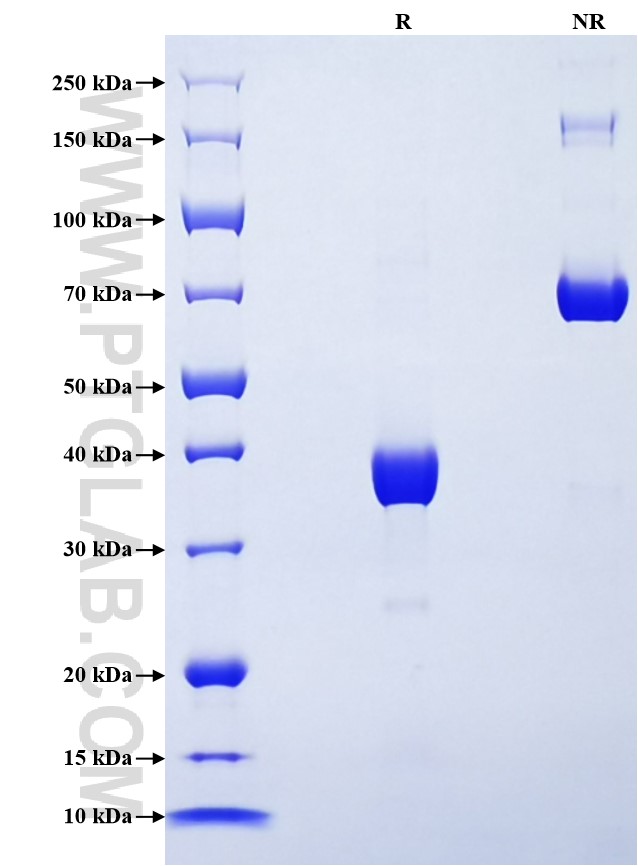
>90 %, SDS-PAGE
标签
mFc Tag
生物活性
未测试
验证数据展示
产品信息
| 纯度 | >90 %, SDS-PAGE |
| 内毒素 | <0.1 EU/μg protein, LAL method |
| 生物活性 |
Not tested |
| 来源 | HEK293-derived Mouse CXCL3 protein Ala28-Ser100 (Accession# Q6W5C0) with a mouse IgG Fc tag at the C-terminus. |
| 基因ID | 330122 |
| 蛋白编号 | Q6W5C0 |
| 预测分子量 | 34.5 kDa |
| SDS-PAGE | 35-40 kDa, reducing (R) conditions |
| 组分 | Lyophilized from 0.22 μm filtered solution in PBS, pH 7.4. Normally 5% trehalose and 5% mannitol are added as protectants before lyophilization. |
| 复溶 | Briefly centrifuge the tube before opening. Reconstitute at 0.1-0.5 mg/mL in sterile water. |
| 储存条件 |
It is recommended that the protein be aliquoted for optimal storage. Avoid repeated freeze-thaw cycles.
|
| 运输条件 | The product is shipped at ambient temperature. Upon receipt, store it immediately at the recommended temperature. |
背景信息
Chemokines are a class of pro-inflammatory cytokines that can recruit and activate chemotactic cells.This chemokine is secreted by a variety of cell types including monocyte/macrophages, T cells, neutrophils, fibroblasts, endothelial cells, and various tumor cell lines in response to inflammatory stimuli.CXC chemokine ligand 3 (CXCL3) is a member of CXC-type chemokine family that is identified as a major regulator in immune and inflammation responses. CXCL3 is broadly expressed in various human tumor types, and it is also known to play a critical role in mediating tumor development and progression.
参考文献:
1. Adams DH, et al. (1997). Lancet.15;349(9050):490-5.
2. Bonecchi R, et al. (2009). Front Biosci (Landmark Ed).1;14(2):540-51.
3. Cheng Y, et al. (2023). BMC Cancer. 29;23(1):1162.