Recombinant Human CCL3 protein (rFc Tag)
种属
Human
纯度
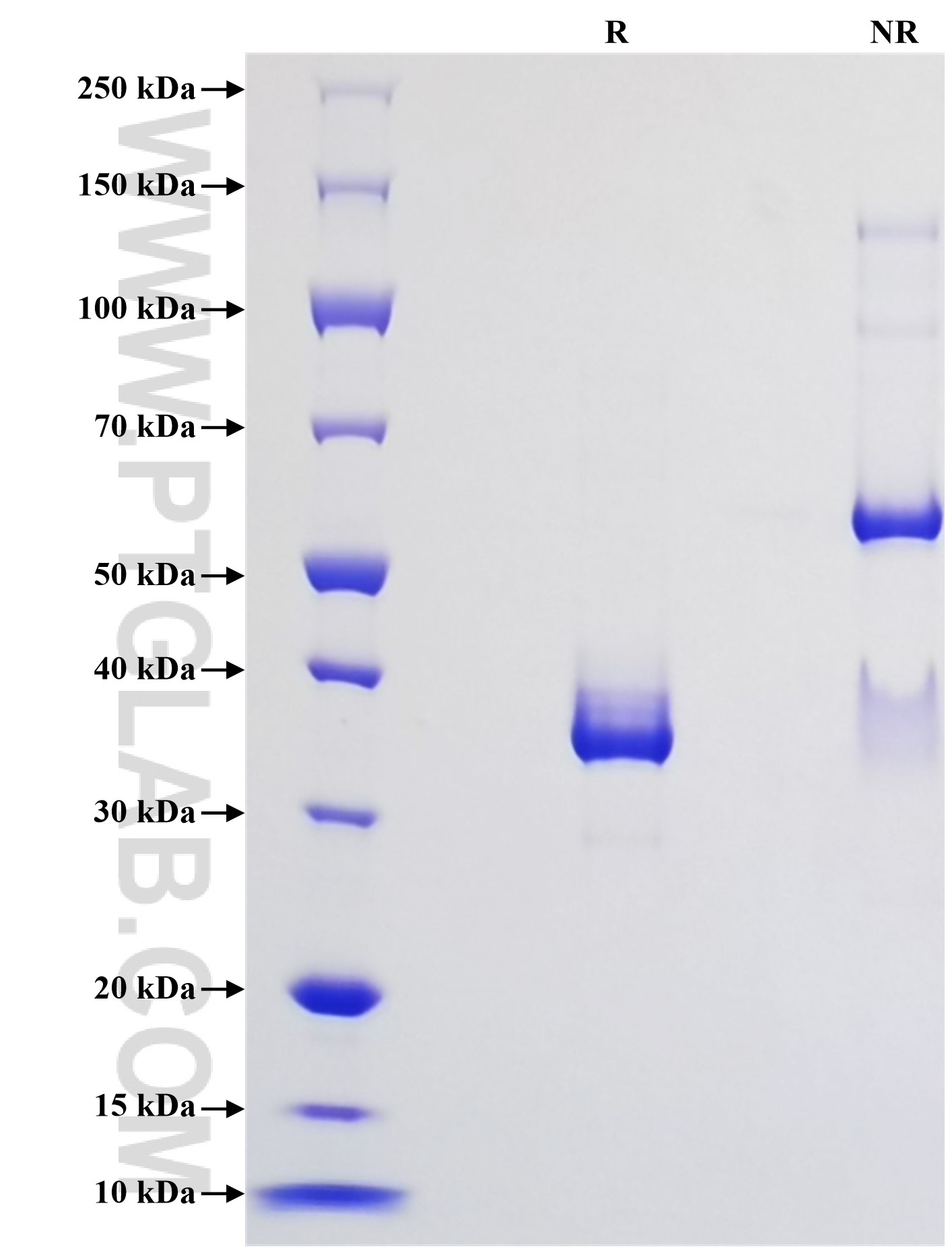
>90 %, SDS-PAGE
标签
rFc Tag
生物活性
未测试
验证数据展示
产品信息
| 纯度 | >90 %, SDS-PAGE |
| 内毒素 | <0.1 EU/μg protein, LAL method |
| 生物活性 |
Not tested |
| 来源 | CHO-derived Human CCL3 protein Ser24-Ala92 (Accession# P10147) with a rabbit IgG Fc tag at the C-terminus. |
| 基因ID | 6348 |
| 蛋白编号 | P10147 |
| 预测分子量 | 33.7 kDa |
| SDS-PAGE | 35-39 kDa, reducing (R) conditions |
| 组分 | Lyophilized from 0.22 μm filtered solution in 30mM Tris,500mM arginine, pH 8.0. Normally 5% trehalose and 5% mannitol are added as protectants before lyophilization. |
| 复溶 | Briefly centrifuge the tube before opening. Reconstitute at 0.1-0.5 mg/mL in sterile water. |
| 储存条件 |
It is recommended that the protein be aliquoted for optimal storage. Avoid repeated freeze-thaw cycles.
|
| 运输条件 | The product is shipped at ambient temperature. Upon receipt, store it immediately at the recommended temperature. |
背景信息
CCL3, also known as macrophage inflammatory protein-1 alpha (MIP-1α), belongs to the CC chemokine family and is a small-molecule cytokine secreted by activated immune cells such as T cells and macrophages. Its primary function is to bind to and activate the chemokine receptors CCR1 and CCR5 on cell surfaces, thereby recruiting and activating various immune cells including monocytes, macrophages, T cells, and dendritic cells. This plays a critical role in infection defense, inflammatory responses, and tumor immune surveillance. Research indicates that CCL3 is aberrantly expressed in conditions such as rheumatoid arthritis, HIV infection, and the microenvironment of various tumors, making it an important therapeutic target for inflammatory diseases and tumor immunotherapy. Receptor antagonists targeting its pathway, such as anti-CCR5 drugs, have already been applied in clinical practice.
参考文献:
1. Soares, Denis Melo et al. Brain research vol. 1269 (2009): 54-60. 2. Barcelos, Lucíola S et al. Microvascular research vol. 78,2 (2009): 148-54. 3. Yang, Ying-Li et al. Rheumatology and therapy vol. 10,4 (2023): 793-808. 4. Ntanasis-Stathopoulos, Ioannis et al. Advances in experimental medicine and biology vol. 1231 (2020): 13-21.