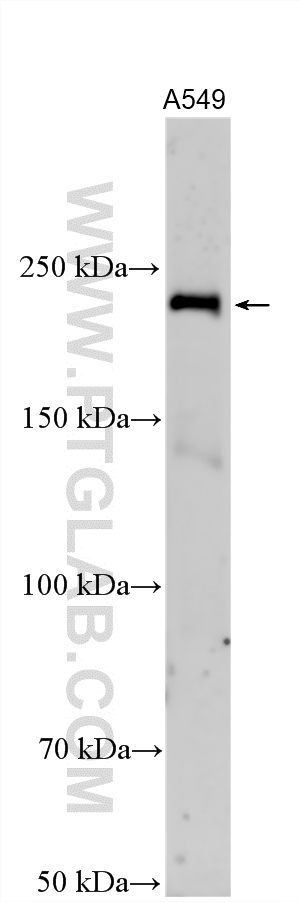
验证数据展示
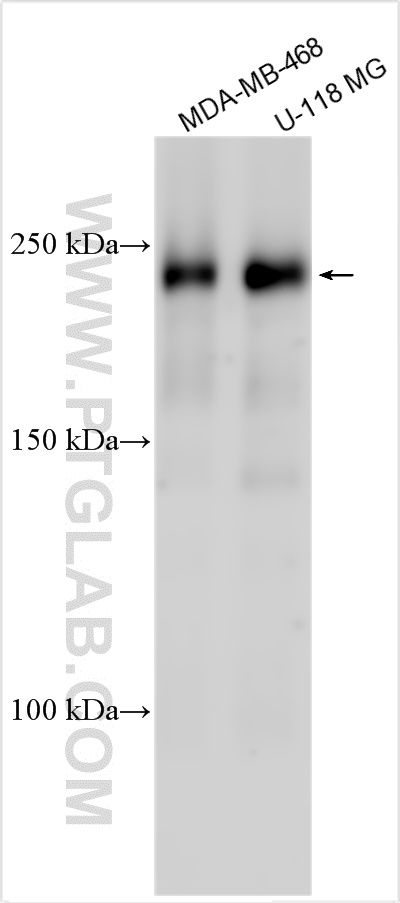

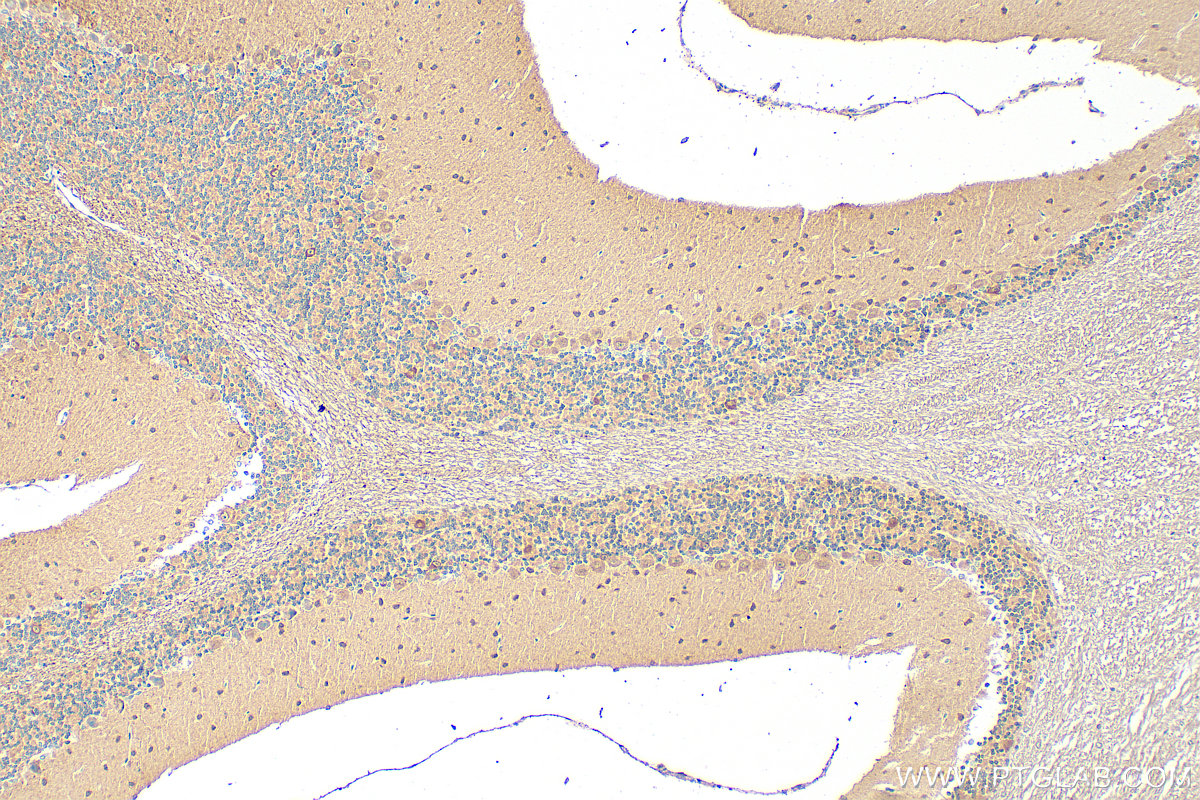
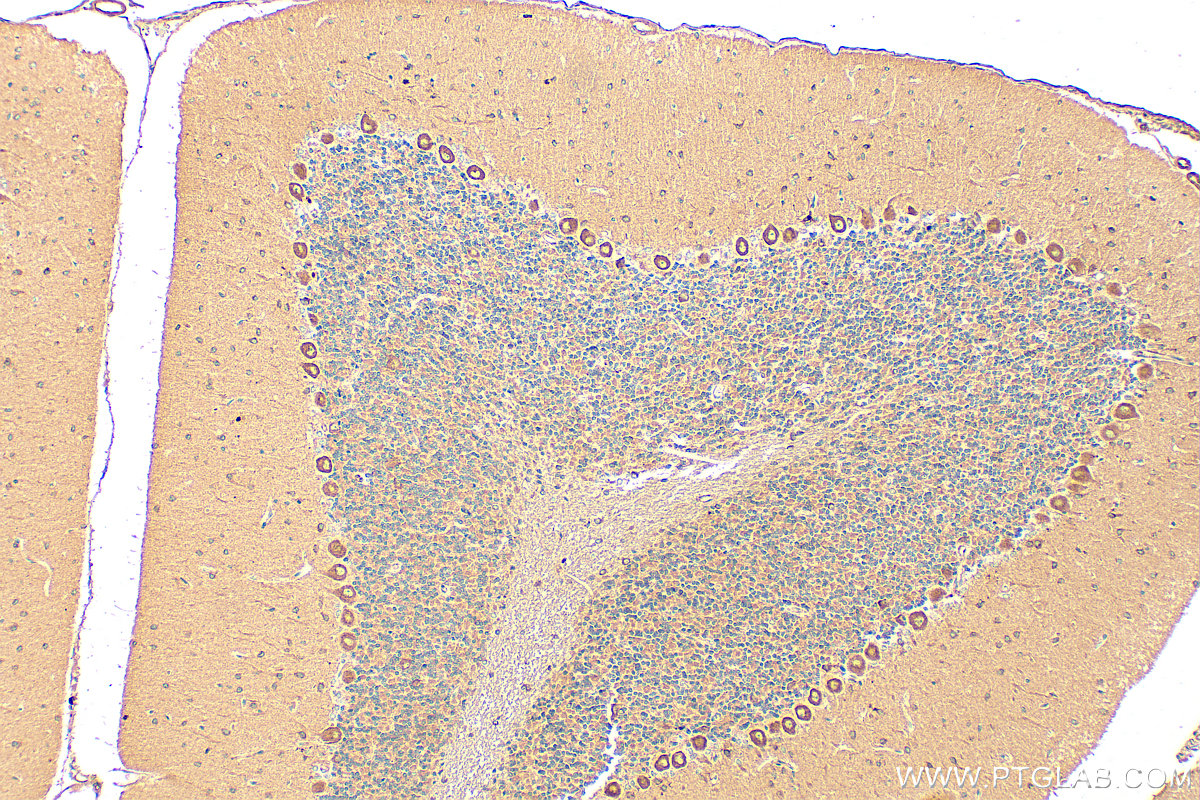
产品信息
32026-1-PBS targets HECW2 in WB, IHC, IF/ICC, Indirect ELISA applications and shows reactivity with human, mouse, rat samples.
| 经测试应用 | WB, IHC, IF/ICC, Indirect ELISA Application Description |
| 经测试反应性 | human, mouse, rat |
| 免疫原 |
CatNo: Ag36316 Product name: Recombinant human HECW2 protein Source: e coli.-derived, PGEX-4T Tag: GST Domain: 450-650 aa of XM_017004563.1 Sequence: SFPTDTRLNAMLHIDSDEEDHEFQQDLGYPSSLEEEGGLIMFSRASRADDGSLTSQTKLEDNPVENEEASTHEAASFEDKPENLPELAESSLPAGPAPEEGEGGPEPQPSADQGSAELCGSQEVDQPTSGADTGTSDASGGSRRAVSETESLDQGSEPSQVSSETEPSDPARTESVSEASTRPEGESDLECADSSCNESVT 种属同源性预测 |
| 宿主/亚型 | Rabbit / IgG |
| 抗体类别 | Polyclonal |
| 产品类型 | Antibody |
| 全称 | HECT, C2 and WW domain containing E3 ubiquitin protein ligase 2 |
| 别名 | E3 ubiquitin-protein ligase HECW2, EC:2.3.2.26, HECT, C2 and WW domain-containing protein 2, HECT-type E3 ubiquitin transferase HECW2, KIAA1301 |
| 计算分子量 | 176 kDa,1572aa |
| 观测分子量 | 240 kDa |
| GenBank蛋白编号 | XM_017004563.1 |
| 基因名称 | HECW2 |
| Gene ID (NCBI) | 57520 |
| RRID | AB_3742511 |
| 偶联类型 | Unconjugated |
| 形式 | Liquid |
| 纯化方式 | Antigen affinity Purification |
| UNIPROT ID | Q9P2P5 |
| 储存缓冲液 | PBS only, pH 7.3. |
| 储存条件 | Store at -80°C. The product is shipped with ice packs. Upon receipt, store it immediately at -80°C |
背景介绍
HECW2, also known as NEDL2 (Nedd4-like E3 ubiquitin-protein ligase 2), is a member of the HECT (Homologous to the E6-AP Carboxyl Terminus) family of E3 ubiquitin ligases. It is crucial in various pathophysiological processes, including cell proliferation, apoptosis, autophagy, immune response, and DNA damage repair (PMID: 39529070). HECW2 is known to stabilize and enhance the transcriptional activity of p73, a member of the p53 family of tumor suppressors, which promotes cell cycle arrest and apoptosis and has an essential role in neurodevelopment (PMID: 27389779). In cancer, HECW2 is a promising target for tumor therapy due to its role in regulating cell cycle progression and angiogenesis (PMID: 39529070). In neurodevelopmental disorders, variants in HECW2 have been reported to cause a disorder characterized by hypotonia, seizures, and impaired language (PMID: 34321324).