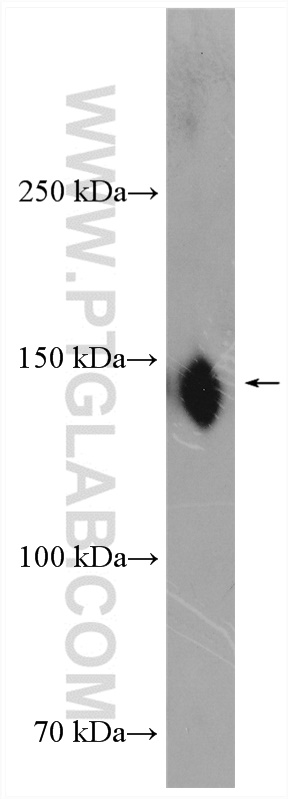
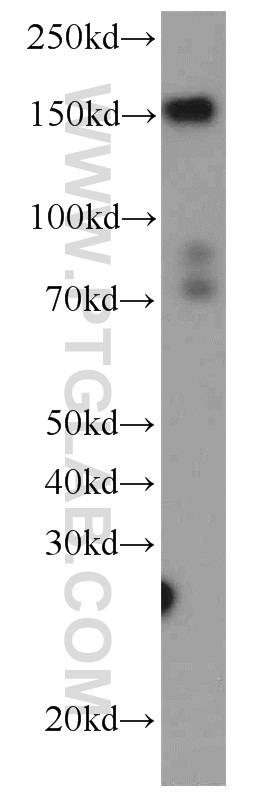
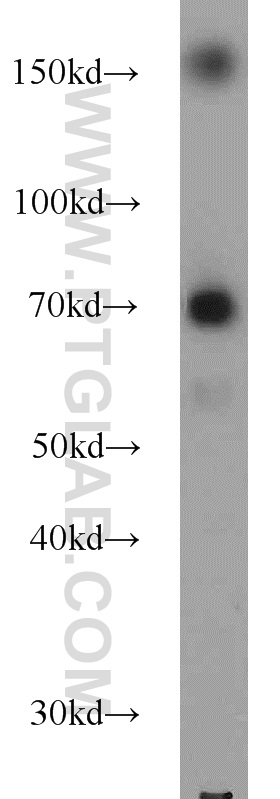
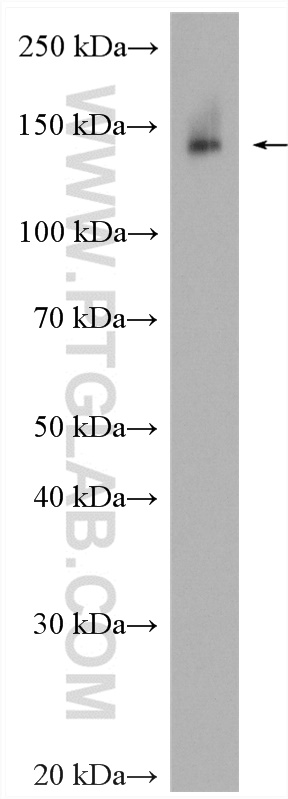
验证数据展示
产品信息
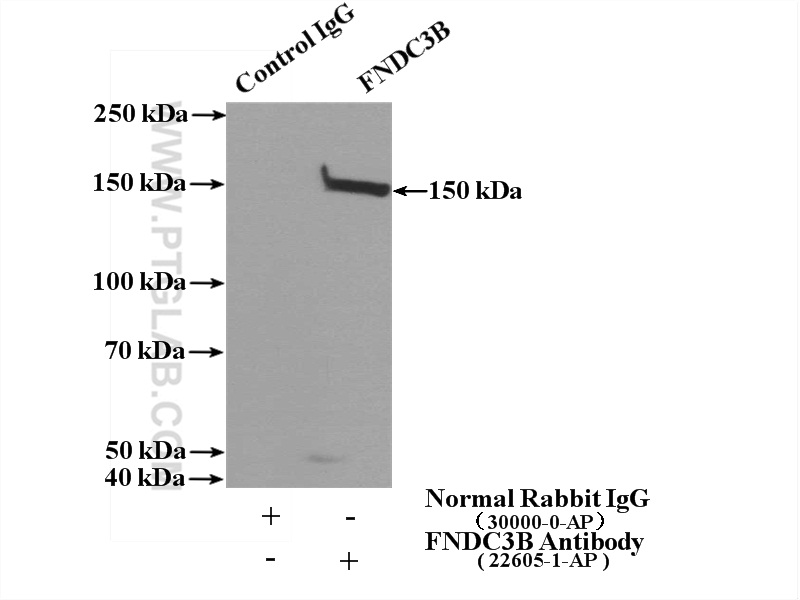
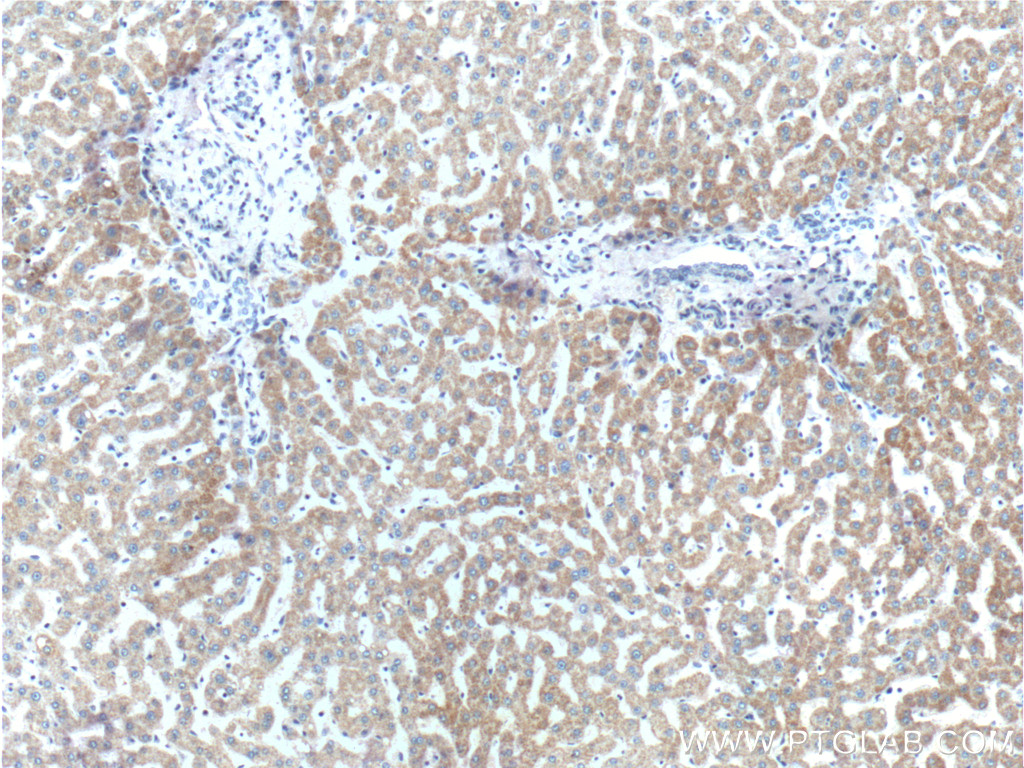
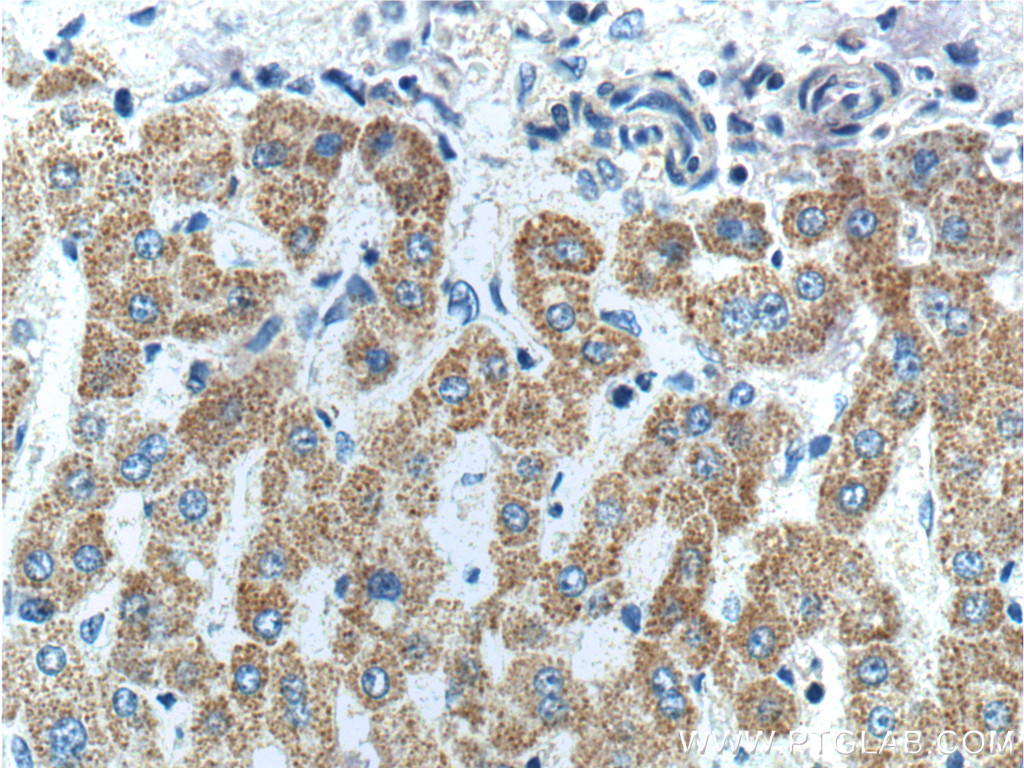
22605-1-PBS targets FNDC3B in WB, IHC, IP, Indirect ELISA applications and shows reactivity with human, mouse, rat samples.
| 经测试应用 | WB, IHC, IP, Indirect ELISA Application Description |
| 经测试反应性 | human, mouse, rat |
| 免疫原 |
CatNo: Ag18357 Product name: Recombinant human FNDC3B protein Source: e coli.-derived, PET28a Tag: 6*His Domain: 3-370 aa of BC039297 Sequence: VTMMMTDQIPLELPPLLNGEVAMMPHLVNGDAAQQVILVQVNPGETFTIRAEDGTLQCIQGPAEVPMMSPNGSIPPIHVPPGYISQVIEDSTGVRRVVVTPQSPECYPPSYPSAMSPTHHLPPYLTHHPHFIHNSHTAYYPPVTGPGDMPPQFFPQHHLPHTIYGEQEIIPFYGMSSYITREDQYSKPPHKKLKDRQIDRQNRLNSPPSSIYKSSCTTVYNGYGKGHSGGSGGGGSGSGPGIKKTERRARSSPKSNDSDLQEYELEVKRVQDILSGIEKPQVSNIQARAVVLSWAPPVGLSCGPHSGLSFPYSYEVALSDKGRDGKYKIIYSGEELECNLKDLRPATDYHVRVYAMYNSVKGSCSEPV 种属同源性预测 |
| 宿主/亚型 | Rabbit / IgG |
| 抗体类别 | Polyclonal |
| 产品类型 | Antibody |
| 全称 | fibronectin type III domain containing 3B |
| 别名 | FAD104, fibronectin type III domain containing 3B, Fibronectin type III domain-containing protein 3B, HCV NS5A-binding protein 37, UNQ2421/PRO4979/PRO34274 |
| 计算分子量 | 1204 aa, 133 kDa |
| 观测分子量 | 150 kDa, 70 kDa |
| GenBank蛋白编号 | BC039297 |
| 基因名称 | FNDC3B |
| Gene ID (NCBI) | 64778 |
| RRID | AB_2879133 |
| 偶联类型 | Unconjugated |
| 形式 | Liquid |
| 纯化方式 | Antigen affinity purification |
| UNIPROT ID | Q53EP0 |
| 储存缓冲液 | PBS only, pH 7.3. |
| 储存条件 | Store at -80°C. The product is shipped with ice packs. Upon receipt, store it immediately at -80°C |
背景介绍
Fibronectin type III domain-containing protein 3B(FNDC3B), also named FAD104, belongs to the FNDC3 family. NDC3B is a positive regulator of adipocyte differentiation and is expressed at an early stage of adipocyte differentiation. FNDC3B is an endoplasmic reticulum transmembrane protein with a single transmembrane domain at the C terminus preceded by nine repeated fibronectin type III domains(PMID: 32966780). Due to the ability of the fibronectin type III domain to bind to a variety of proteins, FNDC3B plays a crucial role in cell adhesion, proliferation, and growth signaling. FNDC3B is abnormally expressed in a variety of human cancers, including hepatocellular carcinoma, acute myeloid leukemia, colorectal carcinoma, and cervical carcinoma(PMID: 36275754).