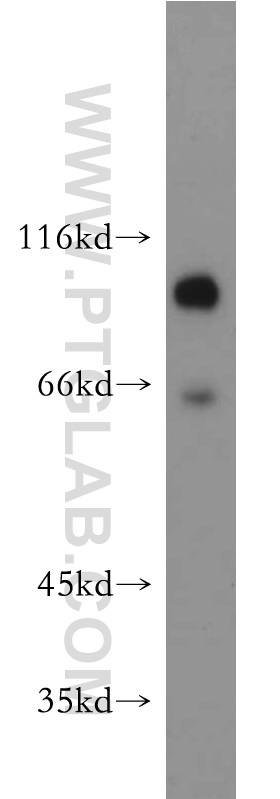
验证数据展示
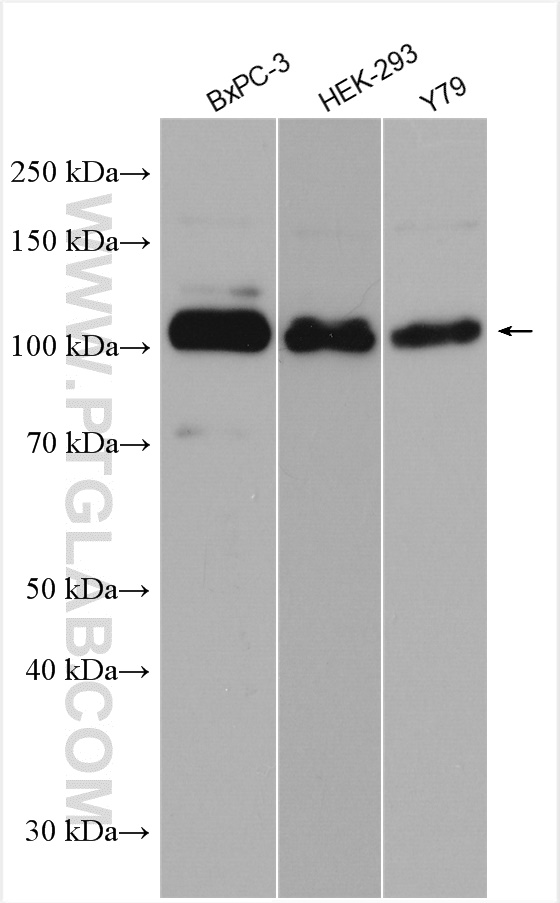
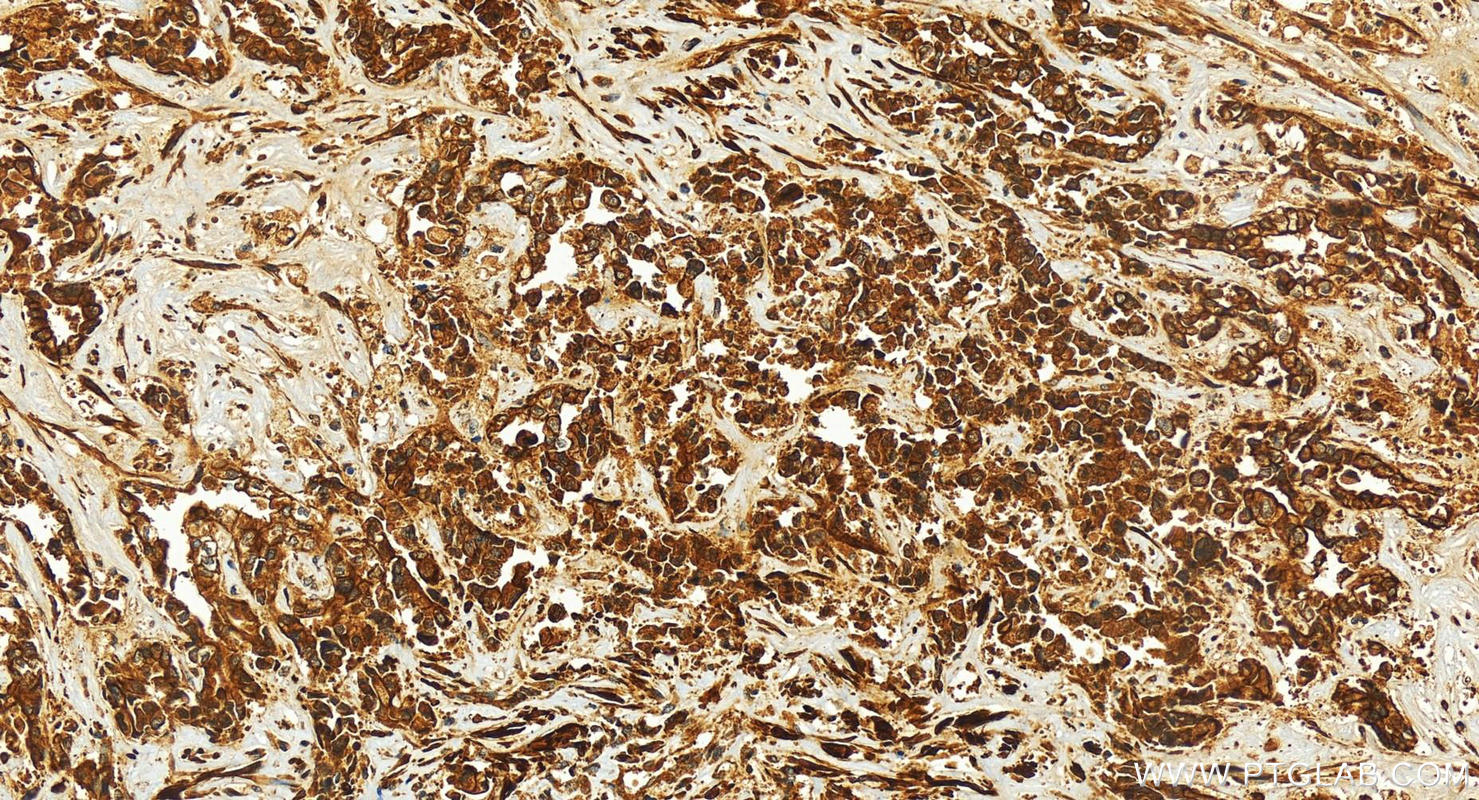
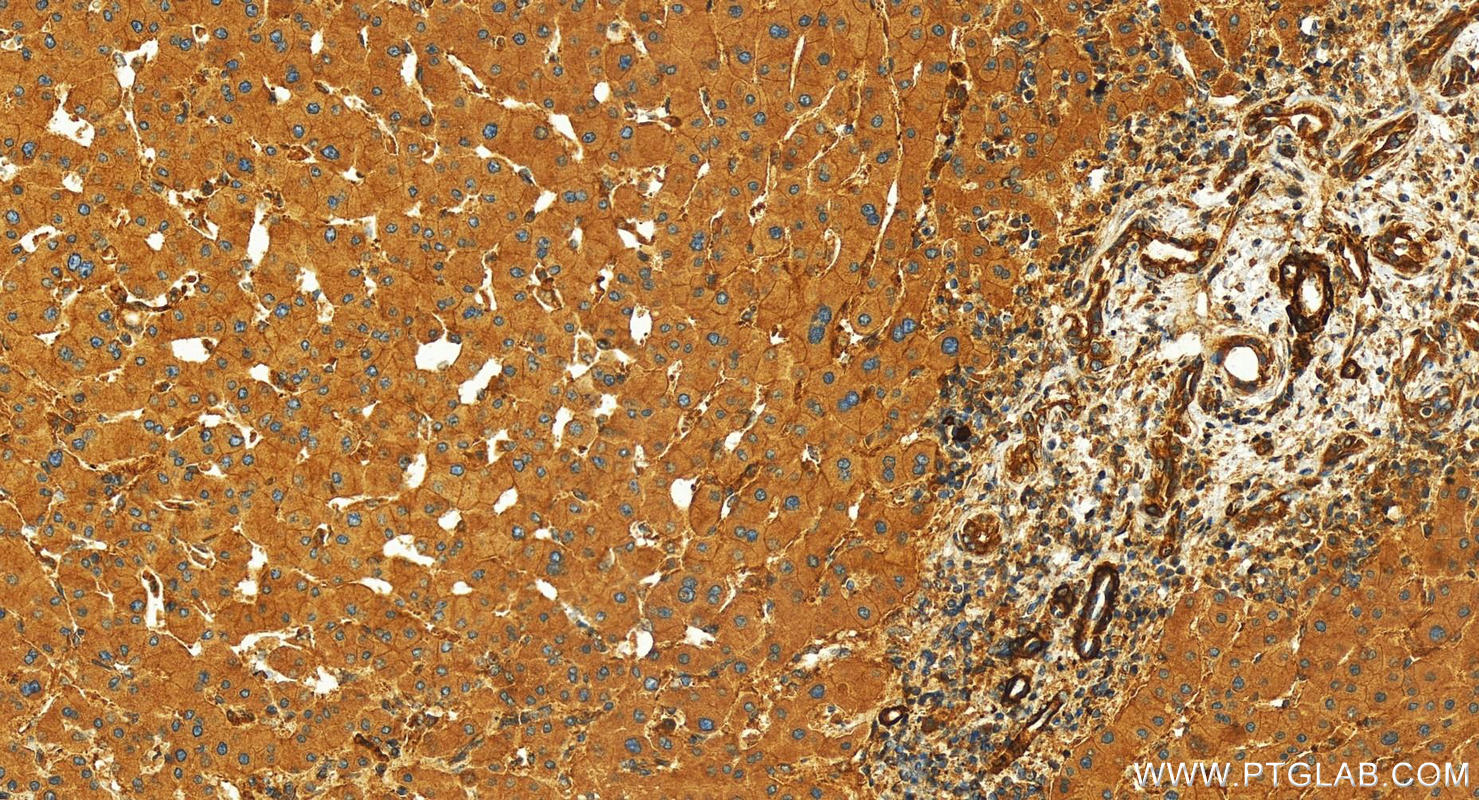
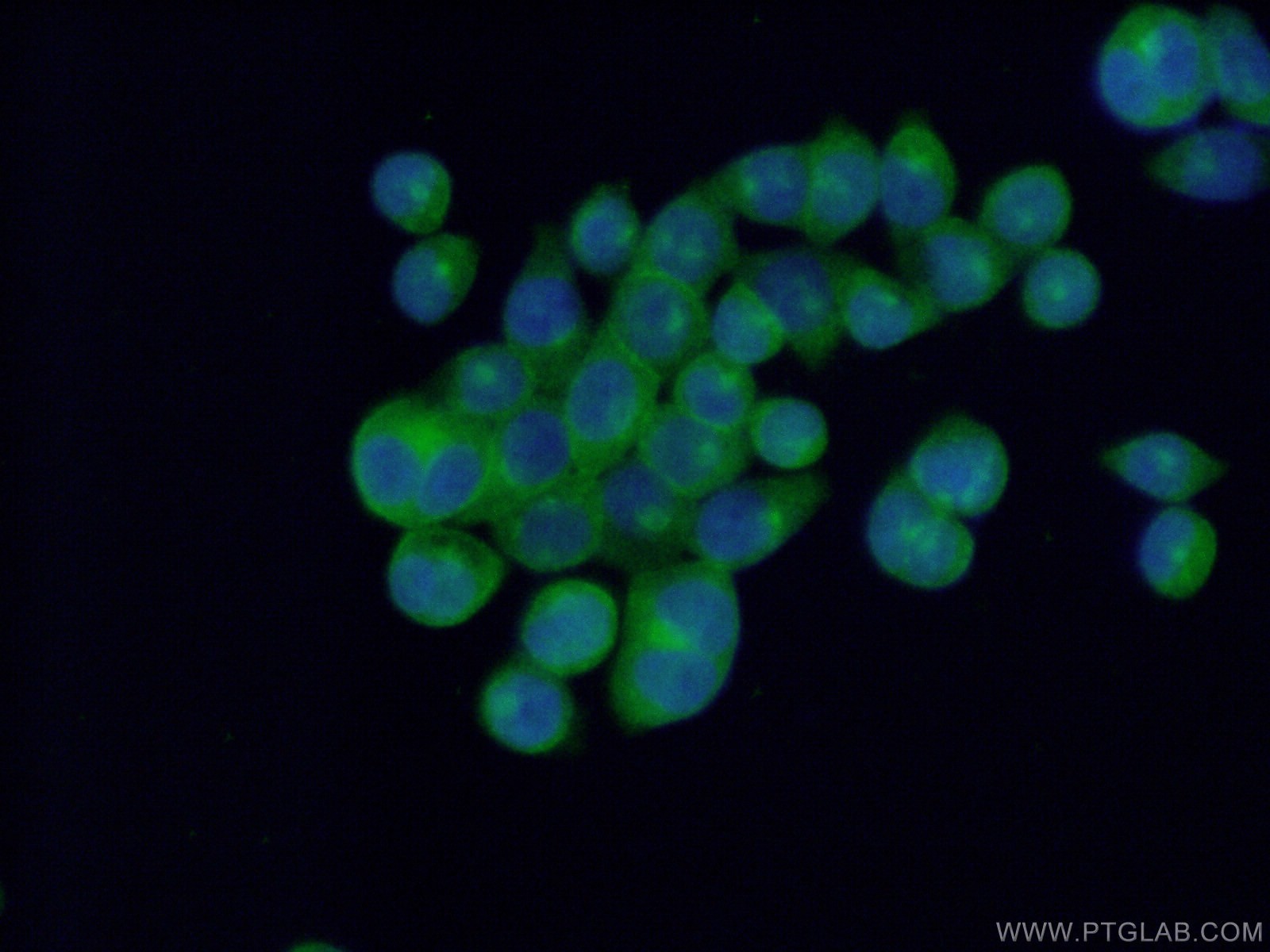
产品信息
21243-1-PBS targets EPS15R in WB, IHC, IF/ICC, Indirect ELISA applications and shows reactivity with human samples.
| 经测试应用 | WB, IHC, IF/ICC, Indirect ELISA Application Description |
| 经测试反应性 | human |
| 免疫原 |
CatNo: Ag15735 Product name: Recombinant human EPS15L1 protein Source: e coli.-derived, PGEX-4T Tag: GST Domain: 351-597 aa of BC142716 Sequence: PQVLSPDMVPPSERGTPGPDSSGSLGSGEFTGVKELDDISQEIAQLQREKYSLEQDIREKEEAIRQKTSEVQELQNDLDRETSSLQELEAQKQDAQDRLDEMDQQKAKLRDMLSDVRQKCQDETQMISSLKTQIQSQESDLKSQEDDLNRAKSELNRLQQEETQLEQSIQAGRVQLETIIKSLKSTQDEINQARSKLSQLHESRQEAHRSLEQYDQVLDGAHGASLTDLANLSEGVSLAERGSFGAM 种属同源性预测 |
| 宿主/亚型 | Rabbit / IgG |
| 抗体类别 | Polyclonal |
| 产品类型 | Antibody |
| 全称 | epidermal growth factor receptor pathway substrate 15-like 1 |
| 别名 | EPS15L1, Eps15-related protein, Eps15 related protein, Epidermal growth factor receptor substrate 15-like 1 |
| 计算分子量 | 864 aa, 94 kDa |
| 观测分子量 | 94 kDa |
| GenBank蛋白编号 | BC142716 |
| 基因名称 | EPS15R |
| Gene ID (NCBI) | 58513 |
| RRID | AB_10733643 |
| 偶联类型 | Unconjugated |
| 形式 | Liquid |
| 纯化方式 | Antigen affinity purification |
| UNIPROT ID | Q9UBC2 |
| 储存缓冲液 | PBS only, pH 7.3. |
| 储存条件 | Store at -80°C. The product is shipped with ice packs. Upon receipt, store it immediately at -80°C |
背景介绍
EPS15R is a protein that belongs to the Eps15 family of proteins, which are known for their roles in intracellular trafficking, particularly in the regulation of endocytosis and vesicle formation. EPS15R, like other members of the Eps15 family, functions as a scaffolding adaptor protein and is involved in both secretion and endocytosis. It has been shown to bind to AP-1 and AP-2 complexes, inositol lipids, and several other proteins that are crucial for the regulation of intracellular trafficking. EPS15R is also implicated in the regulation of membrane morphology, which is essential for intracellular vesicle formation and trafficking . It has been detected in the nucleus of mammalian cells, and its activation through growth factor receptors induces tyrosine phosphorylation and mono-ubiquitination, although the specific roles of these post-translational modifications are not yet fully understood