验证数据展示
产品信息
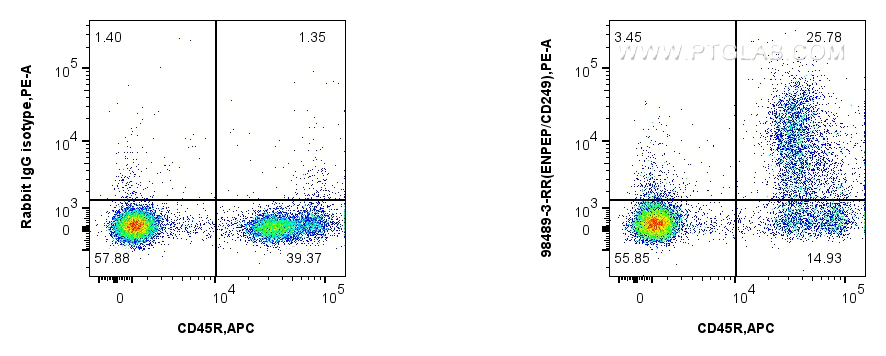
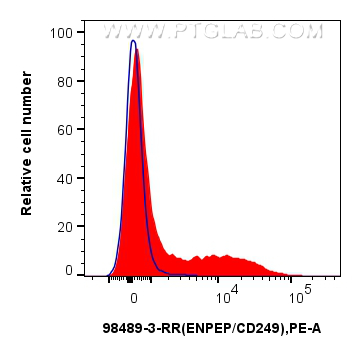
98489-3-PBS targets ENPEP in FC applications and shows reactivity with mouse samples.
| 经测试应用 | FC Application Description |
| 经测试反应性 | mouse |
| 免疫原 |
CatNo: Eg4233 Product name: Recombinant Mouse ENPEP protein (rFc Tag) Source: mammalian cells-derived, pHZ-KIsec-N-rFc Tag: N-rFc Domain: 41-945 aa of NM_007934.3 Sequence: RSCEQDTTPAPSQPPPEASTALPPQDQNVCPDSEDESGEWKNFRLPDFINPVHYDLEVKALMEEDRYTGIVTISVNLSKPTRDLWLHIRETKITKLPELRRPSGEQVPIRRCFEYKKQEYVVIQAAEDLAATSGDSVYRLTMEFKGWLNGSLVGFYKTTYMEDGQIRSIAATDHEPTDARKSFPCFDEPNKKSTYSISIIHPKEYSALSNMPEEKSEMVDDNWKKTTFVKSVPMSTYLVCFAVHRFTAIERKSRSGKPLKVYVQPNQKETAEYAANITQAVFDYFEDYFAMEYALPKLDKIAIPDFGTGAMENWGLVTYRETNLLYDPLLSASSNQQRVASVVAHELVHQWFGNTVTMDWWDDLWLNEGFASFFEFLGVNHAEKDWQMLSQVLLEDVFPVQEDDSLMSSHPVVVTVSTPAEITSVFDGISYSKGASILRMLQDWITPEKFQKGCQIYLKKFQFANAKTSDFWDSLQEASNLPVKEVMDTWTSQMGYPVVTVSGRQNITQKRFLLDSKADPSQPPSELGYTWNIPVRWADNDNSRITVYNRLDKGGITLNANLSGDAFLKINPDHIGFYRVNYEGGTWDWIAEALSSNHTRFSAADRSSFIDDAFALARAQLLNYKIALNLTMYLKSEEDFLPWERVISSVSYIISMFEDDRELYPMIETYFQGQVKPVADLLGWQDTGSHITKLLRASILGFACKMGDREALGNASQLFDSWLKGSASIPVNLRLLVYRYGMQNSGNEAAWNYTLEQYQKTSLAQEKEKLLYGLASVKDVKLLARYLEMLKDPNIIKTQDVFTVIRYISYNSYGKTMAWNWIQLNWDYLVSRFTINDRYLGRIVTIAEPFNTELQLWQMQSFFAKYPNAGAGAKPREQVLETVKNNIEWLNVNRQSIREWFASLP 种属同源性预测 |
| 宿主/亚型 | Rabbit / IgG |
| 抗体类别 | Recombinant |
| 产品类型 | Antibody |
| 全称 | glutamyl aminopeptidase |
| 别名 | Aminopeptidase A, AP-A, BP-1/6C3 antigen, CD249, EAP |
| 计算分子量 | 108 kDa |
| GenBank蛋白编号 | NM_007934.3 |
| 基因名称 | Enpep |
| Gene ID (NCBI) | 13809 |
| RRID | AB_3746119 |
| 偶联类型 | Unconjugated |
| 形式 | Liquid |
| 纯化方式 | Protein A purification |
| UNIPROT ID | P16406 |
| 储存缓冲液 | PBS only, pH 7.3. |
| 储存条件 | Store at -80°C. The product is shipped with ice packs. Upon receipt, store it immediately at -80°C |
背景介绍
ENPEP is the gene encoding the protein glutamyl aminopeptidase, also known as aminopeptidase A (APA), human kidney differentiation antigen (gp160). A type 2 membrane zinc metalloenzyme, APA is a general-purpose protease that primarily serves to cleave the acidic N-terminal aspartate and glutamyl residues of a variety of peptides, most significantly angiotensin 2 (ANG2, ang1-8), cholecystokinin-8 (CCK8), and neurokinin A. The presence of Ca2+ augments both the enzymatic efficiency and specificity of APA, increasing its selectivity towards the aforementioned acidic amino acids. Conversely, in the absence of calcium, APA can bind a wider range of N-terminal neutral and basic amino acids, some of which are cleaved, while others bind without proteolysis.