验证数据展示
产品信息
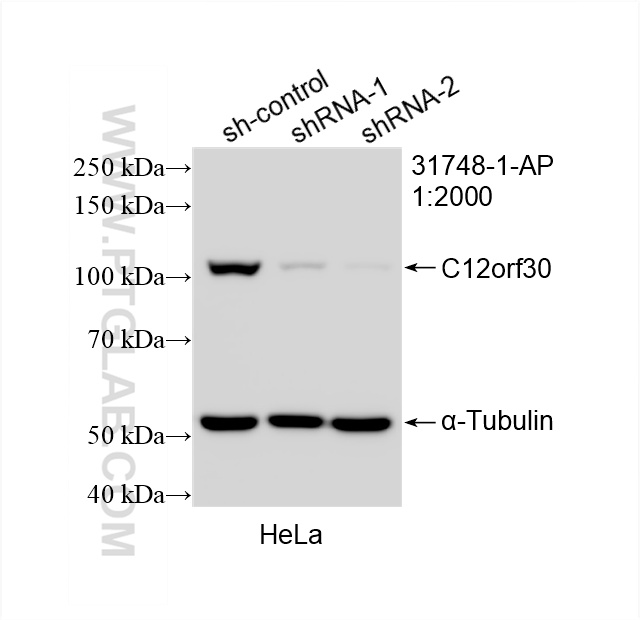
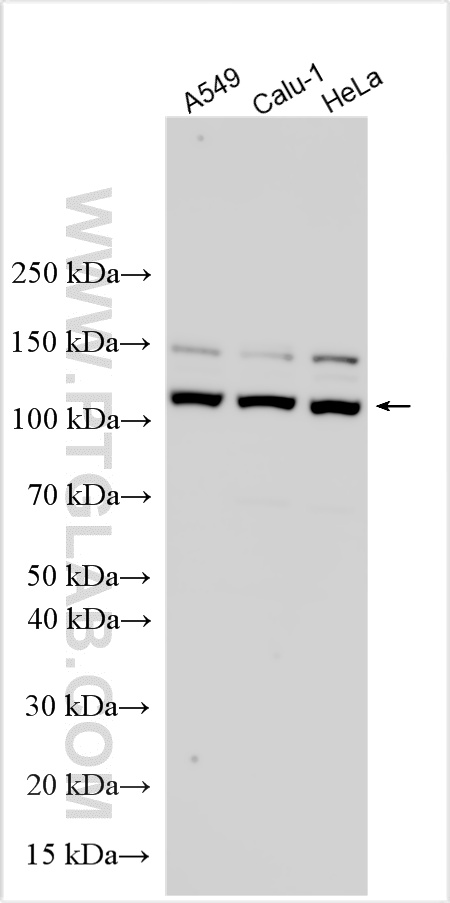
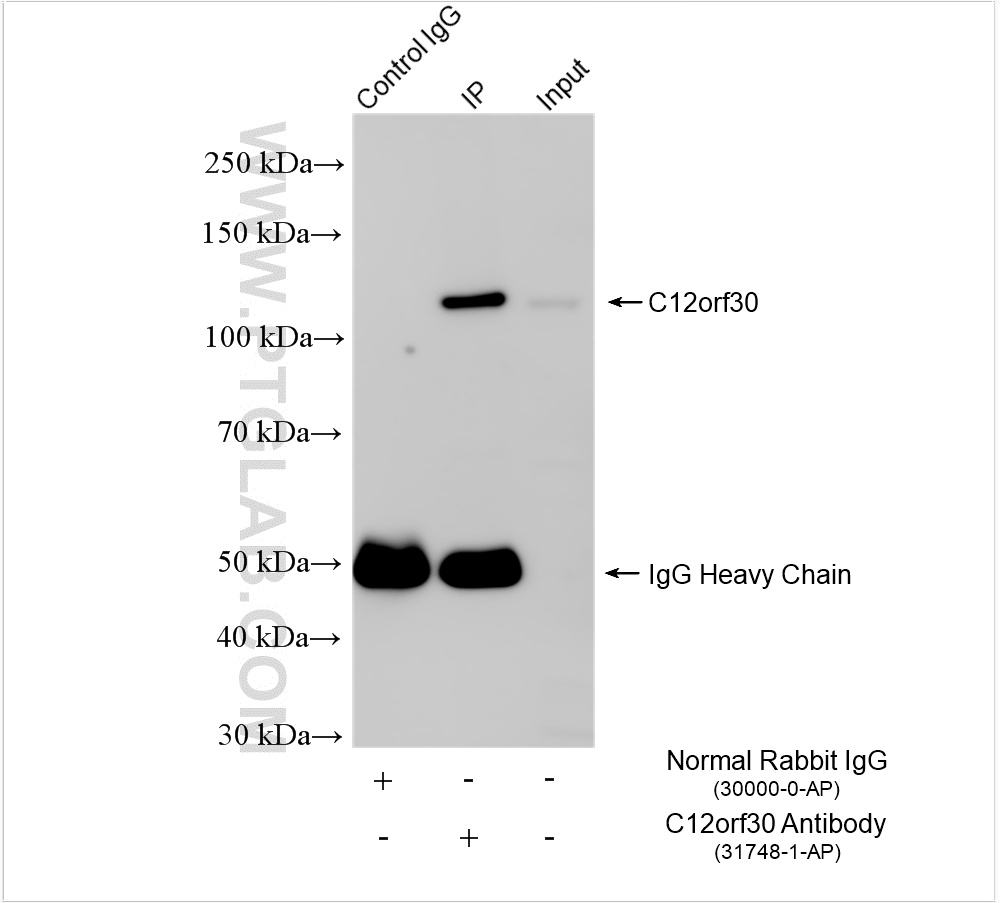
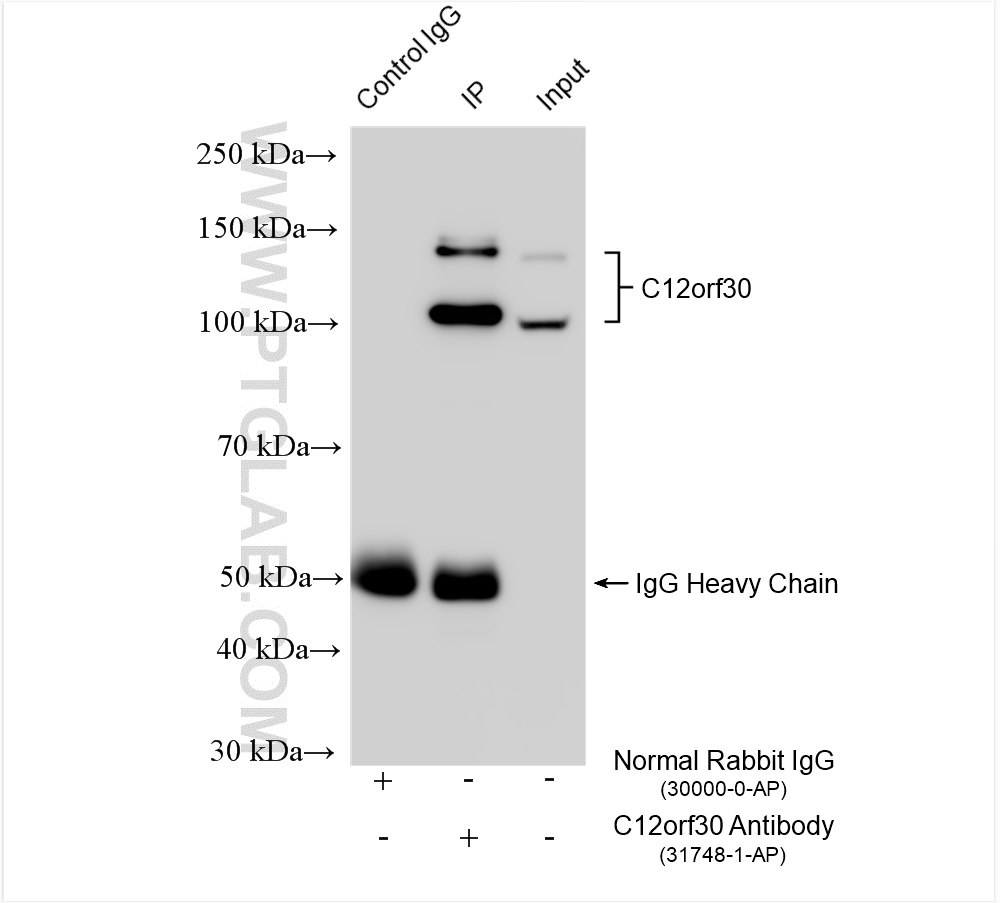
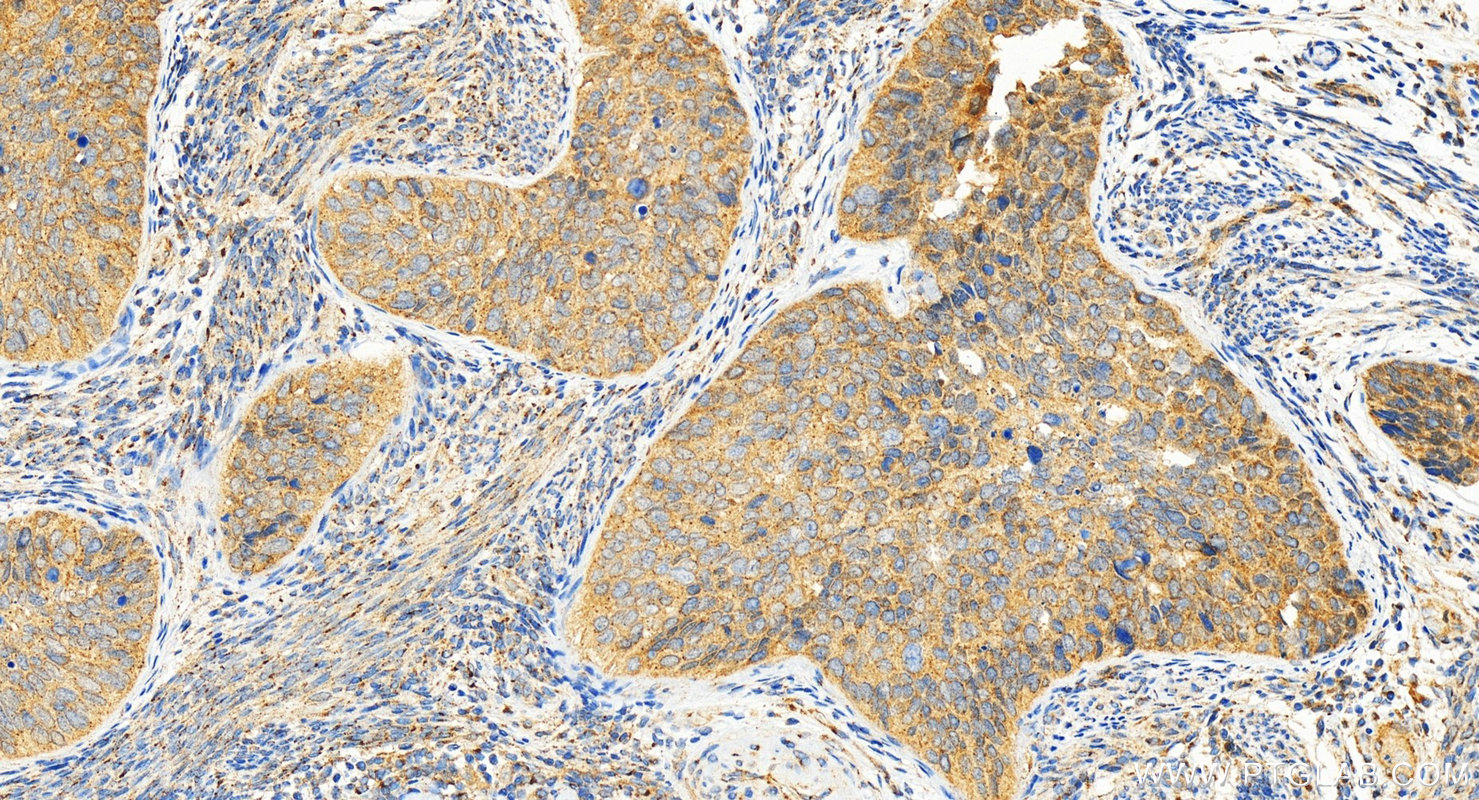
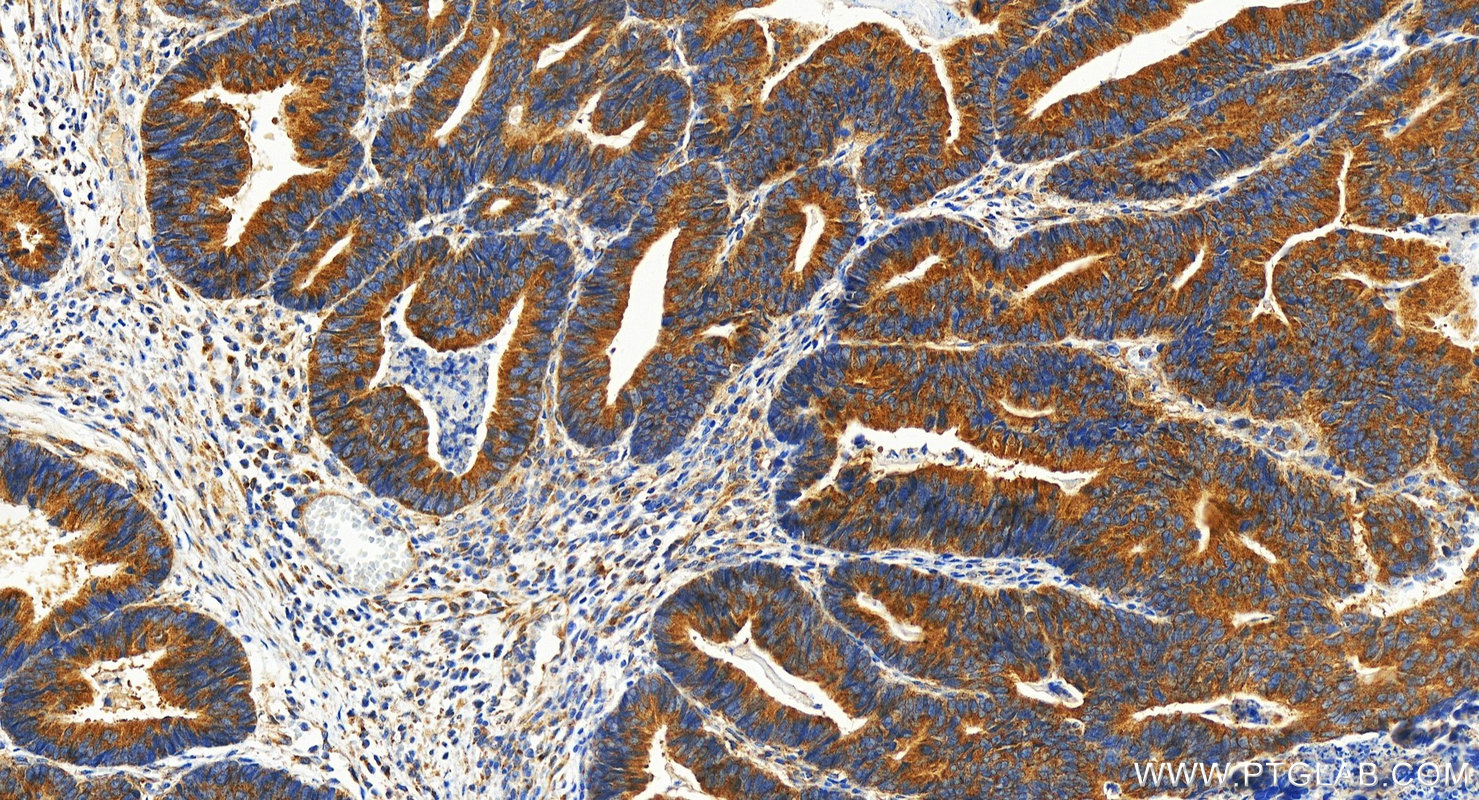
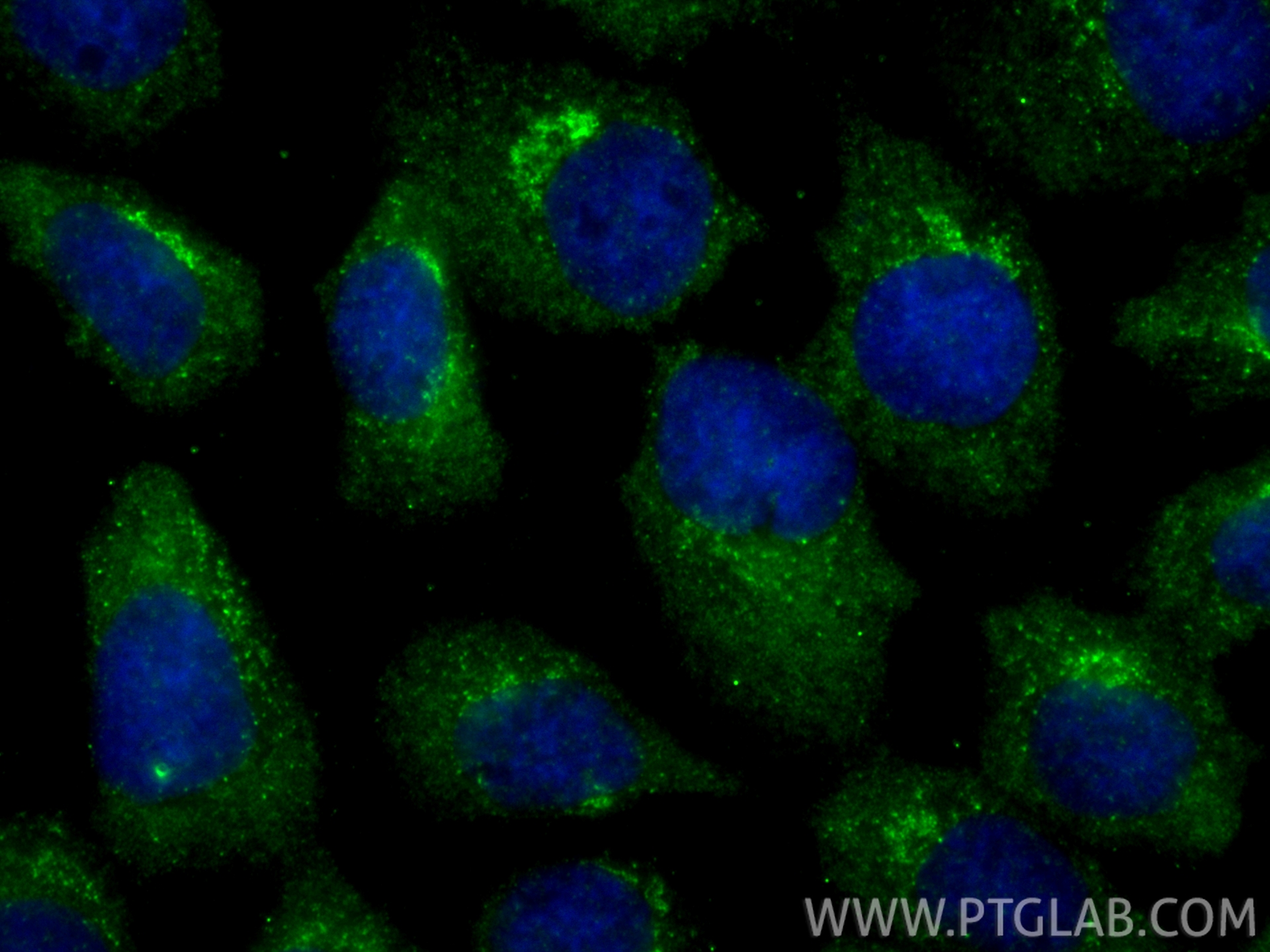
31748-1-PBS targets C12orf30 in WB, IHC, IF/ICC, IP, Indirect ELISA applications and shows reactivity with human, mouse samples.
| 经测试应用 | WB, IHC, IF/ICC, IP, Indirect ELISA Application Description |
| 经测试反应性 | human, mouse |
| 免疫原 |
CatNo: Ag36383 Product name: Recombinant human C12orf30 protein Source: e coli.-derived, PGEX-4T Tag: GST Domain: 703-972 aa of BC113585 Sequence: LNHPVEPKNSEKTAENGVSSRIDILRLLLQQLEATLETGKRFIEKDIQYPFLGPVPTRMGGFFNSGCSQCQISSFYLVNDIYELDTSGLEDTMEIQERIENSFKSLLDQLKDVFSKCKGDLLEVKDGNLKTHPTLLENLVFFVETISVILWVSSYCESVLRPYKLNLQKKKKKKKETSIIMPPVFTSFQDYVTGLQTLISNVVDHIKGLETHLIALKLEELILEDTSLSPEERKFSKTVQGKVQSSYLHSLLEMGELLKKRLETTKKLKI 种属同源性预测 |
| 宿主/亚型 | Rabbit / IgG |
| 抗体类别 | Polyclonal |
| 产品类型 | Antibody |
| 全称 | chromosome 12 open reading frame 30 |
| 别名 | MDM20, NAA25, N-alpha-acetyltransferase 25, NatB auxiliary subunit, NAP1, N-terminal acetyltransferase B complex subunit MDM20 |
| 观测分子量 | 113 kDa,140 kDa |
| GenBank蛋白编号 | BC113585 |
| 基因名称 | C12orf30 |
| Gene ID (NCBI) | 80018 |
| RRID | AB_3742472 |
| 偶联类型 | Unconjugated |
| 形式 | Liquid |
| 纯化方式 | Antigen affinity Purification |
| UNIPROT ID | Q14CX7 |
| 储存缓冲液 | PBS only, pH 7.3. |
| 储存条件 | Store at -80°C. The product is shipped with ice packs. Upon receipt, store it immediately at -80°C |
背景介绍
The C12orf30 gene encodes an auxiliary subunit of the N-terminal acetyltransferase B (NatB) complex, which is responsible for the acetylation of methionine residues at the N-terminus of proteins. The C12orf30 protein plays a role in the distribution and morphology of organelles, and is involved in cell migration and the dynamic changes of the cytoskeleton. In addition, polymorphisms in the C12orf30 gene are associated with susceptibility to various autoimmune diseases, such as rheumatoid arthritis, juvenile idiopathic arthritis, and type 1 diabetes. The C12orf30 protein also participates in regulating the function of immune cells, influencing their signal transduction. The theoretical size of C12orf30 protein is 113 kDa, and it is possible that post-translational modifications may have shifted the protein band up to about 140 kD.