验证数据展示
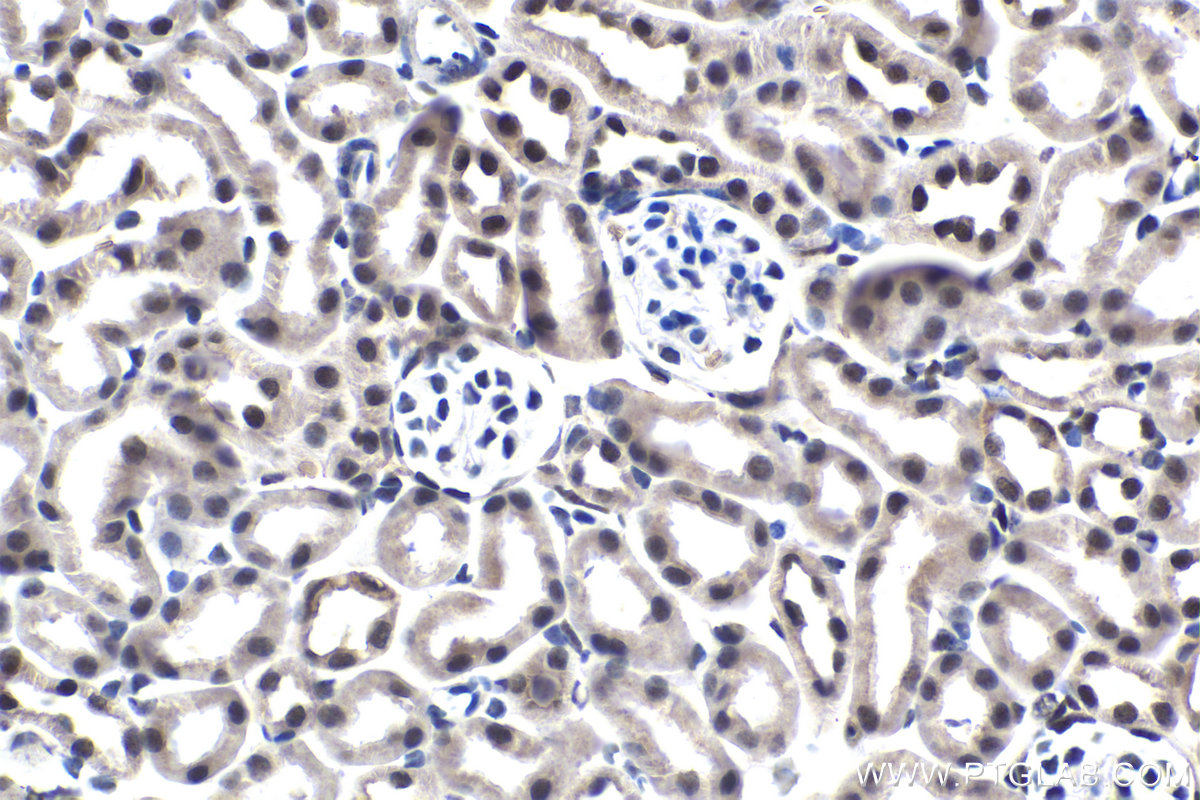
产品信息
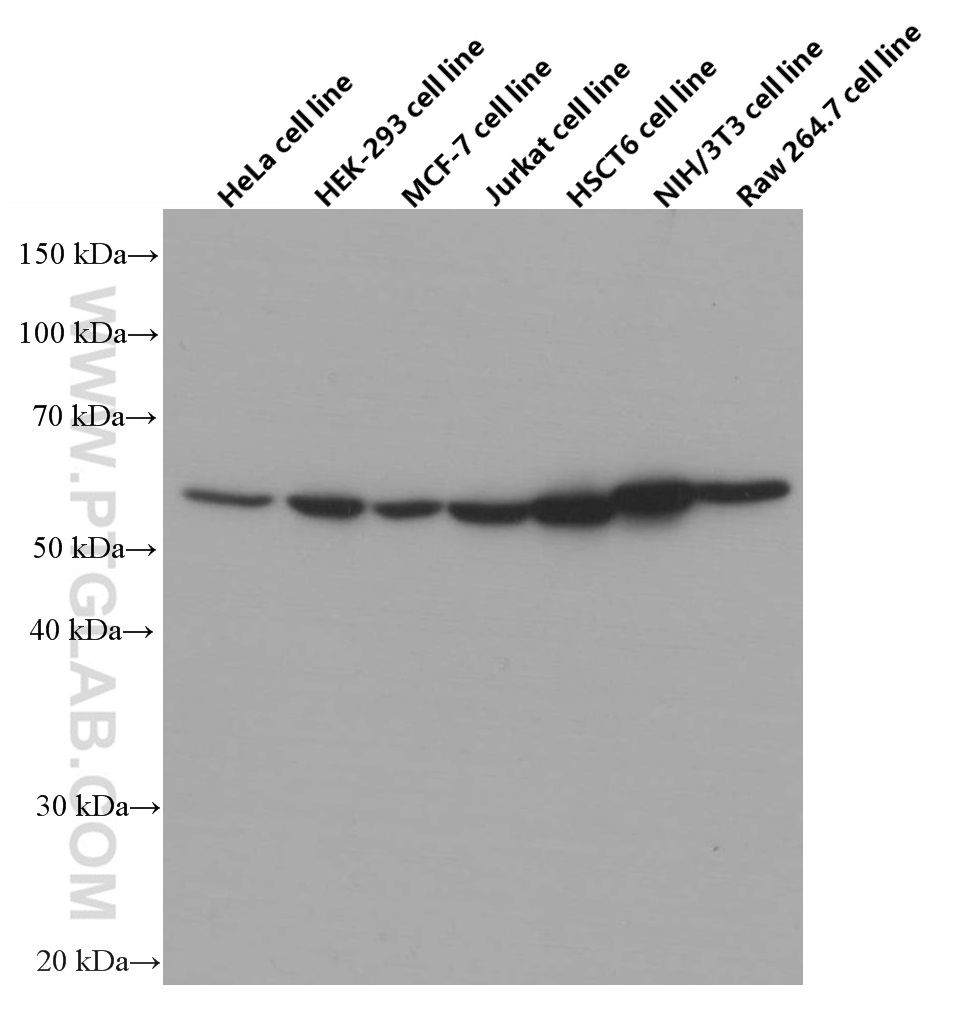
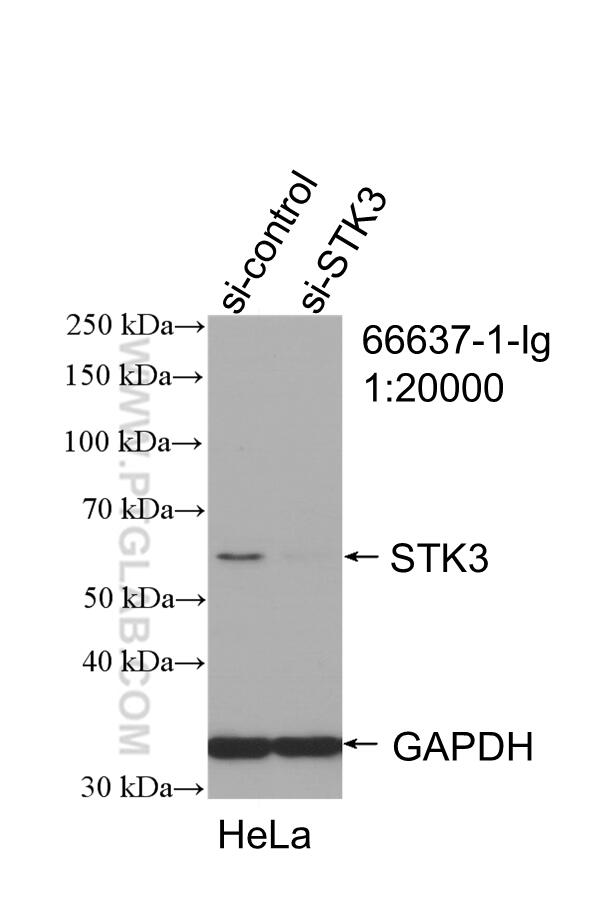
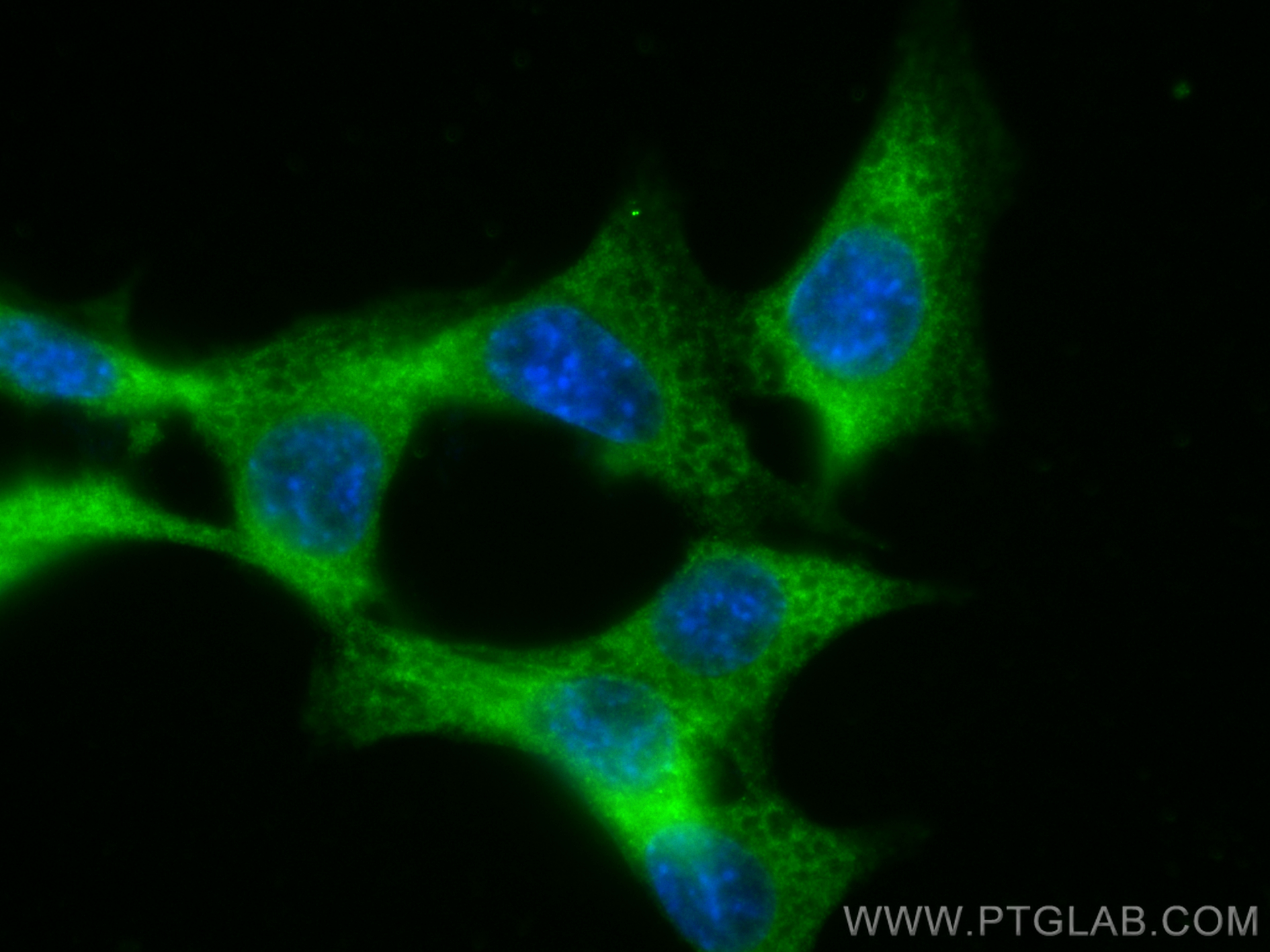
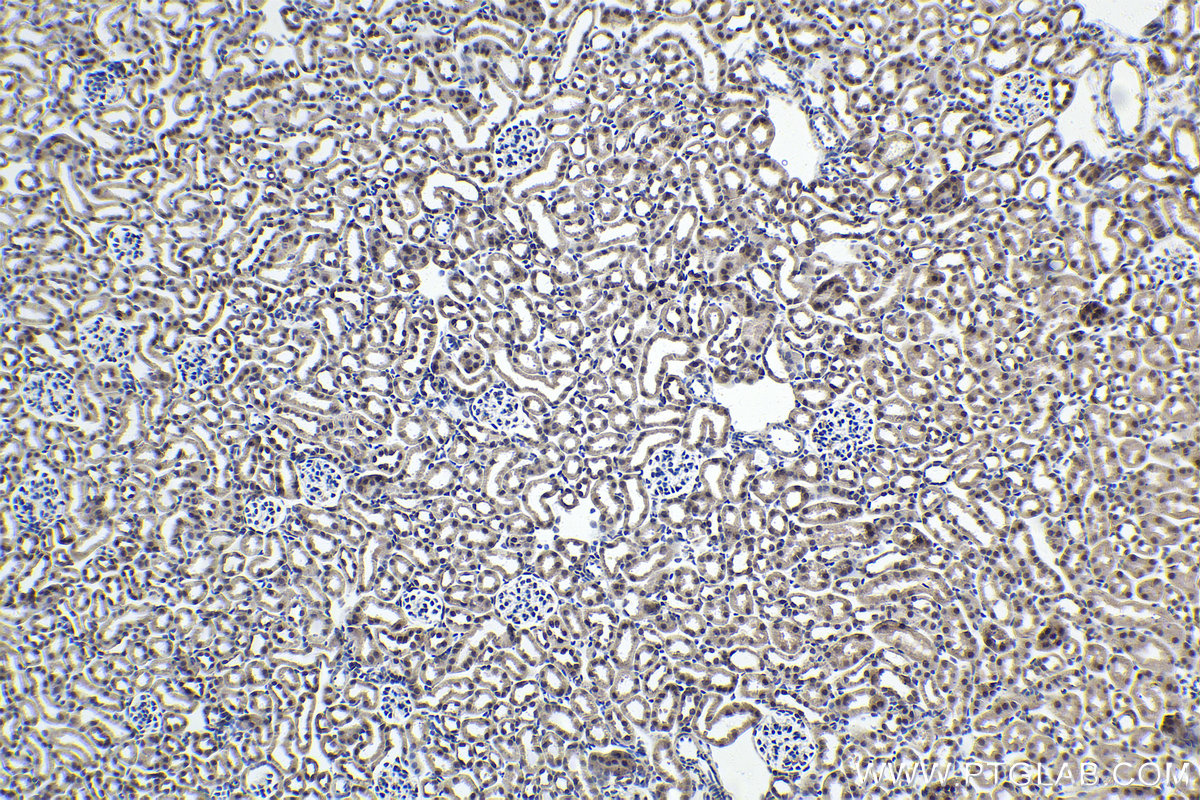
66637-1-PBS targets STK3/MST2 in WB, IHC, IF/ICC, Indirect ELISA applications and shows reactivity with human, mouse, rat samples.
| 经测试应用 | WB, IHC, IF/ICC, Indirect ELISA Application Description |
| 经测试反应性 | human, mouse, rat |
| 免疫原 |
CatNo: Ag2741 Product name: Recombinant human STK3 protein Source: e coli.-derived, PGEX-4T Tag: GST Domain: 1-306 aa of BC010640 Sequence: MEQPPAPKSKLKKLSEDSLTKQPEEVFDVLEKLGEGSYGSVFKAIHKESGQVVAIKQVPVESDLQEIIKEISIMQQCDSPYVVKYYGSYFKNTDLWIVMEYCGAGSVSDIIRLRNKTLIEDEIATILKSTLKGLEYLHFMRKIHRDIKAGNILLNTEGHAKLADFGVAGQLTDTMAKRNTVIGTPFWMAPEVIQEIGYNCVADIWSLGITSIEMAEGKPPYADIHPMRAIFMIPTNPPPTFRKPELWSDDFTDFVKKCLVKNPEQRATATQLLQHPFIKNAKPVSILRDLITEAMEIKAKRHEEQQ 种属同源性预测 |
| 宿主/亚型 | Mouse / IgG2a |
| 抗体类别 | Monoclonal |
| 产品类型 | Antibody |
| 全称 | serine/threonine kinase 3 (STE20 homolog, yeast) |
| 别名 | MST2, STK3, 1C11A4, EC:2.7.11.1, KRS1 |
| 计算分子量 | 491 aa, 56 kDa |
| 观测分子量 | 56-63 kDa |
| GenBank蛋白编号 | BC010640 |
| 基因名称 | STK3 |
| Gene ID (NCBI) | 6788 |
| RRID | AB_2881996 |
| 偶联类型 | Unconjugated |
| 形式 | Liquid |
| 纯化方式 | Protein A purification |
| UNIPROT ID | Q13188 |
| 储存缓冲液 | PBS only, pH 7.3. |
| 储存条件 | Store at -80°C. The product is shipped with ice packs. Upon receipt, store it immediately at -80°C |
背景介绍
The protein encoded by STK3 gene is a key serine/threonine kinase, and its protein product can be cleaved by caspase in the process of apoptosis, and the inhibitory C-terminal part is removed, and the N-terminal part is transferred to the nucleus to form homodimer, which becomes an active kinase and promotes chromatin condensation in the process of apoptosis. STK3 is one of the core components of Hippo signaling pathway, which plays a key role in controlling cell proliferation, apoptosis and tissue growth. In the Hippo signaling pathway, STK3 forms a cascade reaction with STK4, LATS1/2 and other kinases, phosphorylates and activates LATS1/2, and then inhibits transcription coactivators YAP and TAZ, thus controlling cell growth and preventing cancer progression. STK3 and STK4(MST1) are similar in structure and function. They have conserved amino-terminal kinase domains, carboxyl-terminal regulatory domains and interaction domains. The antibody can cross-recognize STK4.