验证数据展示
产品信息
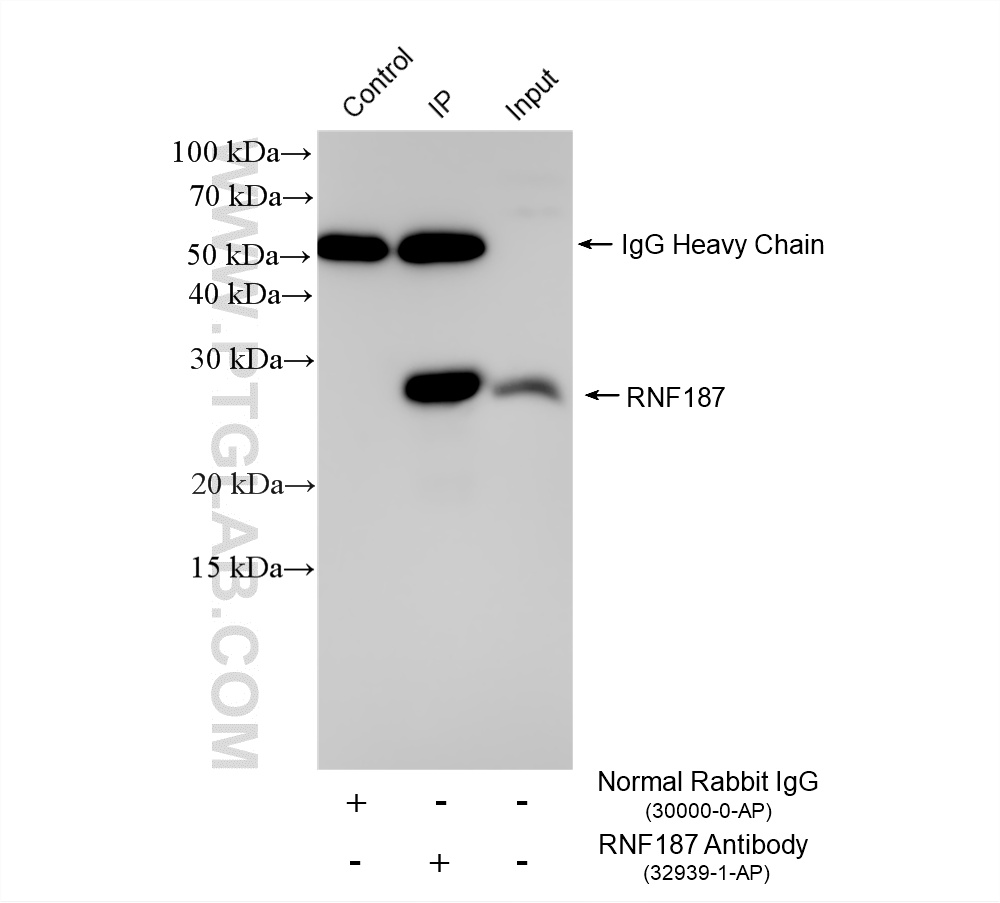
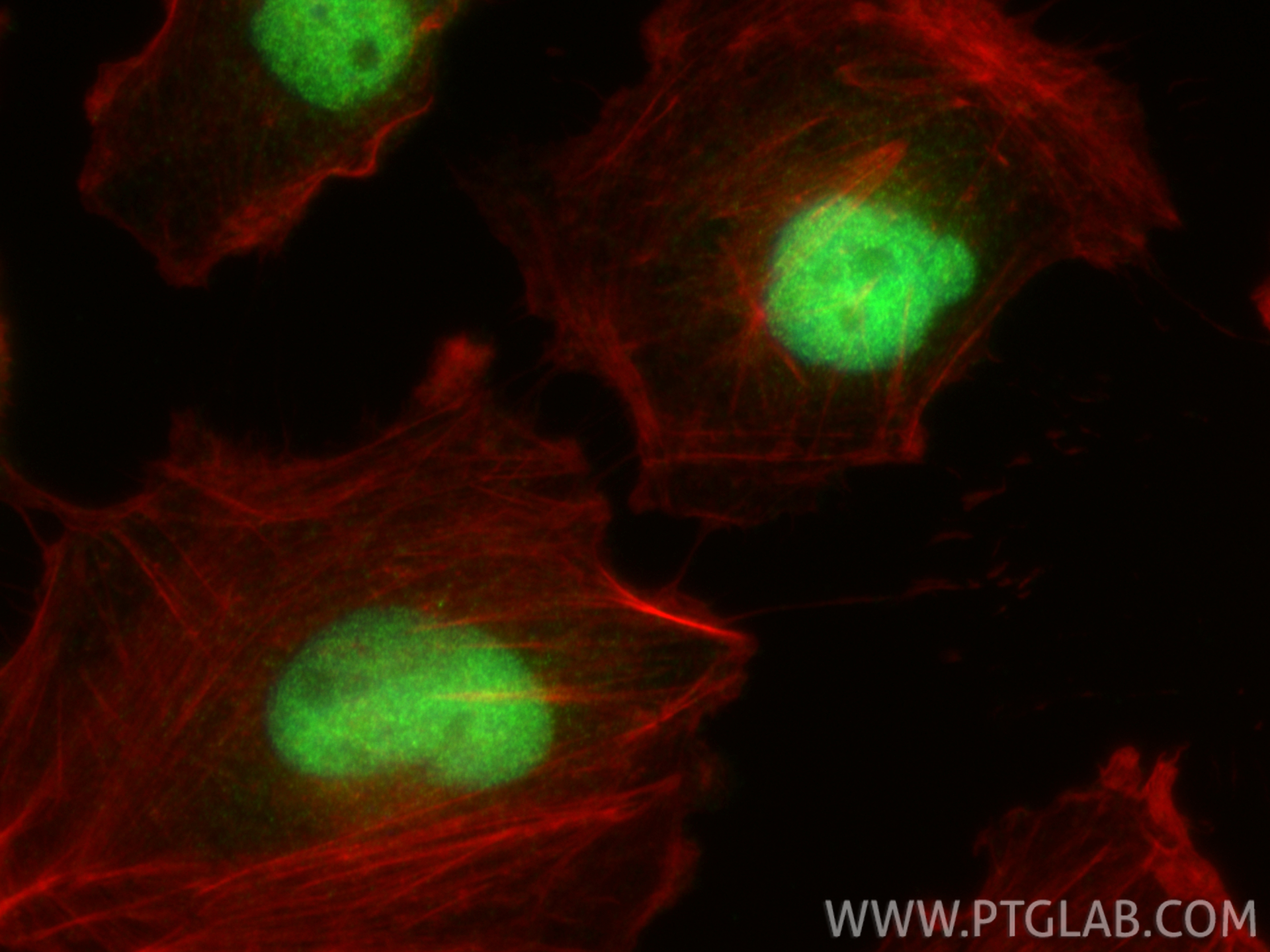
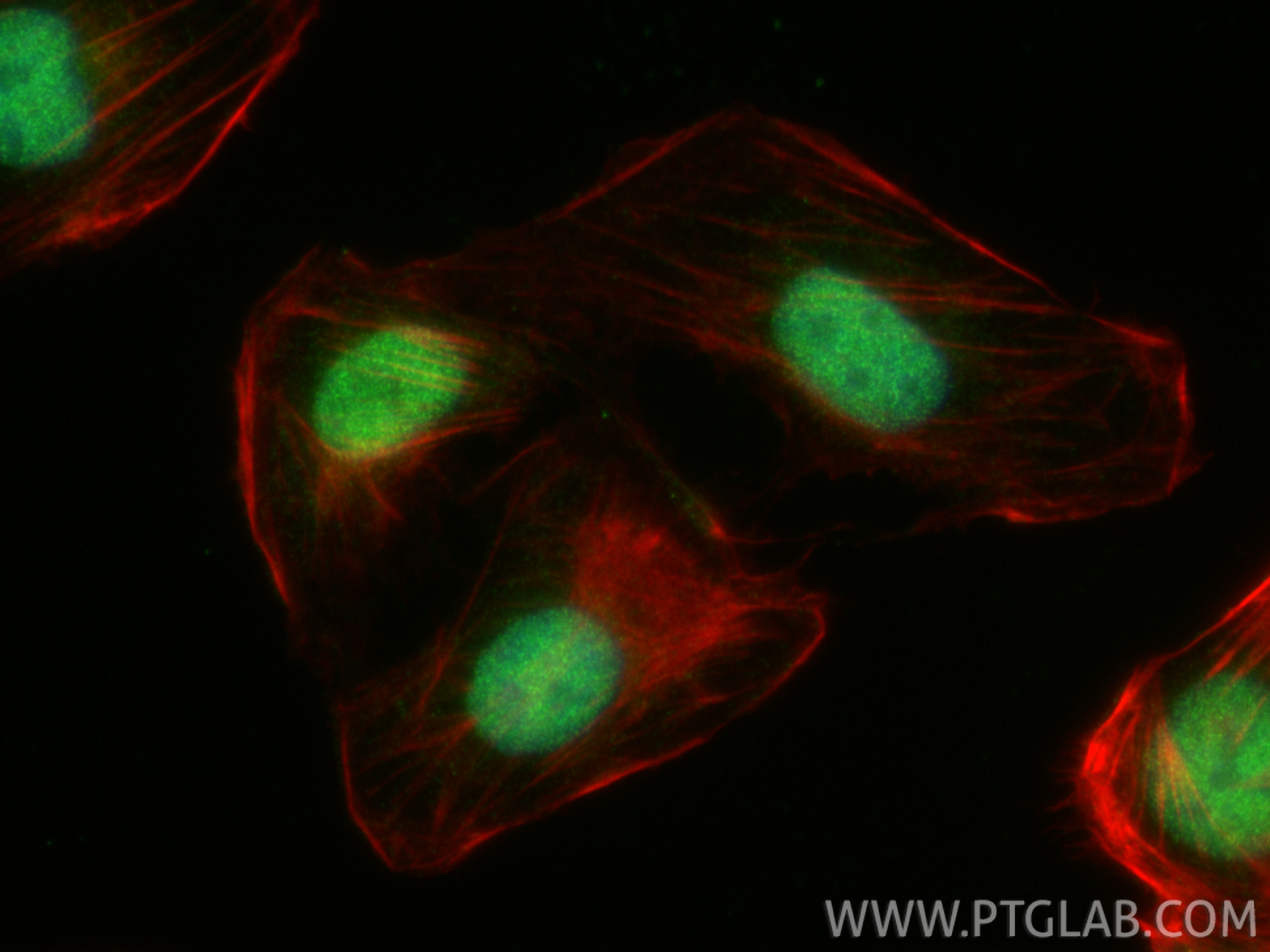
32939-1-PBS targets RNF187 in IF/ICC, IP, Indirect ELISA applications and shows reactivity with human samples.
| 经测试应用 | IF/ICC, IP, Indirect ELISA Application Description |
| 经测试反应性 | human |
| 免疫原 |
CatNo: Ag36665 Product name: Recombinant human RNF187 protein Source: e coli.-derived, PGEX-4T Tag: GST Domain: 120-235 aa of BC012758 Sequence: EPRWRKALRGKENKGSVEIMRKDLNDARDLHGQAESAAAVWKGHVMDRRKKALTDYKKLRAFFVEEEEHFLQEAEKEEGLPEDELADPTERFRSLLQAVSELEKKHRNLGLSMLLQ 种属同源性预测 |
| 宿主/亚型 | Rabbit / IgG |
| 抗体类别 | Polyclonal |
| 产品类型 | Antibody |
| 全称 | ring finger protein 187 |
| 别名 | E3 ubiquitin-protein ligase RNF187, EC:2.3.2.27, HA2K, RACO-1, RING domain AP1 coactivator 1 |
| 观测分子量 | 29 kDa |
| GenBank蛋白编号 | BC012758 |
| 基因名称 | RNF187 |
| Gene ID (NCBI) | 149603 |
| 偶联类型 | Unconjugated |
| 形式 | Liquid |
| 纯化方式 | Antigen affinity Purification |
| UNIPROT ID | Q5TA31 |
| 储存缓冲液 | PBS only, pH 7.3. |
| 储存条件 | Store at -80°C. The product is shipped with ice packs. Upon receipt, store it immediately at -80°C |
背景介绍
RNF187 (Ring Finger Protein 187) is an E3 ubiquitin ligase with a molecular weight of approximately 28 kDa. It belongs to the RING finger protein family and participates in protein degradation and signal transduction regulation by catalyzing the ubiquitination of substrate proteins. In cancer research, RNF187 is upregulated in various malignant tumors, including melanoma and breast cancer, where it promotes tumor proliferation and invasion through ubiquitin-mediated degradation of tumor suppressors or regulation of cyclins. Additionally, RNF187 is involved in oxidative stress responses and DNA damage repair, playing a role in cell survival and maintenance of genomic stability. In research settings, anti-RNF187 antibodies are widely used for studying ubiquitination mechanisms, analyzing tumor signaling pathways, and exploring skin disease models.