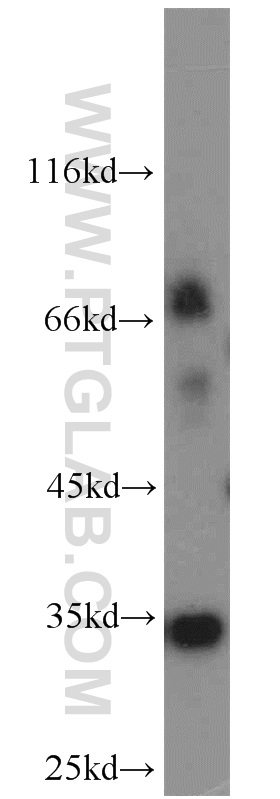
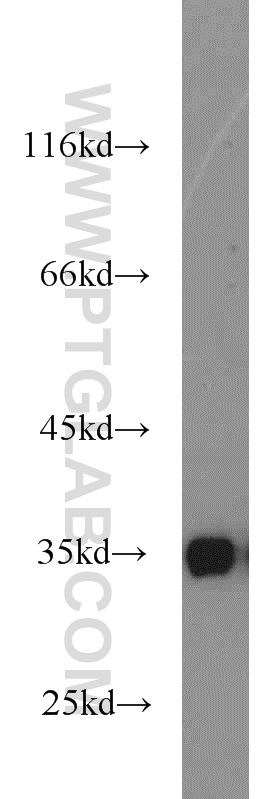
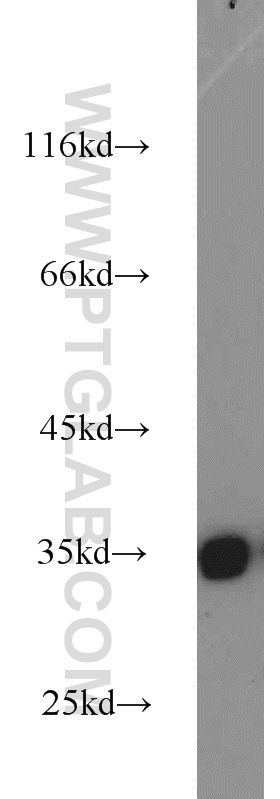
验证数据展示
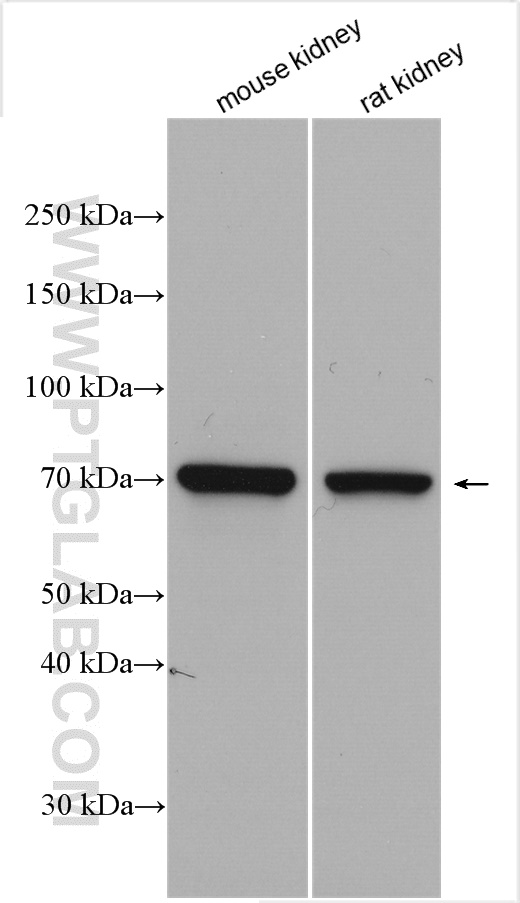
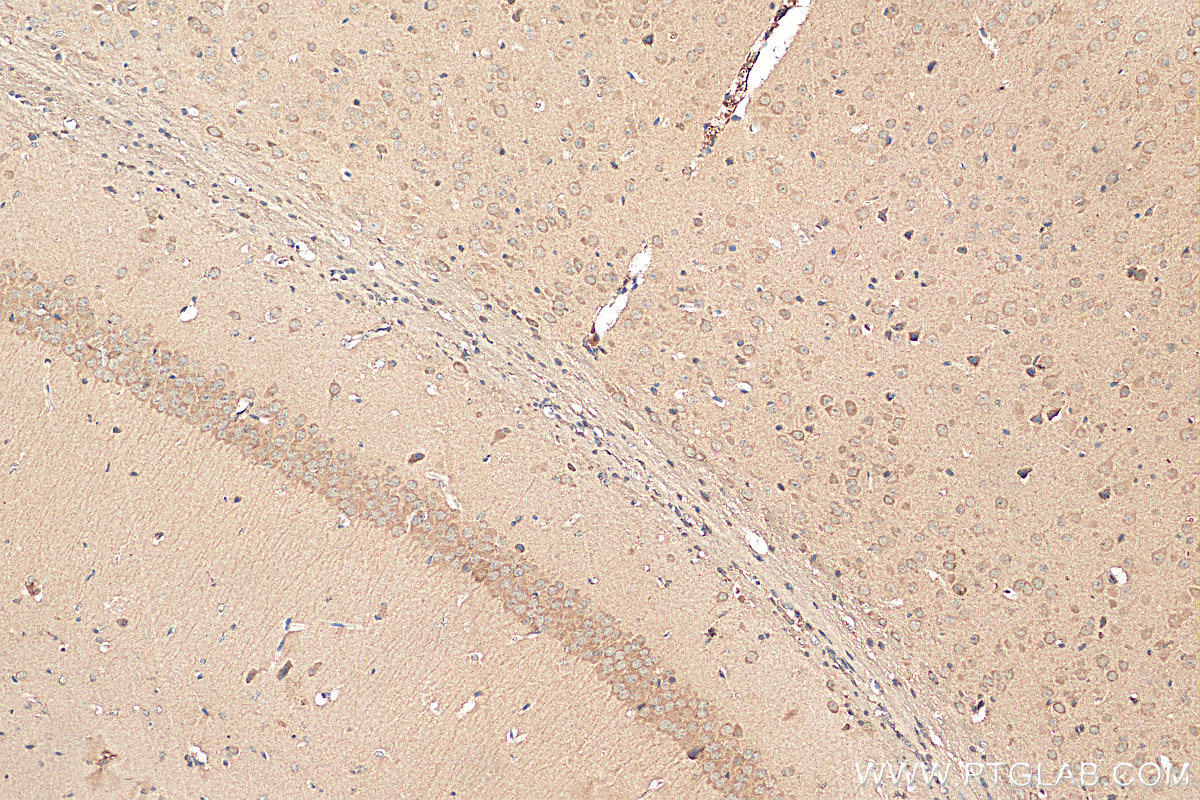
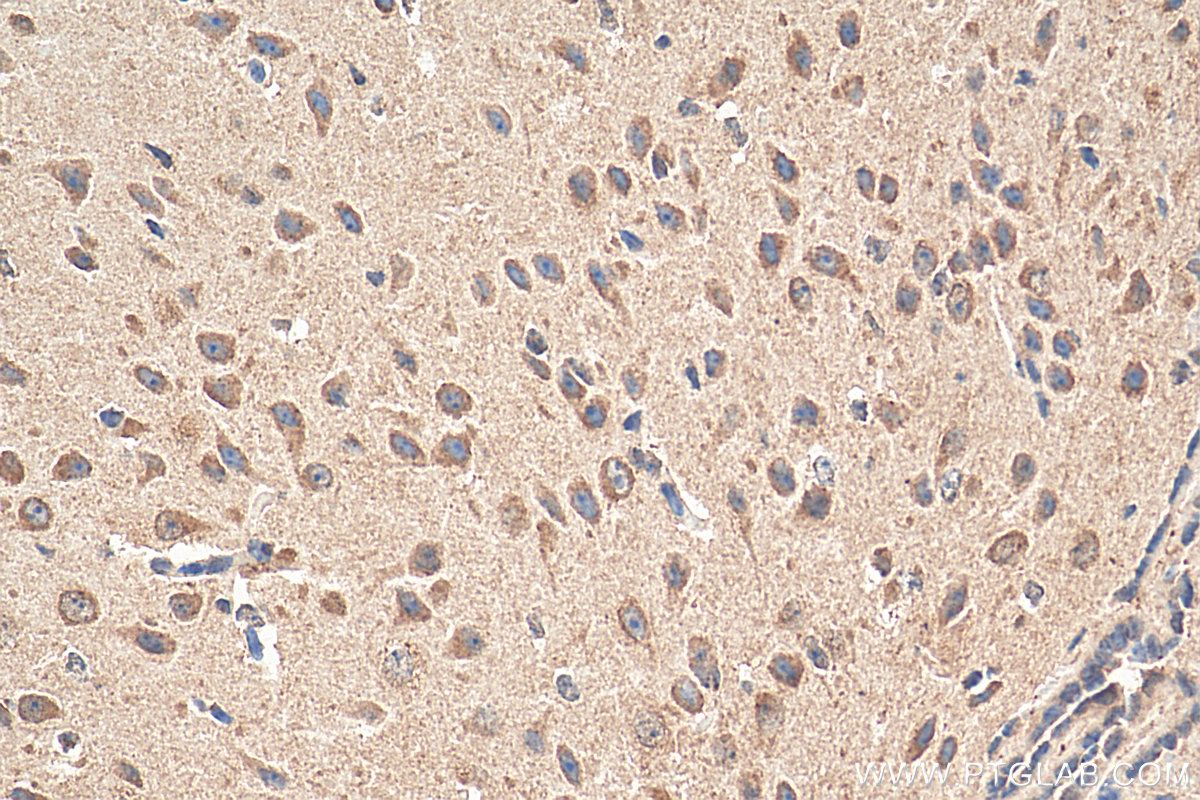
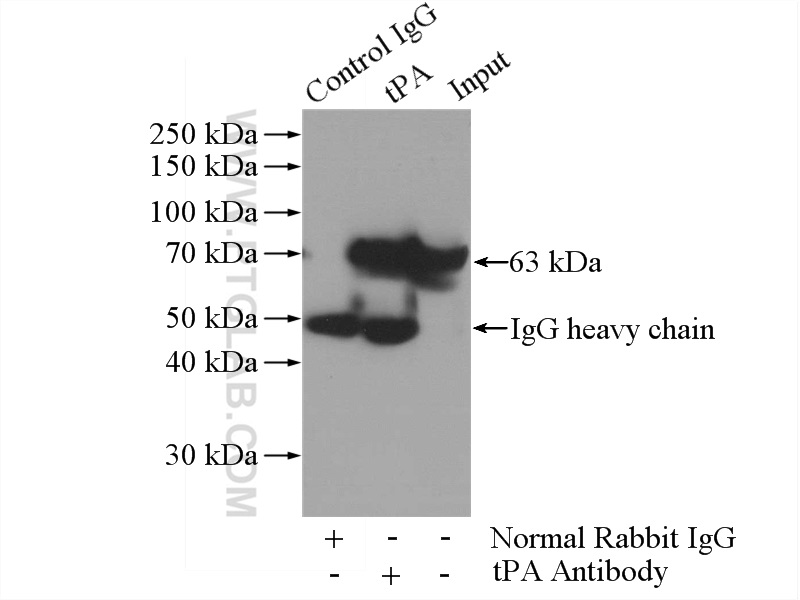
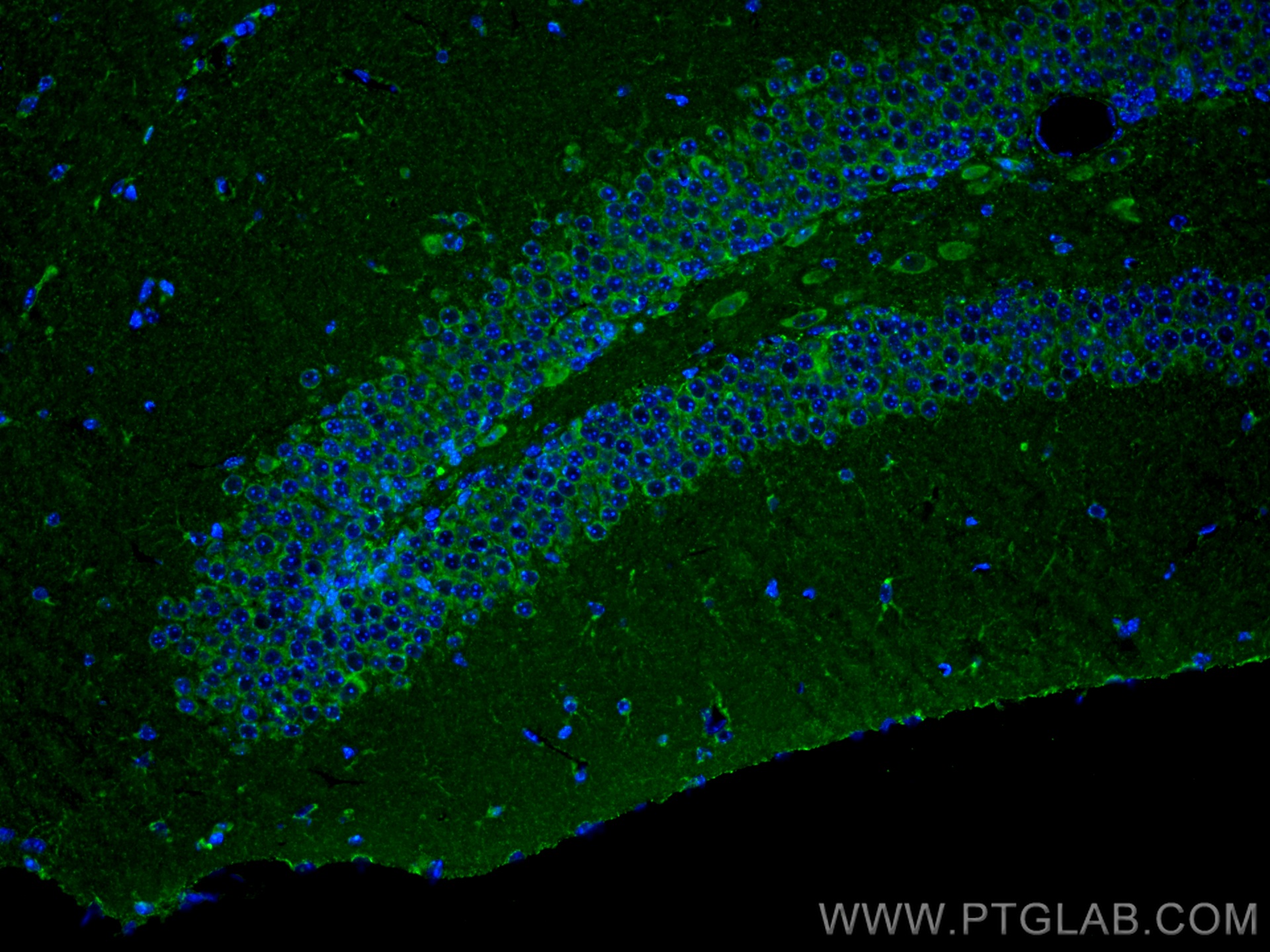
经过测试的应用
| Positive WB detected in | mouse kidney tissue, mouse pancreas tissue, rat kidney tissue |
| Positive IP detected in | mouse kidney tissue |
| Positive IHC detected in | mouse brain tissue Note: suggested antigen retrieval with TE buffer pH 9.0; (*) Alternatively, antigen retrieval may be performed with citrate buffer pH 6.0 |
| Positive IF-P detected in | mouse brain tissue |
推荐稀释比
| 应用 | 推荐稀释比 |
|---|---|
| Western Blot (WB) | WB : 1:500-1:3000 |
| Immunoprecipitation (IP) | IP : 0.5-4.0 ug for 1.0-3.0 mg of total protein lysate |
| Immunohistochemistry (IHC) | IHC : 1:50-1:500 |
| Immunofluorescence (IF)-P | IF-P : 1:50-1:500 |
| It is recommended that this reagent should be titrated in each testing system to obtain optimal results. | |
| Sample-dependent, Check data in validation data gallery. | |
产品信息
10147-1-AP targets t-Plasminogen activator/tPA in WB, IHC, IF-P, IP, ELISA applications and shows reactivity with human, mouse, rat samples.
| 经测试应用 | WB, IHC, IF-P, IP, ELISA Application Description |
| 文献引用应用 | WB, IHC, IF |
| 经测试反应性 | human, mouse, rat |
| 文献引用反应性 | human, mouse, rat |
| 免疫原 |
CatNo: Ag0200 Product name: Recombinant human PLAT protein Source: e coli.-derived, PGEX-4T Tag: GST Domain: 359-516 aa of BC002795 Sequence: NDIALLQLKSDSSRCAQESSVVRTVCLPPADLQLPDWTECELSGYGKHEALSPFYSERLKEAHVRLYPSSRCTSQHLLNRTVTDNMLCAGDTRSGGPQANLHDACQGDSGGPLVCLNDGRMTLVGIISWGLGCGQKDVPGVYTKVTNYLDWIRDNMRP 种属同源性预测 |
| 宿主/亚型 | Rabbit / IgG |
| 抗体类别 | Polyclonal |
| 产品类型 | Antibody |
| 全称 | plasminogen activator, tissue |
| 别名 | PLAT, tPA, Alteplase, AlteplaseReteplase, EC:3.4.21.68 |
| 计算分子量 | 57 kDa |
| 观测分子量 | 32-35 kDa, 65 kDa |
| GenBank蛋白编号 | BC002795 |
| 基因名称 | tPA |
| Gene ID (NCBI) | 5327 |
| RRID | AB_2299701 |
| 偶联类型 | Unconjugated |
| 形式 | Liquid |
| 纯化方式 | Antigen affinity purification |
| UNIPROT ID | P00750 |
| 储存缓冲液 | PBS with 0.02% sodium azide and 50% glycerol, pH 7.3. |
| 储存条件 | Store at -20°C. Stable for one year after shipment. Aliquoting is unnecessary for -20oC storage. |
背景介绍
Plasminogen activator, tissue (PLAT, synonyms: TPA, T-PA) is a tissue-type plasminogen activator, a secreted serine protease which converts the proenzyme plasminogen to plasmin, a fibrinolytic enzyme. Tissue-type plasminogen activator is synthesized as a single chain which is cleaved by plasmin to a two chain disulfide linked protein (33 kDa and 32 kDa). PLAT enzyme plays a role in cell migration and tissue remodeling. Increased enzymatic activity causes hyperfibrinolysis, which manifests as excessive bleeding; decreased activity leads to hypofibrinolysis which can result in thrombosis or embolism. tPA has 4 isoforms produced by alternative splicing with the MW of 63 kDa, 33 kDa, 57 kDa and 44 kDa.
实验方案
| Product Specific Protocols | |
|---|---|
| IF protocol for t-Plasminogen activator/tPA antibody 10147-1-AP | Download protocol |
| IHC protocol for t-Plasminogen activator/tPA antibody 10147-1-AP | Download protocol |
| IP protocol for t-Plasminogen activator/tPA antibody 10147-1-AP | Download protocol |
| WB protocol for t-Plasminogen activator/tPA antibody 10147-1-AP | Download protocol |
| Standard Protocols | |
|---|---|
| Click here to view our Standard Protocols |
发表文章
| Species | Application | Title |
|---|---|---|
Mol Cancer Single-cell multi-omics reveals that FABP1 + renal cell carcinoma drive tumor angiogenesis through the PLG-PLAT axis under fatty acid reprogramming
| ||
Cell Metab Astrocytic LRP1 enables mitochondria transfer to neurons and mitigates brain ischemic stroke by suppressing ARF1 lactylation | ||
Cell Stem Cell Fully biologic endothelialized-tissue-engineered vascular conduits provide antithrombotic function and graft patency | ||
ACS Nano Nonswellable Hydrogel Patch with Tissue-Mimetic Mechanical Characteristics Remodeling In Vivo Microenvironment for Effective Adhesion Prevention | ||
Redox Biol FUNDC1-dependent mitophagy induced by tPA protects neurons against cerebral ischemia-reperfusion injury.
| ||
Adv Sci (Weinh) Disruption of the Clock Component Bmal1 in Mice Promotes Cancer Metastasis through the PAI-1-TGF-β-myoCAF-Dependent Mechanism |