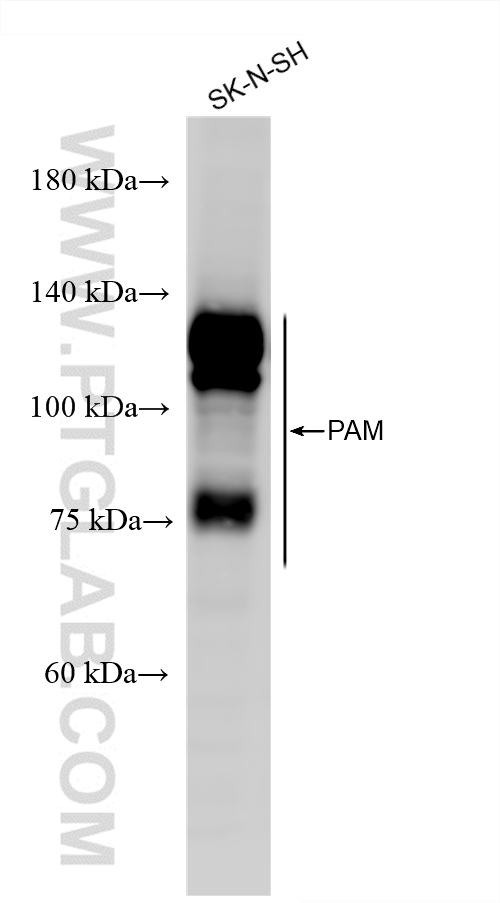
验证数据展示
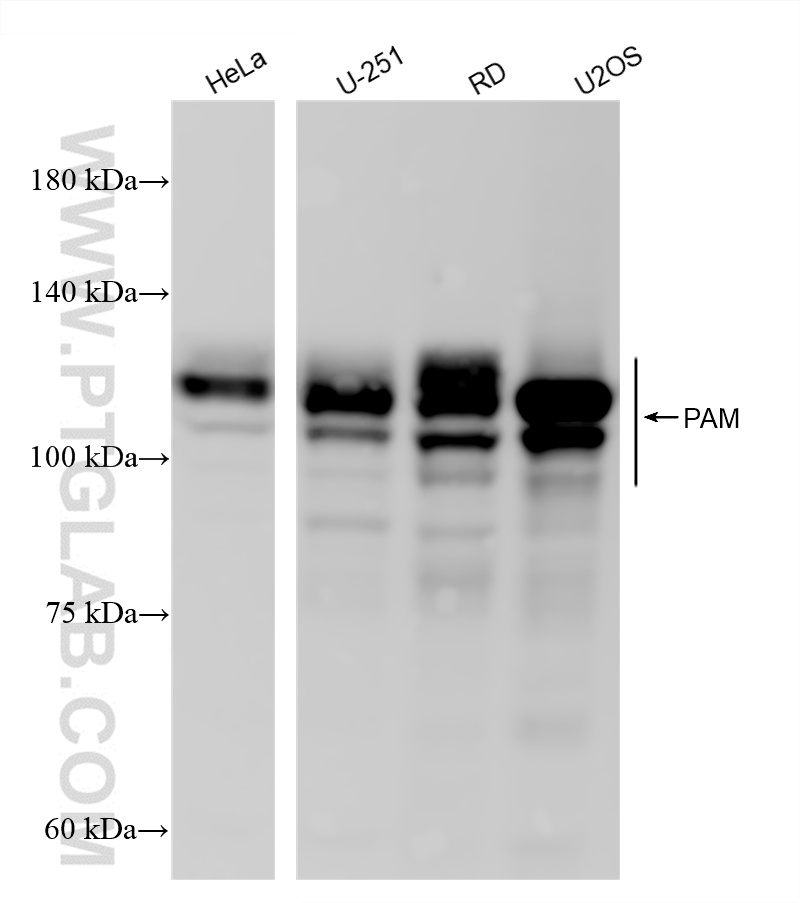
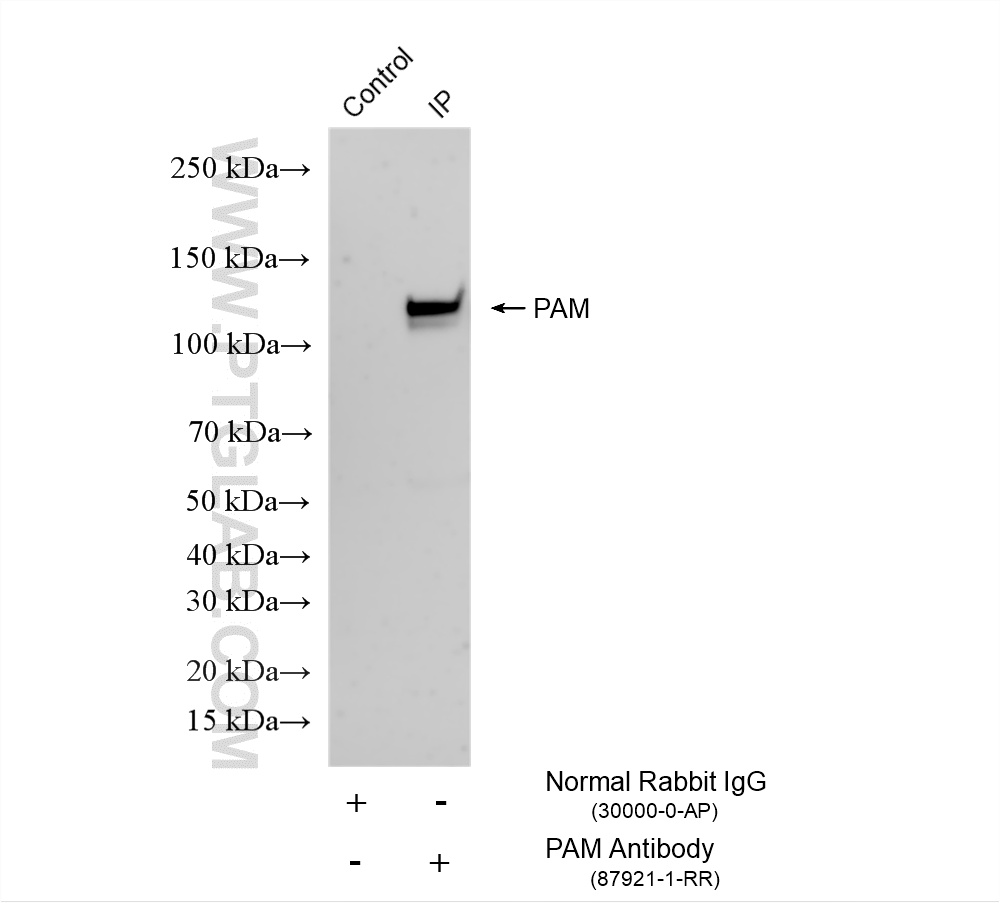
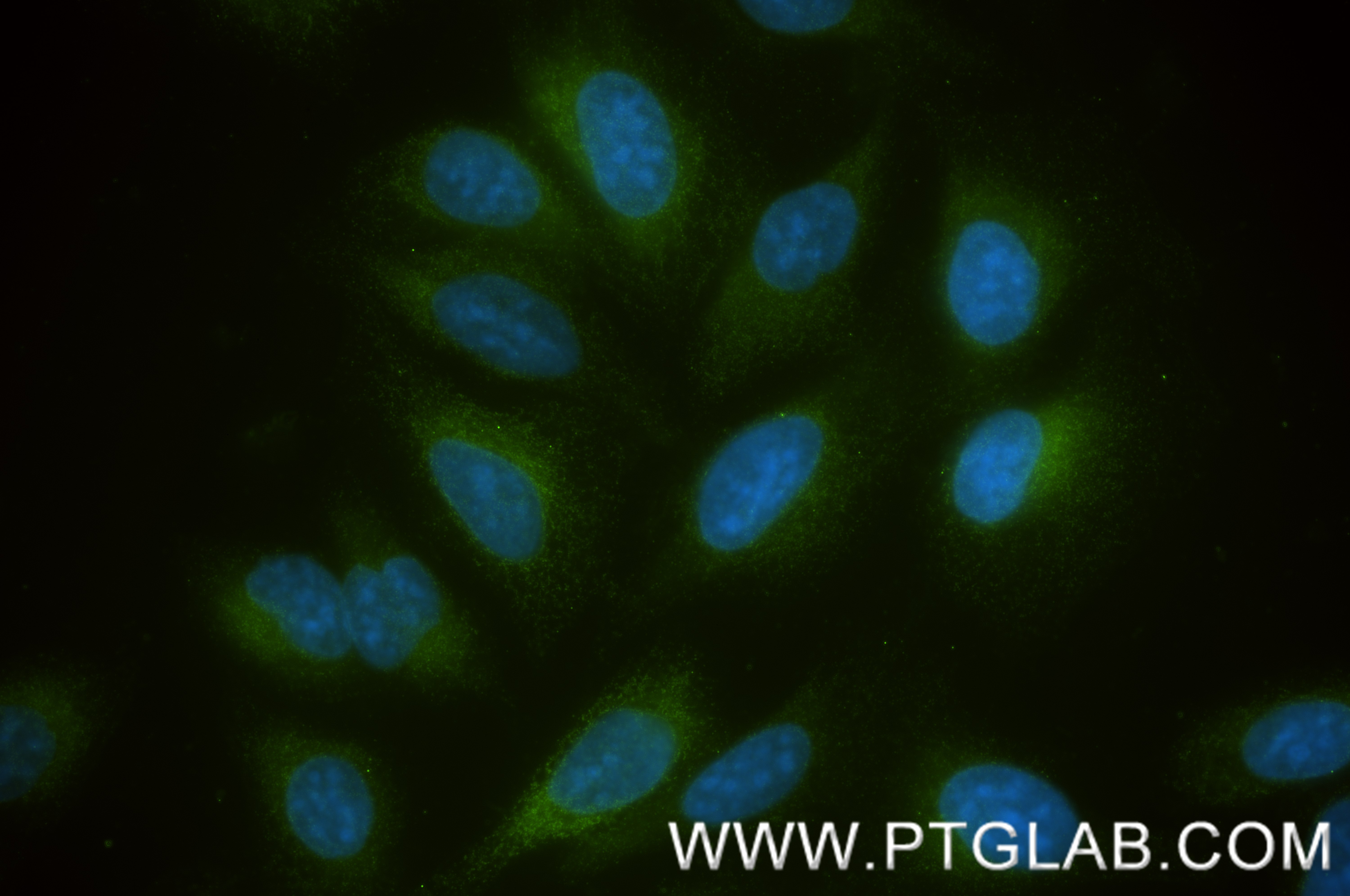
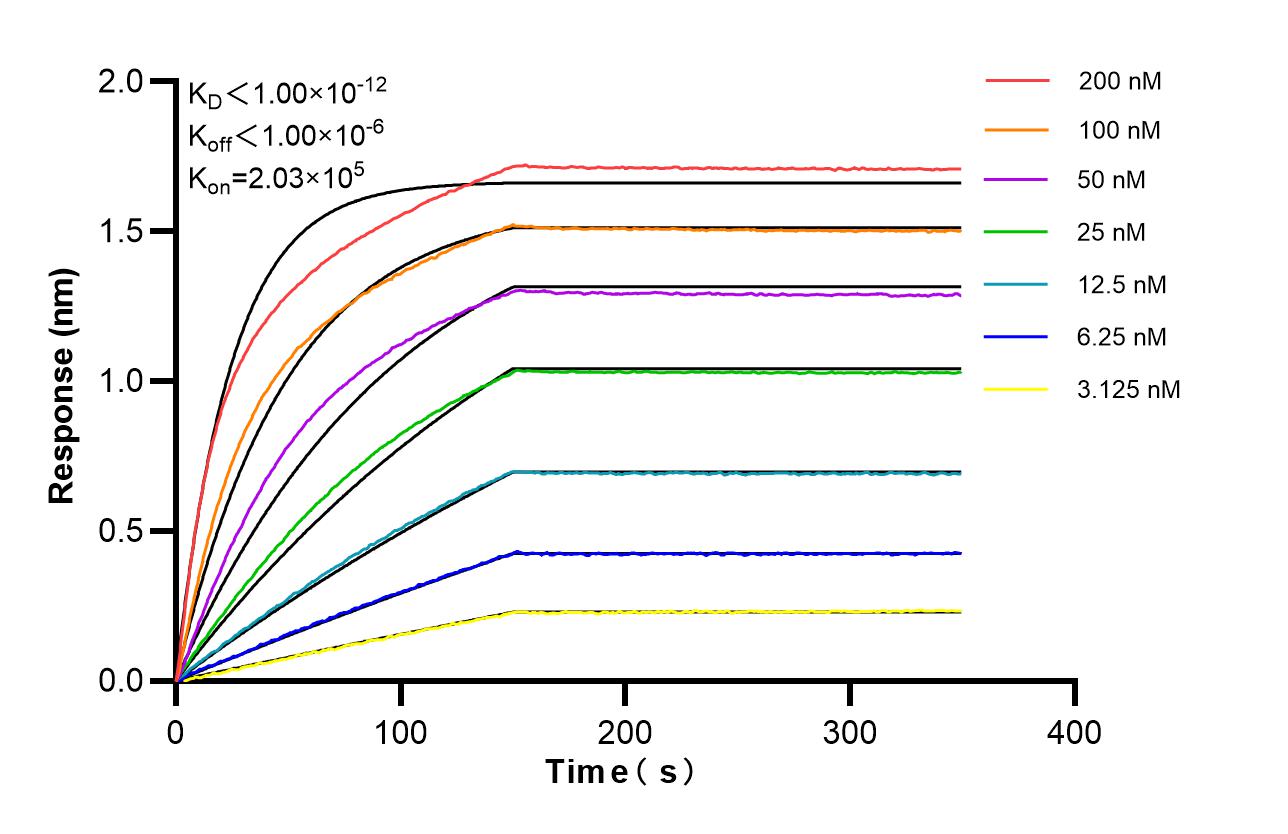
产品信息
87921-1-PBS targets PAM in WB, IF/ICC, IP, Indirect ELISA applications and shows reactivity with human samples.
| 经测试应用 | WB, IF/ICC, IP, Indirect ELISA Application Description |
| 经测试反应性 | human |
| 免疫原 |
CatNo: Eg5194 Product name: Recombinant human PAM protein Source: mammalian cells-derived, pHZ-KIsec-C-rFc Tag: C-rFc Domain: 21-494 aa of NM_001177306.2 Sequence: FRSPLSVFKRFKETTRPFSNECLGTTRPVVPIDSSDFALDIRMPGVTPKQSDTYFCMSMRIPVDEEAFVIDFKPRASMDTVHHMLLFGCNMPSSTGSYWFCDEGTCTDKANILYAWARNAPPTRLPKGVGFRVGGETGSKYFVLQVHYGDISAFRDNNKDCSGVSLHLTRLPQPLIAGMYLMMSVDTVIPAGEKVVNSDISCHYKNYPMHVFAYRVHTHHLGKVVSGYRVRNGQWTLIGRQSPQLPQAFYPVGHPVDVSFGDLLAARCVFTGEGRTEATHIGGTSSDEMCNLYIMYYMEAKHAVSFMTCTQNVAPDMFRTIPPEANIPIPVKSDMVMMHEHHKETEYKDKIPLLQQPKREEEEVLDQGDFYSLLSKLLGEREDVVHVHKYNPTEKAESESDLVAEIANVVQKKDLGRSDAREGAEHERGNAILVRDRIHKFHRLVSTLRPPESRVFSLQQPPPGEGTWEPEHTG 种属同源性预测 |
| 宿主/亚型 | Rabbit / IgG |
| 抗体类别 | Recombinant |
| 产品类型 | Antibody |
| 全称 | peptidylglycine alpha-amidating monooxygenase |
| 别名 | PAL, PAM-1, Peptidyl-alpha-hydroxyglycine alpha-amidating lyase, Peptidyl-glycine alpha-amidating monooxygenase, Peptidylglycine alpha-hydroxylating monooxygenase |
| 计算分子量 | 108 kDa |
| 观测分子量 | 75 kDa and 105-120 kDa |
| GenBank蛋白编号 | NM_001177306.2 |
| 基因名称 | PAM |
| Gene ID (NCBI) | 5066 |
| RRID | AB_3745828 |
| 偶联类型 | Unconjugated |
| 形式 | Liquid |
| 纯化方式 | Protein A purification |
| UNIPROT ID | P19021-1 |
| 储存缓冲液 | PBS only, pH 7.3. |
| 储存条件 | Store at -80°C. The product is shipped with ice packs. Upon receipt, store it immediately at -80°C |
背景介绍
Peptidyl-glycine alpha-amidating monooxygenase (PAM) is a bifunctional type I membrane protein essential for neuropeptide maturation. It catalyzes the C-terminal amidation of peptides via two sequential enzymatic domains: peptidylglycine α-hydroxylating monooxygenase (PHM, ~44-46 kDa) and peptidyl-α-hydroxyglycine α-amidating lyase (PAL, ~50 kDa), which together convert glycine-extended precursors into bioactive amidated peptides. PAM undergoes alternative splicing, generating integral membrane isoforms such as PAM-1 (~120 kDa) and PAM-2 (~105 kDa). Endoproteolytic cleavage produces soluble monofunctional PHM and PAL, as well as a bifunctional ~75 kDa fragment. The cleaved cytosolic domain (sfCD, ~16 kDa) can translocate to the nucleus, influencing gene expression. PAM also supports angiogenesis and tumor progression, notably in glioblastoma, highlighting its therapeutic potential (PMID: 8436961; PMID: 32054826).