验证数据展示
产品信息
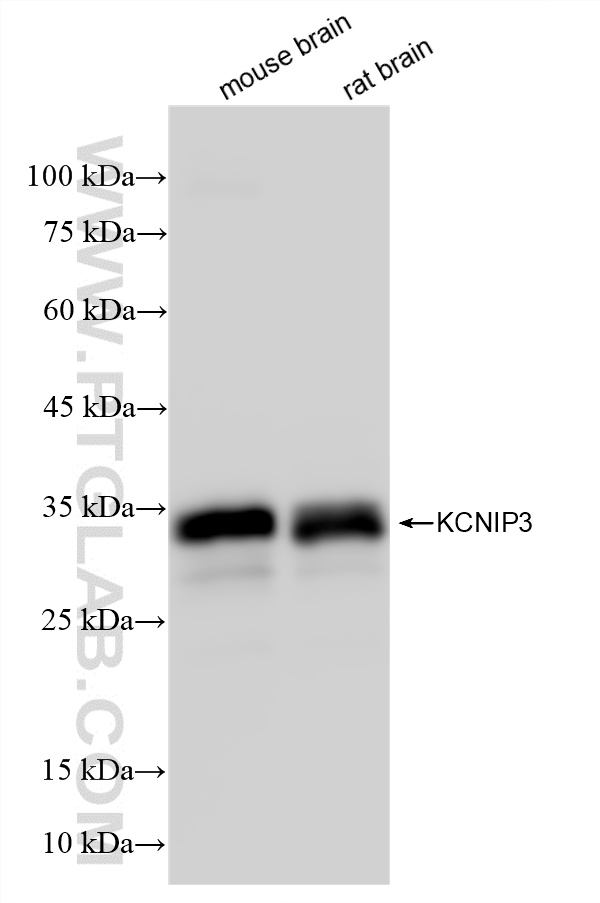
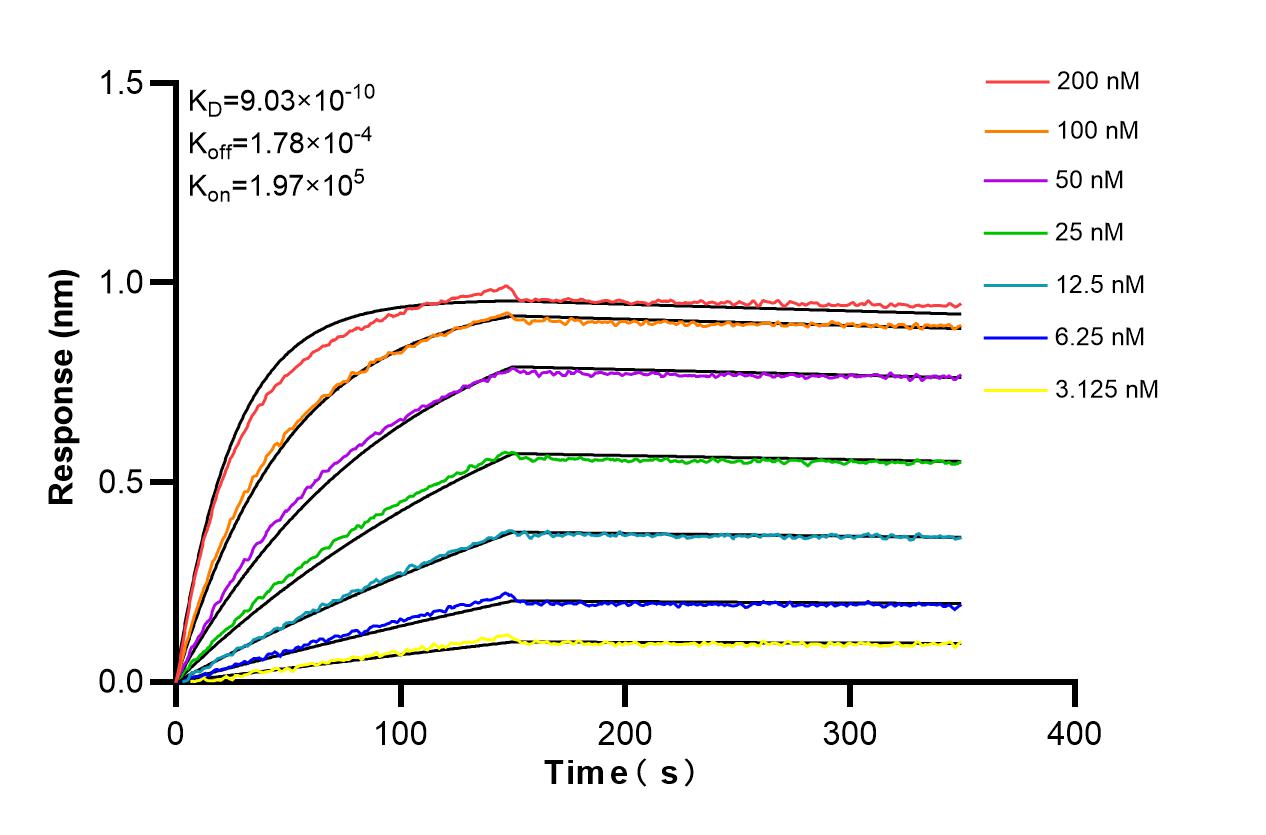
86579-1-PBS targets KCNIP3 in WB, Indirect ELISA applications and shows reactivity with human, mouse, rat, pig samples.
| 经测试应用 | WB, Indirect ELISA Application Description |
| 经测试反应性 | human, mouse, rat, pig |
| 免疫原 |
CatNo: Ag2665 Product name: Recombinant human KCNIP3 protein Source: e coli.-derived, PGEX-4T Tag: GST Domain: 1-256 aa of BC012850 Sequence: MQPAKEVTKASDGSLLGDLGHTPLSKKEGIKWQRPRLSRQALMRCCLVKWILSSTAPQGSDSSDSELELSTVRHQPEGLDQLQAQTKFTKKELQSLYRGFKNECPTGLVDEDTFKLIYAQFFPQGDATTYAHFLFNAFDADGNGAIHFEDFVVGLSILLRGTVHEKLKWAFNLYDINKDGYITKEEMLAIMKSIYDMMGRHTYPILREDAPAEHVERFFEKMDRNQDGVVTIEEFLEACQKDENIMSSMQLFENVI 种属同源性预测 |
| 宿主/亚型 | Rabbit / IgG |
| 抗体类别 | Recombinant |
| 产品类型 | Antibody |
| 全称 | Kv channel interacting protein 3, calsenilin |
| 别名 | A-type potassium channel modulatory protein 3, Calsenilin, DRE-antagonist modulator, Kv channel-interacting protein 3 |
| 计算分子量 | 256 aa, 29 kDa |
| 观测分子量 | 29 kDa |
| GenBank蛋白编号 | BC012850 |
| 基因名称 | KCNIP3 |
| Gene ID (NCBI) | 30818 |
| RRID | AB_3744978 |
| 偶联类型 | Unconjugated |
| 形式 | Liquid |
| 纯化方式 | Protein A purification |
| UNIPROT ID | Q9Y2W7 |
| 储存缓冲液 | PBS only, pH 7.3. |
| 储存条件 | Store at -80°C. The product is shipped with ice packs. Upon receipt, store it immediately at -80°C |
背景介绍
KCNIP3 also known as Calsenilin, CSEN, DREAM, or KCHIP3, is a protein-coding gene located on human chromosome 2q11.1 . It encodes a small calcium-binding protein belonging to the recoverin branch of the EF-hand superfamily. KCNIP3 is an integral subunit of native Kv4 channel complexes, regulating A-type potassium currents in response to intracellular calcium changes, thereby modulating neuronal excitability. KCNIP3 interacts with presenilin 1 (PSEN1) and presenilin 2 (PSEN2), influencing γ-secretase activity and β-amyloid formation, potentially linking it to Alzheimer's disease pathology.