验证数据展示

产品信息
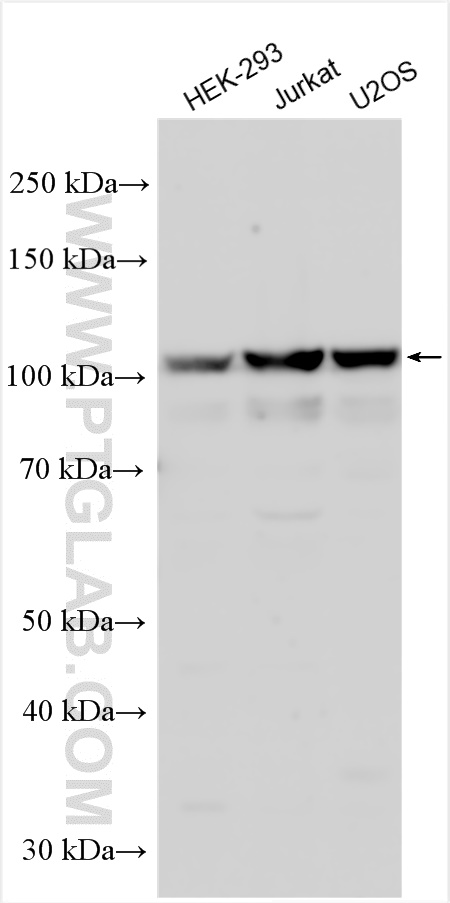
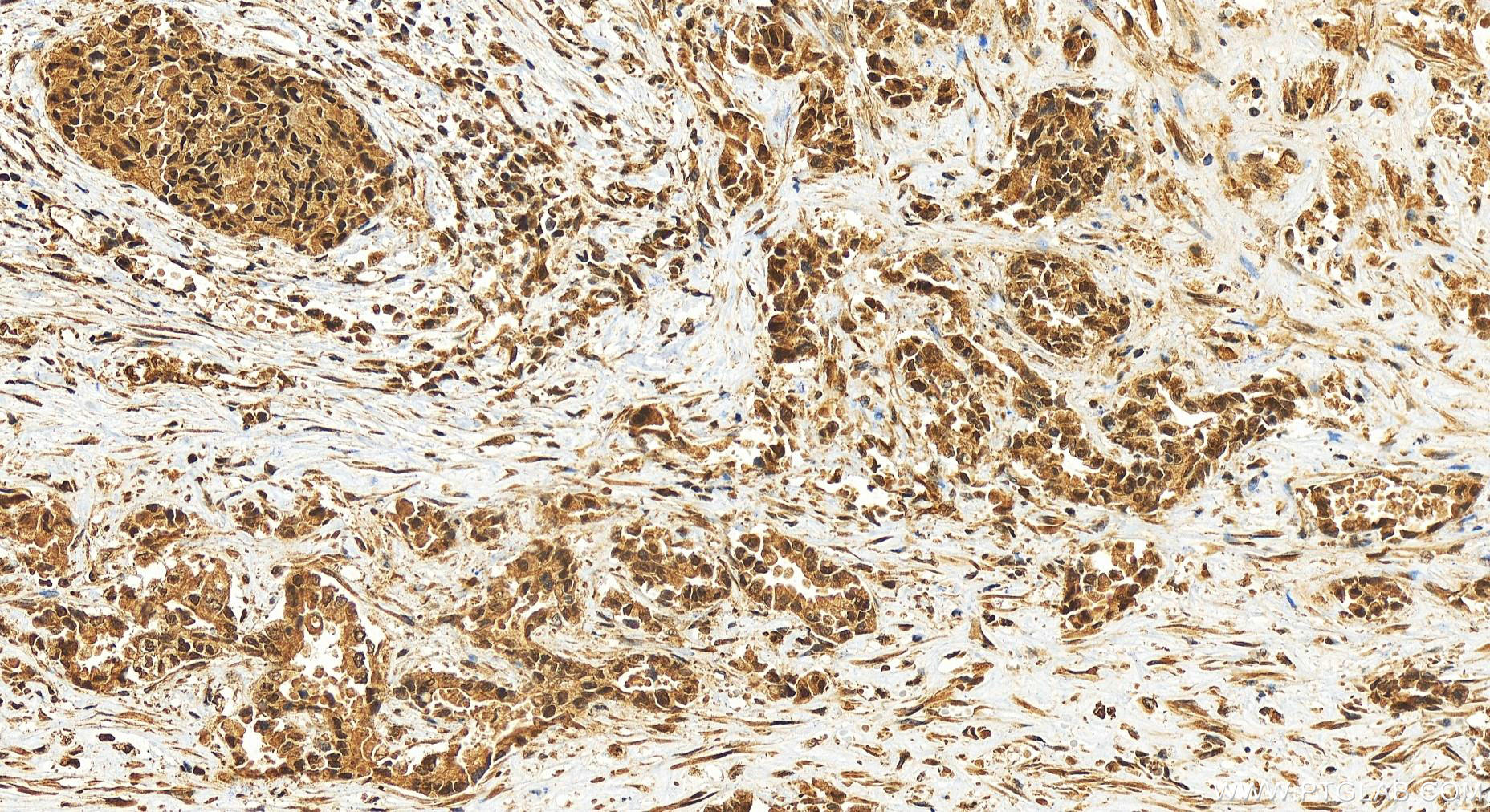
25533-1-PBS targets KANSL3 in WB, IHC, Indirect ELISA applications and shows reactivity with human samples.
| 经测试应用 | WB, IHC, Indirect ELISA Application Description |
| 经测试反应性 | human |
| 免疫原 |
CatNo: Ag22117 Product name: Recombinant human KIAA1310 protein Source: e coli.-derived, PET30a Tag: 6*His Domain: 530-878 aa of BC063792 Sequence: LSSVSSSPTSSPKTKVTTVTSAQKSSQIGSSQLLKRHVQRTEAVLTHKQAQVPISSEPPEEGEKEDLRVQLKRHHPSSPLPGSKTSKRPKIKVSLISQGDTAGGPCAPSQGSAPEAAGGKPITMTLGQASAGAKELTGLLTTAKSSSSEGGVSASPVPSVVSSSTAPSALHTLQSRLVATSPGSSLPGATSASSLLQGLSFSLQDISSKTSGLPANPSPGPAPQATSVKLPTPMQSLGAITTGTSTIVRTIPVATTLSSLGATPGGKPTAIHQLLTNGGLAKLASSLPGLAQISNQASGLKVPTTITLTLRGQPSRITTLSPMGSGAAPSEESSSQVLPSSSQRLPPAP 种属同源性预测 |
| 宿主/亚型 | Rabbit / IgG |
| 抗体类别 | Polyclonal |
| 产品类型 | Antibody |
| 全称 | KIAA1310 |
| 别名 | KIAA1310, KAT8 regulatory NSL complex subunit 3, PRTD, NSL3, NSL complex protein NSL3 |
| 计算分子量 | 878 aa, 93 kDa |
| 观测分子量 | 105 kDa |
| GenBank蛋白编号 | BC063792 |
| 基因名称 | KANSL3 |
| Gene ID (NCBI) | 55683 |
| RRID | AB_3085802 |
| 偶联类型 | Unconjugated |
| 形式 | Liquid |
| 纯化方式 | Antigen affinity purification |
| UNIPROT ID | Q9P2N6 |
| 储存缓冲液 | PBS only, pH 7.3. |
| 储存条件 | Store at -80°C. The product is shipped with ice packs. Upon receipt, store it immediately at -80°C |
背景介绍
KANSL3, or KAT8-associated nonspecific lethal complex subunit 3, is a component of the KANSL complex, which is an important chromatin modifier in higher animals. This complex plays a crucial role in regulating housekeeping genes and is highly conserved across species. KANSL3, along with other KANSL complex members, is essential for cell division and has been shown to interact robustly both in vitro and in vivo. KANSL3 has been found to have a dual role in cellular function. In interphase, KANSL3 is chromatin-bound and regulates the expression of housekeeping genes. During mitosis, KANSL3 relocates to the mitotic spindle and is important for cell division. It has been identified as a microtubule minus-end-binding protein, which is a novel function for a chromatin-binding complex. KANSL3's ability to bind directly to microtubule minus ends is significant, as very few proteins are known to perform this function.