Recombinant Human TNFSF11/RANKL protein (His Tag)
种属
Human
纯度
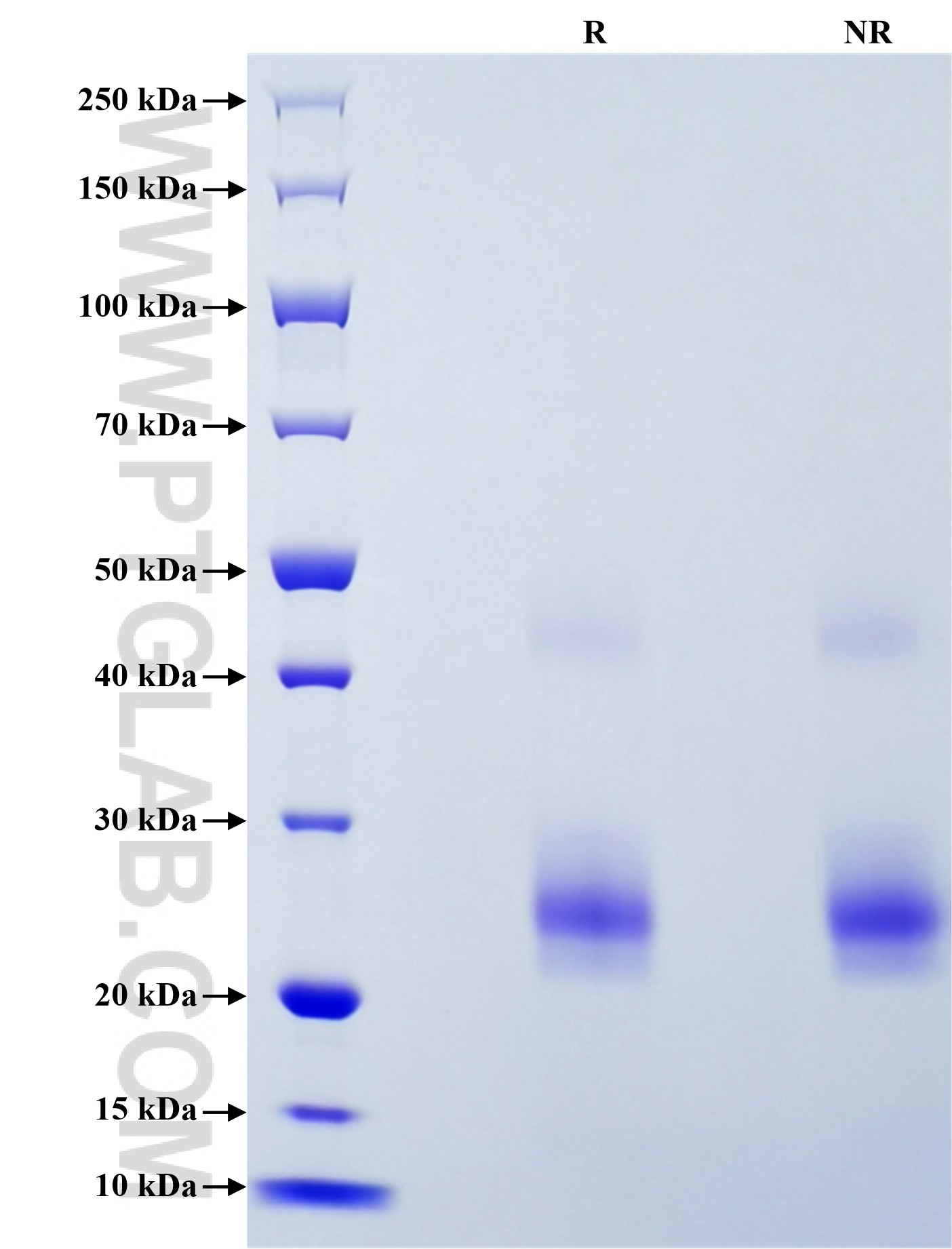
>90 %, SDS-PAGE
标签
His Tag
生物活性
未测试
验证数据展示
产品信息
| 纯度 | >90 %, SDS-PAGE |
| 内毒素 | <0.1 EU/μg protein, LAL method |
| 生物活性 |
Not tested |
| 来源 | CHO-derived Human TNFSF11 protein Gly64-Asp245 (Accession# AAC51762.1) with a His tag at the N-terminus. |
| 基因ID | 8600 |
| 蛋白编号 | AAC51762.1 |
| 预测分子量 | 21.3 kDa |
| SDS-PAGE | 22-27 kDa, reducing (R) conditions |
| 组分 | Lyophilized from 0.22 μm filtered solution in PBS, pH 7.4. Normally 5% trehalose and 5% mannitol are added as protectants before lyophilization. |
| 复溶 | Briefly centrifuge the tube before opening. Reconstitute at 0.1-0.5 mg/mL in sterile water. |
| 储存条件 |
It is recommended that the protein be aliquoted for optimal storage. Avoid repeated freeze-thaw cycles.
|
| 运输条件 | The product is shipped at ambient temperature. Upon receipt, store it immediately at the recommended temperature. |
背景信息
TNFSF11 also known as RANKL, is a member of the tumor necrosis factor (TNF) cytokine family which is a ligand for osteoprotegerin and functions as a key factor for osteoclast differentiation and activation. RANKL is produced by a diverse set of lineage-specific cells and is involved in a wide variety of physiological processes that include skeletal remodeling, lymph node organogenesis, mammary gland development, and thermal regulation. RANKL was shown to be a dentritic cell survival factor and is involved in the regulation of T cell-dependent immune response. The deficient mice exhibited defects in early differentiation of T and B lymphocytes, and failed to form lobulo-alveolar mammary structures during pregnancy.
参考文献:
1.GiulianiN.etal.(2004)ExpHematol.32(8):685-91.
2.HanadaR.etal.(2011)JMolMed(Berl).89(7):647-56.
3.OnalM.etal.(2015)JBoneMinerRes.30(5):855-68.
4.DanksL.etal.(2016)AnnRheumDis.75(6):1187-95.