Recombinant Human PSG2 protein (rFc Tag)
种属
Human
纯度
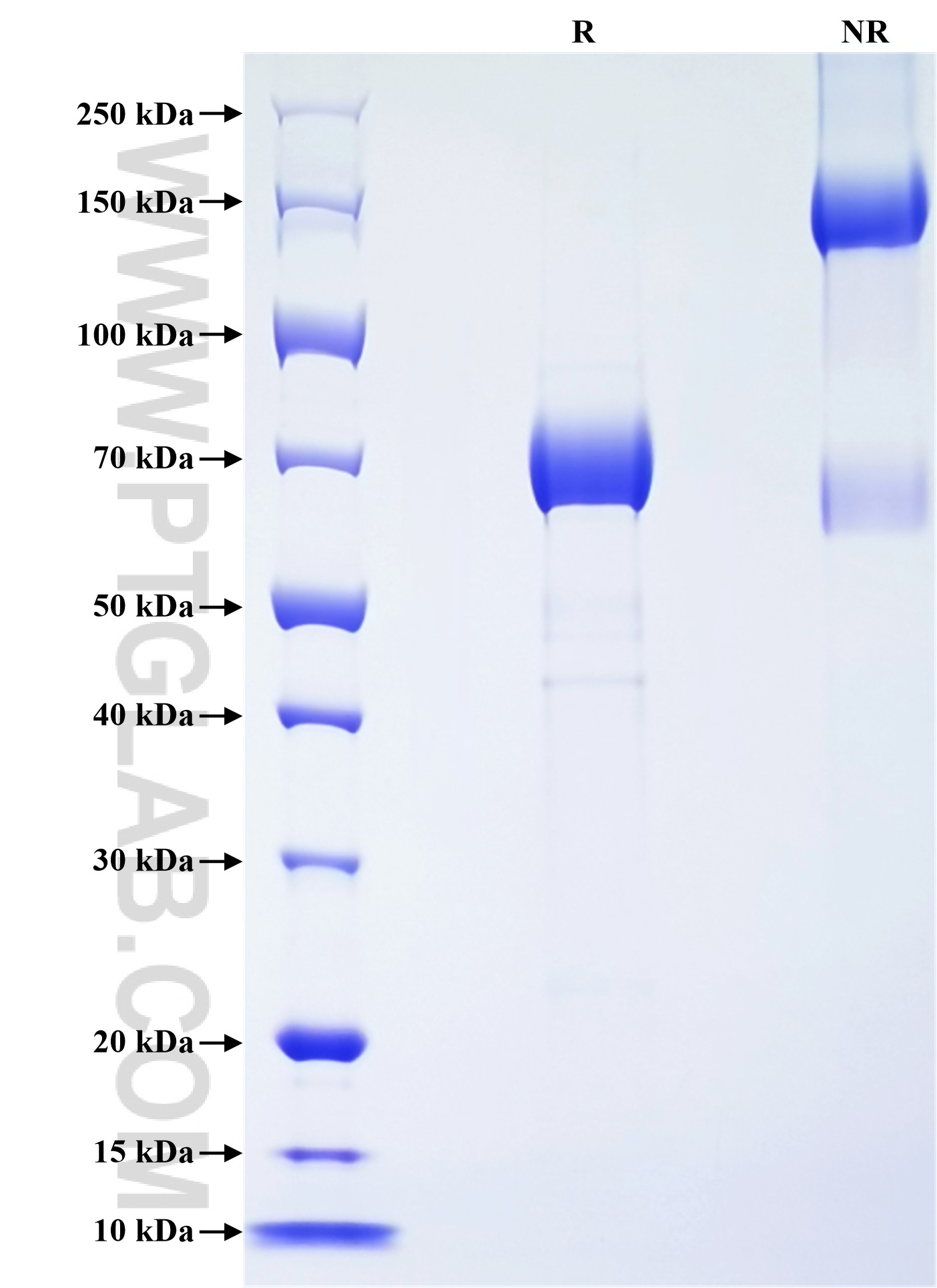
>90 %, SDS-PAGE
标签
rFc Tag
生物活性
未测试
验证数据展示
产品信息
| 纯度 | >90 %, SDS-PAGE |
| 内毒素 | <0.1 EU/μg protein, LAL method |
| 生物活性 |
Not tested |
| 来源 | HEK293-derived Human PSG2 protein Gln35-Thr335 (Accession# P11465) with a rabbit IgG Fc tag at the C-terminus. |
| 基因ID | 5670 |
| 蛋白编号 | P11465 |
| 预测分子量 | 59.1 kDa |
| SDS-PAGE | 63-80 kDa, reducing (R) conditions |
| 组分 | Lyophilized from 0.22 μm filtered solution in PBS, pH 7.4. Normally 5% trehalose and 5% mannitol are added as protectants before lyophilization. |
| 复溶 | Briefly centrifuge the tube before opening. Reconstitute at 0.1-0.5 mg/mL in sterile water. |
| 储存条件 |
It is recommended that the protein be aliquoted for optimal storage. Avoid repeated freeze-thaw cycles.
|
| 运输条件 | The product is shipped at ambient temperature. Upon receipt, store it immediately at the recommended temperature. |
背景信息
Pregnancy-specific β1-glycoproteins (PSGs) are predominant proteins synthesized during gestation in humans, primates and rodents. In humans, PSGs are mainly secreted by syncytiotrophoblasts, while in rodents they derive from trophoblast giant cells and spongiotrophoblasts. Moreover, PSGs can serve as indicators for blastocyst quality and embryonic viability.
参考文献:
1. Zhou, G Q, and S Hammarström. Biology of reproduction vol. 64,1 (2001): 90-9.
2. Zhou, G Q et al. Placenta vol. 18,7 (1997): 491-501.
3. Sinosich, M J et al. Annals of the New York Academy of Sciences vol. 442 (1985): 440-4.