Human MCP-1/CCL2 ELISA Kit
Validation Data Gallery
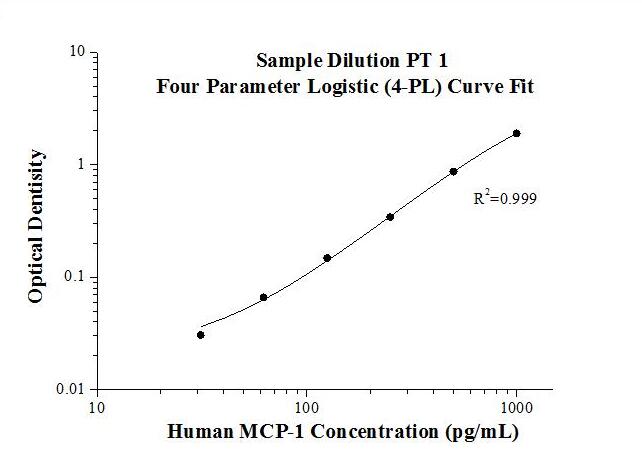
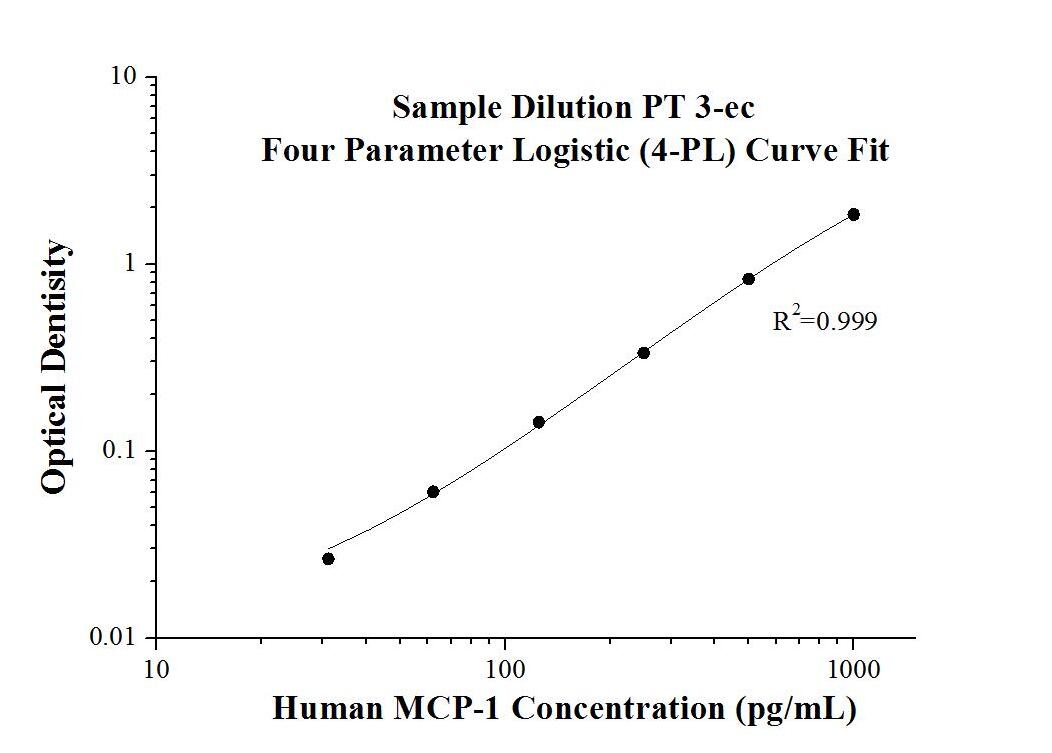
Product Information
KE00091 is a solid phase sandwich Enzyme Linked-Immuno-Sorbent Assay (Sandwich ELISA). The MCP-1 ELISA kit is to be used to detect and quantify protein levels of endogenous MCP-1. The assay recognizes human MCP-1. A monoclonal antibody specific for MCP-1 has been pre-coated onto the microwells. The MCP-1 protein in samples is captured by the coated antibody after incubation. Following extensive washing, a monoclonal antibody of biotinylated specific for MCP-1 is added to detect the captured MCP-1 protein. For signal development, Streptavidin-HRP is added, followed by Tetramethyl-benzidine (TMB) reagent. Solution containing sulfuric acid is used to stop color development and the color intensity which is proportional to the quantity of bound protein is measurable at 450 nm with the correction wavelength set at 630 nm.
| Product name | Human MCP-1/CCL2 ELISA Kit |
| Tests | 1 X 96 well plate |
| Sample type | Serum, Plasma, Cell culture supernatants 备注:对未验证样本,我们提供技术支持和售后保障。 |
| Assay type | Sandwich |
| Sensitivity | 6.9 pg/mL |
| Range | 31.25-1000 pg/mL |
| Reactivity | Human |
| Tested applications | Sandwich ELISA |
| Gene ID (NCBI) | 6347 |
Recovery
| Sample Type | Average | Range |
|---|---|---|
| Human plasma | 90% | 82%-103% |
| Cell culture supernatants | 102% | 84%-121% |
IntraAssay
| Sample | n | mean ( pg/mL) | SD | CV% |
|---|---|---|---|---|
| 1 | 20 | 1,099.5 | 27.9 | 2.5 |
| 2 | 20 | 295.1 | 16.7 | 5.7 |
| 3 | 20 | 42.5 | 3.9 | 9.4 |
InterAssay
| Sample | n | mean ( pg/mL) | SD | CV% |
|---|---|---|---|---|
| 1 | 24 | 1,075.1 | 41.0 | 3.8 |
| 2 | 24 | 259.8 | 19.3 | 7.4 |
| 3 | 24 | 40.3 | 3.6 | 9.0 |
Background Information
Monocyte chemotactic protein 1 (MCP1; also known as CCL2), is a chemokine that can be expressed in monocytes, macrophages, and endothelial cells, and belongs to the CC subfamily of chemokines. Chemokines are a superfamily of secreted proteins involved in immunoregulatory and inflammatory processes. Research has shown that the expression of MCP1 increases in the serum of patients with acute myocarditis. MCP1 is up-regulated in many types of CNS injury, including ischemia, hemorrhage, trauma, infection, hypoxia, and peripheral nerve axotomy. MCP1 has also been implicated in the pathogenesis of diseases characterized by monocytic infiltrates, such as psoriasis, rheumatoid arthritis, and atherosclerosis.
Properties
| Storage Instructions | All the reagents are stored at 2-8℃ for 6 months or -20℃ for 12 months. Refer to the protocol for further storage instructions. |
| Synonyms | CCL2, MCP1, MCP-1, C C motif chemokine 2, C-C motif chemokine 2 |
FAQ
1、我的样本稀释液有限,如何处理稀释倍数较大的样本?
我们建议您对样本进行梯度稀释。例如,人血清样本需要1000000倍稀释时,您可以分3个梯度,每个梯度100倍,进行稀释:
第一步:取2 uL人血清样本,加入198 uL样本稀释液,混匀得到100倍稀释的人血清样本
第二步:取2uL 100倍稀释的人血清样本+ 198 uL样本稀释液进行稀释,混匀得到10000倍稀释的人血清样本
第三步:取2uL 10000倍稀释的人血清样本+ 198 uL样本稀释液进行稀释,混匀得到1000000倍稀释的人血清样本。
如果样本需要进一步稀释,您可以使用更多梯度。除了我们推荐的样本稀释液,不建议您使用其他溶液或者水稀释。如果您的样本稀释液仍然不足,请联系我们的客服为您提供更多样本稀释液。
Publications
| Species | Sample Type | Title |
|---|---|---|
Cancer Res Ephrin A1 Stimulates CCL2 Secretion to Facilitate Pre-metastatic Niche Formation and Promote Gastric Cancer Liver Metastasis | ||
Adv Sci (Weinh) S100A5 Attenuates Efficiency of Anti-PD-L1/PD-1 Immunotherapy by Inhibiting CD8+ T Cell-Mediated Anti-Cancer Immunity in Bladder Carcinoma | ||
Adv Sci (Weinh) H3K36me3-Guided m6A Modification of Oncogenic L1CAM-AS1 Drives Macrophage Polarization and Immunotherapy Resistance in Hepatocellular Carcinoma | ||
Cancer Biol Med Chidamide suppresses macrophage-mediated immune evasion and tumor progression in small cell lung cancer by targeting the STAT4/CCL2 signaling pathway. | ||
Cancer Lett Tumor-associated macrophages drive glycolysis through the IL-8/STAT3/GLUT3 signaling pathway in pancreatic cancer progression | ||
Biosens Bioelectron A storm in a teacup -- A biomimetic lung microphysiological system in conjunction with a deep-learning algorithm to monitor lung pathological and inflammatory reactions |