Recombinant Human MMP10 protein (rFc Tag)
种属
Human
纯度
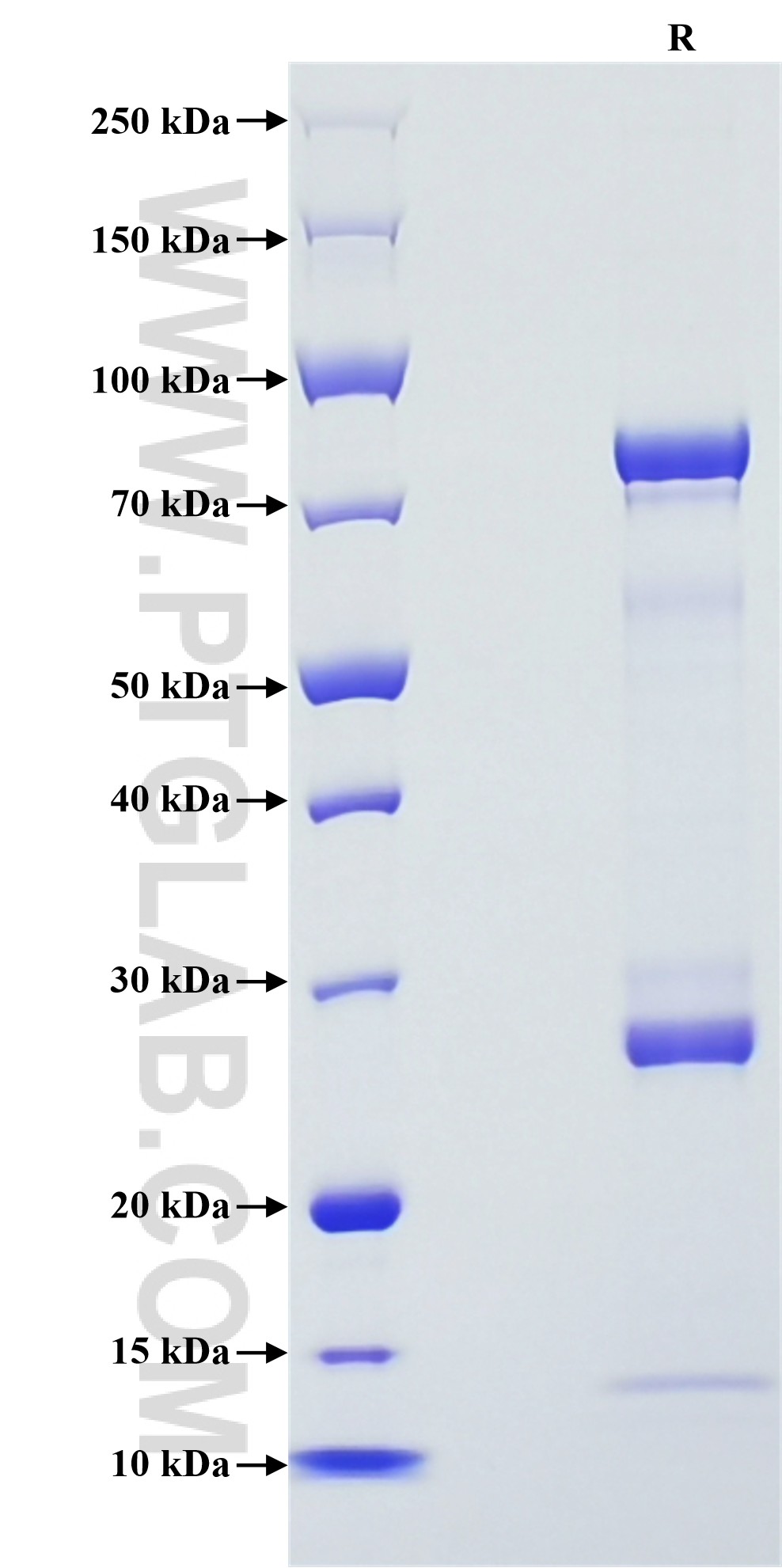
>90 %, SDS-PAGE
标签
rFc Tag
生物活性
未测试
验证数据展示
产品信息
| 纯度 | >90 %, SDS-PAGE |
| 内毒素 | <0.1 EU/μg protein, LAL method |
| 生物活性 |
Not tested |
| 来源 | HEK293-derived Human MMP10 protein Tyr18-Cys476 (Accession# P09238) with a rabbit IgG Fc tag at the C-terminus. |
| 基因ID | 4319 |
| 蛋白编号 | P09238 |
| 预测分子量 | 77.9 kDa |
| SDS-PAGE | 27-28 kDa and 75-90 kDa, reducing (R) conditions |
| 组分 | Lyophilized from 0.22 μm filtered solution in PBS, pH 7.4. Normally 5% trehalose and 5% mannitol are added as protectants before lyophilization. |
| 复溶 | Briefly centrifuge the tube before opening. Reconstitute at 0.1-0.5 mg/mL in sterile water. |
| 储存条件 |
It is recommended that the protein be aliquoted for optimal storage. Avoid repeated freeze-thaw cycles.
|
| 运输条件 | The product is shipped at ambient temperature. Upon receipt, store it immediately at the recommended temperature. |
背景信息
MMP10, also known as matrix metalloproteinase 10, is a key member of the zinc-dependent endopeptidase family. It is primarily secreted by macrophages, fibroblasts, and other cells into the extracellular matrix and is activated in response to signals such as inflammation and tissue injury. Its core function is to degrade various extracellular matrix proteins and modulate the activity of inflammatory factors and growth factors. Consequently, MMP10 plays a crucial role in tissue remodeling, wound healing, and inflammatory responses. Simultaneously, due to its ability to disrupt the basement membrane and promote cell migration, it is also a central driver of tumor invasion and metastasis. Moreover, it is closely linked to the pathological processes of chronic diseases such as rheumatoid arthritis and atherosclerosis, making it an important therapeutic target and prognostic biomarker.
参考文献:
1. Chang, Ling et al. International immunopharmacology vol. 124,Pt B (2023): 111045. 2. Dharavath, Bhasker et al. Communications biology vol. 6,1 (2023): 57. 3. McMahan, Ryan S et al. Journal of immunology (Baltimore, Md. : 1950) vol. 197,3 (2016): 899-909. 4. Hu, Chengxiao et al. Cell death & disease vol. 12,1 (2021): 70.