Recombinant Human DKK1 protein (rFc Tag)
种属
Human
纯度
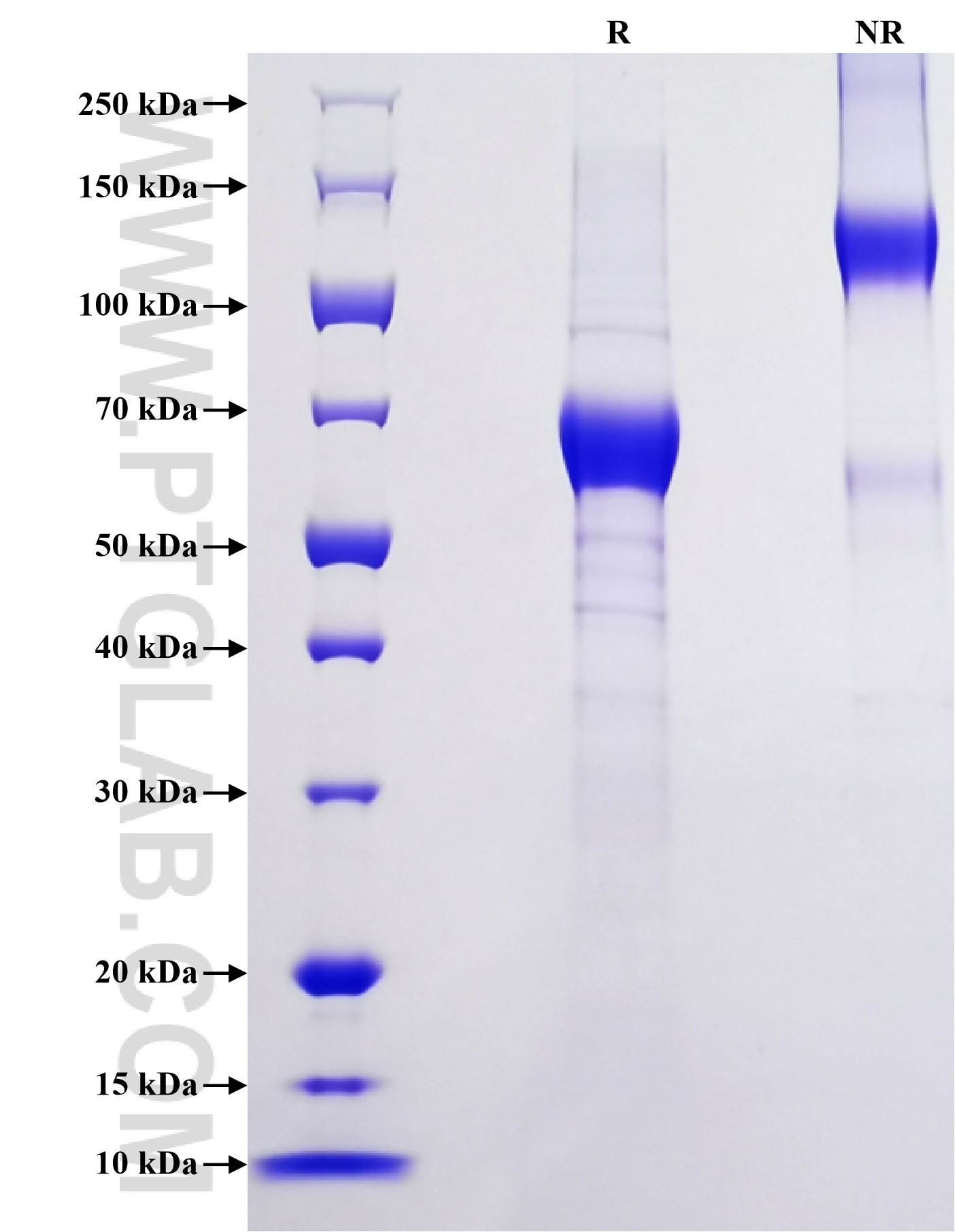
>90 %, SDS-PAGE
标签
rFc Tag
生物活性
未测试
验证数据展示
产品信息
| 纯度 | >90 %, SDS-PAGE |
| 内毒素 | <0.1 EU/μg protein, LAL method |
| 生物活性 |
Not tested |
| 来源 | HEK293-derived Human DKK1 protein Thr32-His266 (Accession# O94907) with a rabbit IgG Fc tag at the C-terminus. |
| 基因ID | 22943 |
| 蛋白编号 | O94907 |
| 预测分子量 | 51.4 kDa |
| SDS-PAGE | 58-75 kDa, reducing (R) conditions |
| 组分 | Lyophilized from 0.22 μm filtered solution in PBS, pH 7.4. Normally 5% trehalose and 5% mannitol are added as protectants before lyophilization. |
| 复溶 | Briefly centrifuge the tube before opening. Reconstitute at 0.1-0.5 mg/mL in sterile water. |
| 储存条件 |
It is recommended that the protein be aliquoted for optimal storage. Avoid repeated freeze-thaw cycles.
|
| 运输条件 | The product is shipped at ambient temperature. Upon receipt, store it immediately at the recommended temperature. |
背景信息
DKK1 is a member of the DKK protein family. Other members of this family include DKK2, DKK3, and DKK4. The DKK family proteins share 35-40 % homology between various members. DKK1 is a secreted protein that functions as a negative regulator of Wnt/β-catenin signaling pathway. Wnt/ β-catenin signaling pathway involves binding of the Wnt ligands to the seven-transmembrane receptor, Frizzled, and the coreceptor lipoprotein-related protein 5 and 6 (LRP5/6). DKK1 forms a ternary complex with LRP5/6 and another receptor, Kremen, followed by endocytosis of this complex and removal of LRP5/6 from the cell surface. It has been suggested that DKK1 permits anterior development by inhibiting Wnt/ β-catenin signaling, which is essential for posterior patterning in vertebrates. The balance between Wnt signaling and DKK1 inhibition is critical for bone formation and homeostasis and insufficient or excess DKK1 activity in bone results in increased or decreased bone density, respectively.
参考文献:
1. Niehrs, C. Oncogene vol. 25,57 (2006): 7469-81.
2. Mao, Bingyu et al. Nature vol. 417,6889 (2002): 664-7.
3. Krupnik, V E et al. Gene vol. 238,2 (1999): 301-13.