验证数据展示
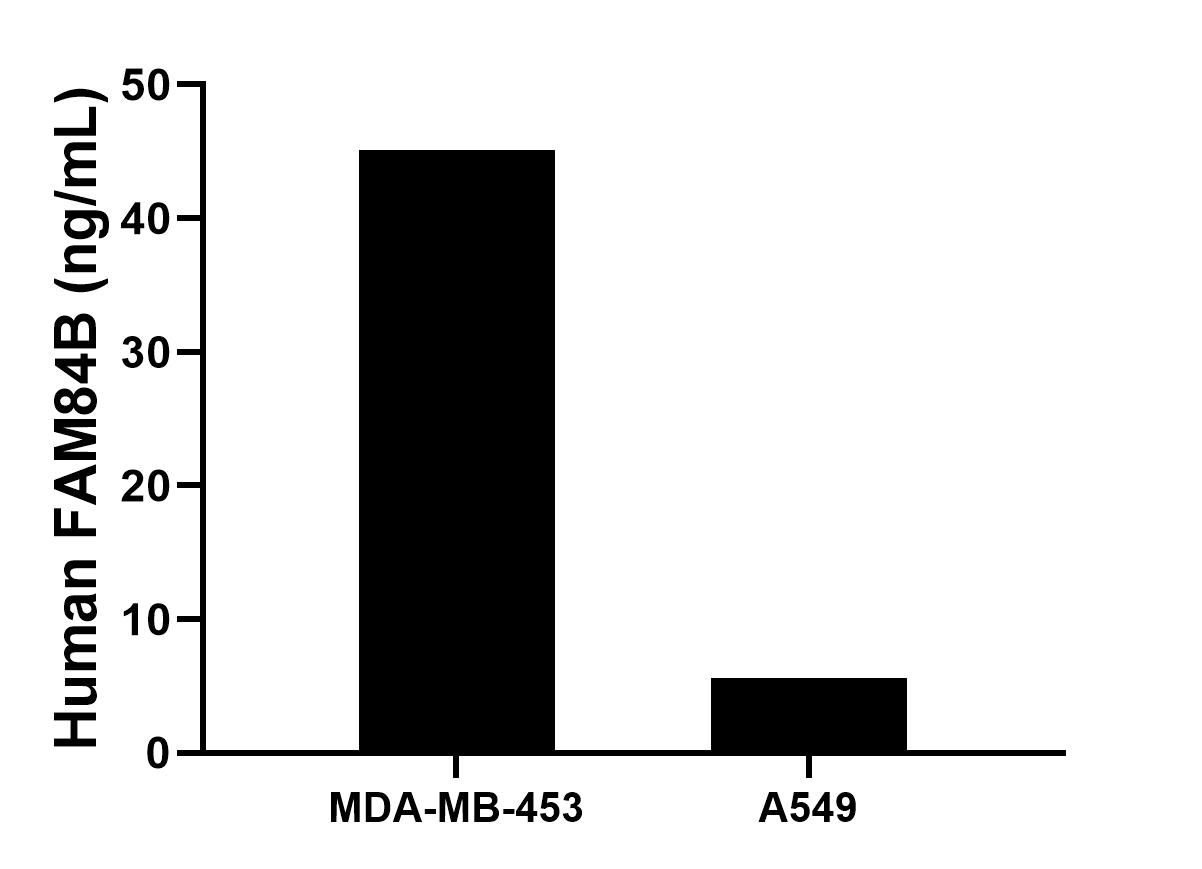
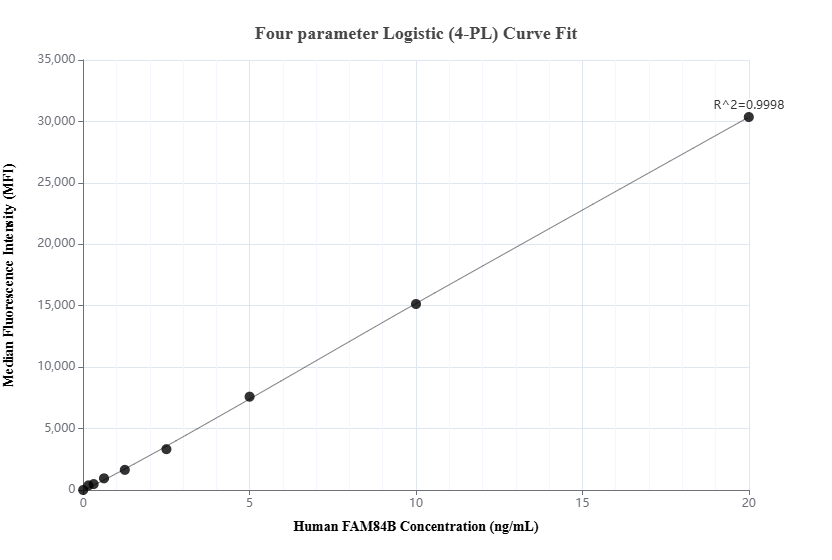
产品信息
87176-2-PBS targets FAM84B as part of a matched antibody pair:
MP02903-1: 87176-2-PBS capture and 87176-1-PBS detection (validated in Cytometric bead array)
Unconjugated rabbit recombinant monoclonal antibody in PBS only (BSA and azide free) storage buffer at a concentration of 1 mg/mL, ready for conjugation. Created using Proteintech’s proprietary in-house recombinant technology. Recombinant production enables unrivalled batch-to-batch consistency, easy scale-up, and future security of supply.
This conjugation ready format makes antibodies ideal for use in many applications including: ELISAs, multiplex assays requiring matched pairs, mass cytometry, and multiplex imaging applications.Antibody use should be optimized by the end user for each application and assay.
| 经测试应用 | WB, Cytometric bead array, Indirect ELISA Application Description |
| 经测试反应性 | human |
| 免疫原 |
CatNo: Ag13243 Product name: Recombinant human FAM84B protein Source: e coli.-derived, PGEX-4T Tag: GST Domain: 1-310 aa of BC052957 Sequence: MGNQVEKLTHLSYKEVPTADPTGVDRDDGPRIGVSYIFSNDDEDVEPQPPPQGPDGGGLPDGGDGPPPPQPQPYDPRLHEVECSVFYRDECIYQKSFAPGSAALSTYTPENLLNKCKPGDLVEFVSQAQYPHWAVYVGNFQVVHLHRLEVINSFLTDASQGRRGRVVNDLYRYKPLSSSAVVRNALAHVGAKERELSWRNSESFAAWCRYGKREFKIGGELRIGKQPYRLQIQLSAQRSHTLEFQSLEDLIMEKRRNDQIGRAAVLQELATHLHPAEPEEGDSNVARTTPPPGRPPAPSSEEEDGEAVAH 种属同源性预测 |
| 宿主/亚型 | Rabbit / IgG |
| 抗体类别 | Recombinant |
| 产品类型 | Antibody |
| 全称 | family with sequence similarity 84, member B |
| 别名 | |
| 计算分子量 | 34 kDa |
| GenBank蛋白编号 | BC052957 |
| 基因名称 | FAM84B |
| Gene ID (NCBI) | 157638 |
| 偶联类型 | Unconjugated |
| 形式 | Liquid |
| 纯化方式 | Protein A purification |
| UNIPROT ID | Q96KN1 |
| 储存缓冲液 | PBS only, pH 7.3. |
| 储存条件 | Store at -80°C. The product is shipped with ice packs. Upon receipt, store it immediately at -80°C |
背景介绍
FAM84B (Family with sequence similarity 84 member B, also called LRATD2 or BCMP101) is a 34 kDa protein-coding gene that maps to the 8q24.21 "gene-desert" region immediately adjacent to MYC. It contains an LRAT-like domain (homologous to the H-Ras-like suppressor family) and is increasingly recognized as a cancer-risk gene whose copy-number amplification and over-expression drive tumor growth in multiple solid tumors.