验证数据展示
产品信息
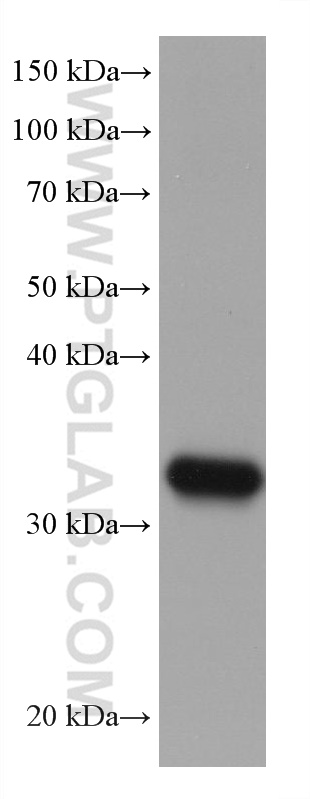
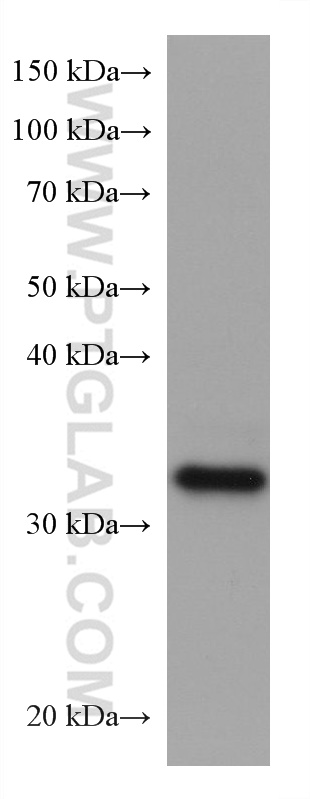
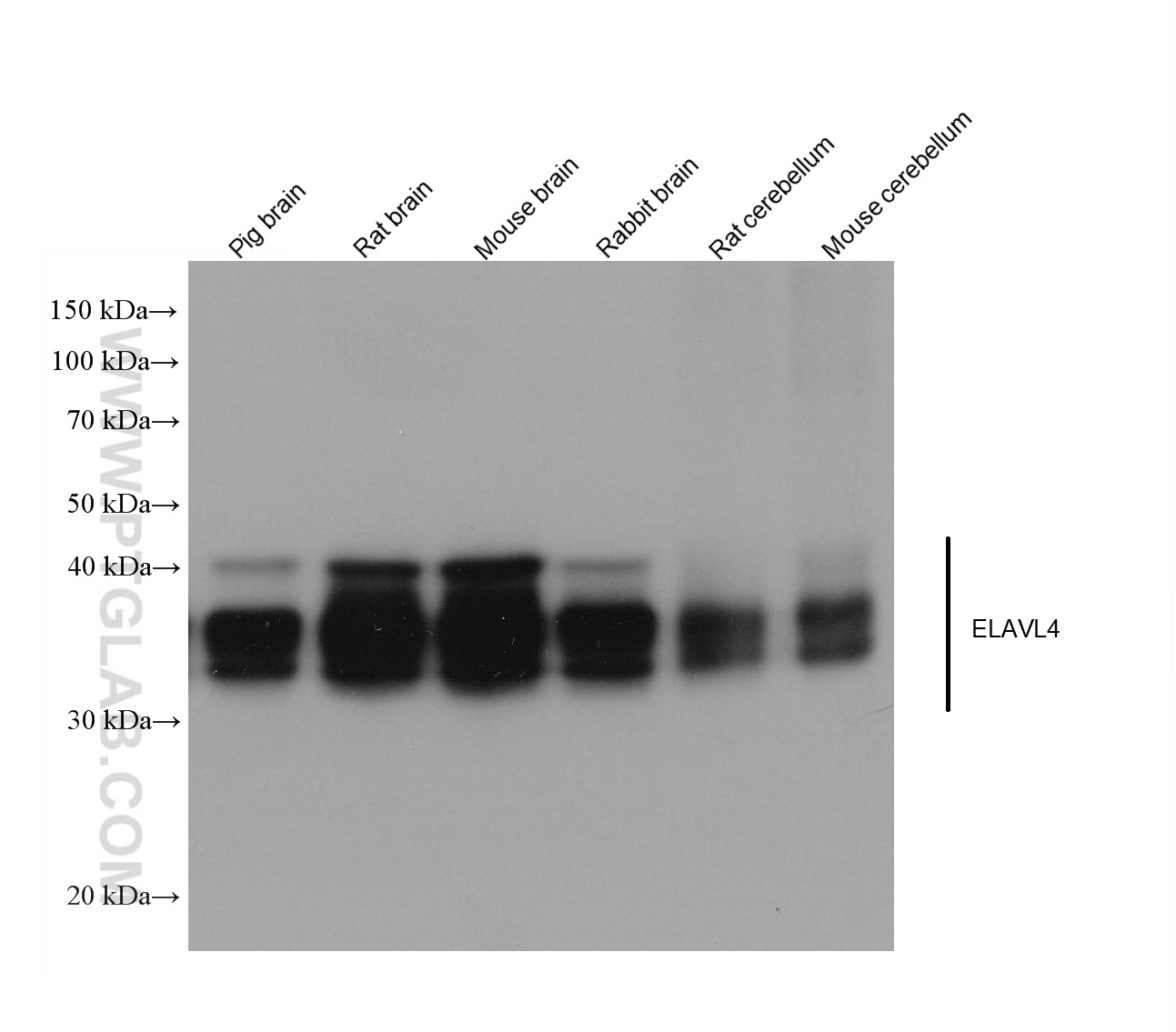
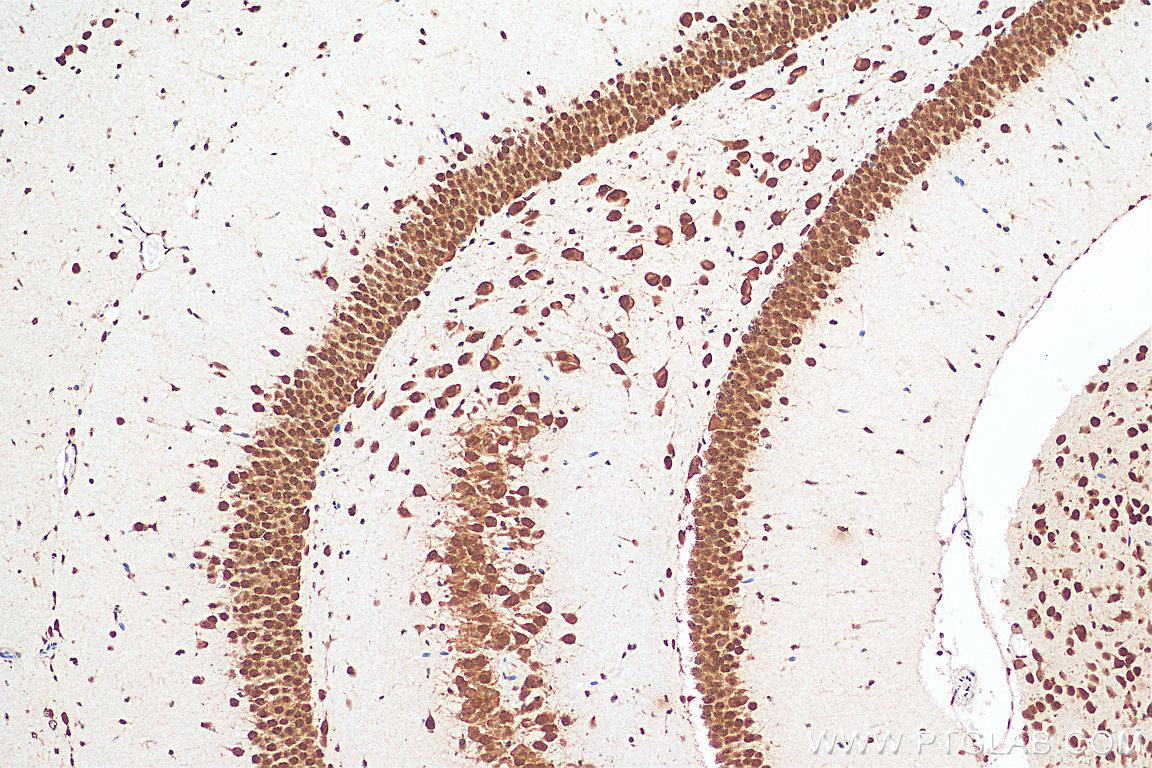
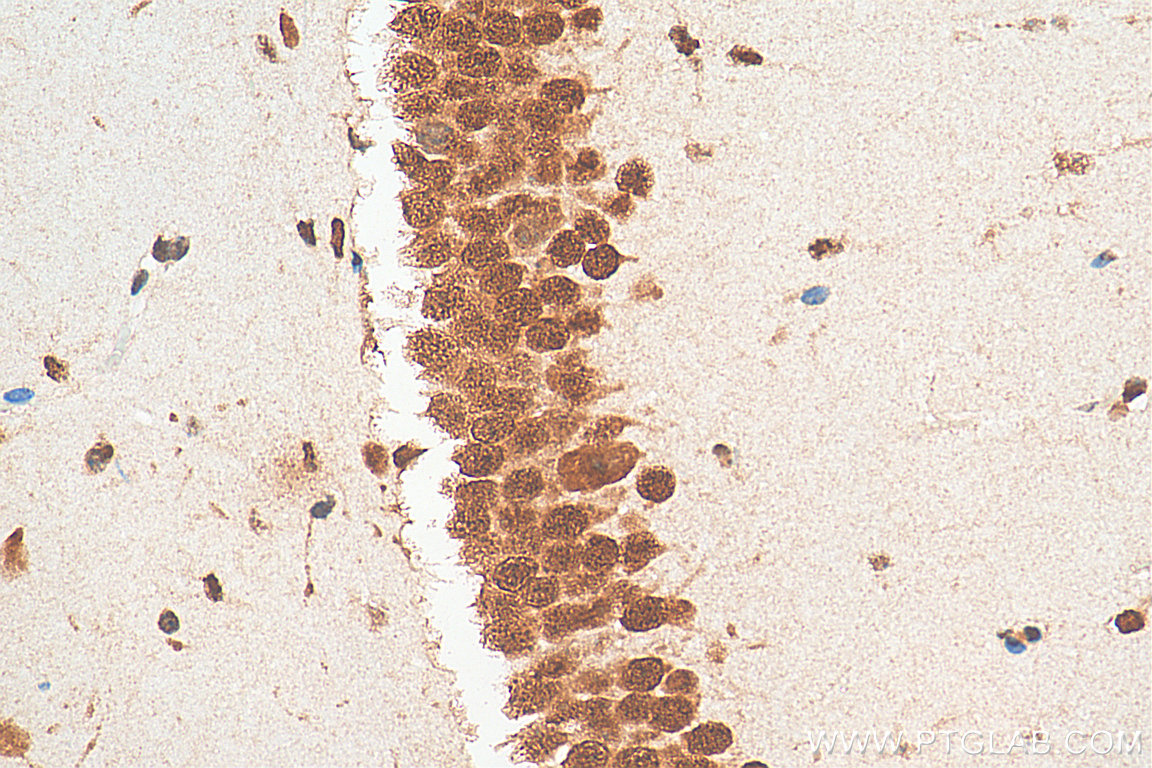
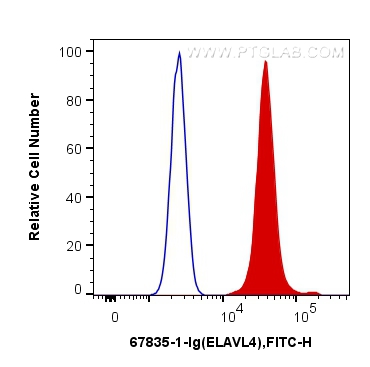
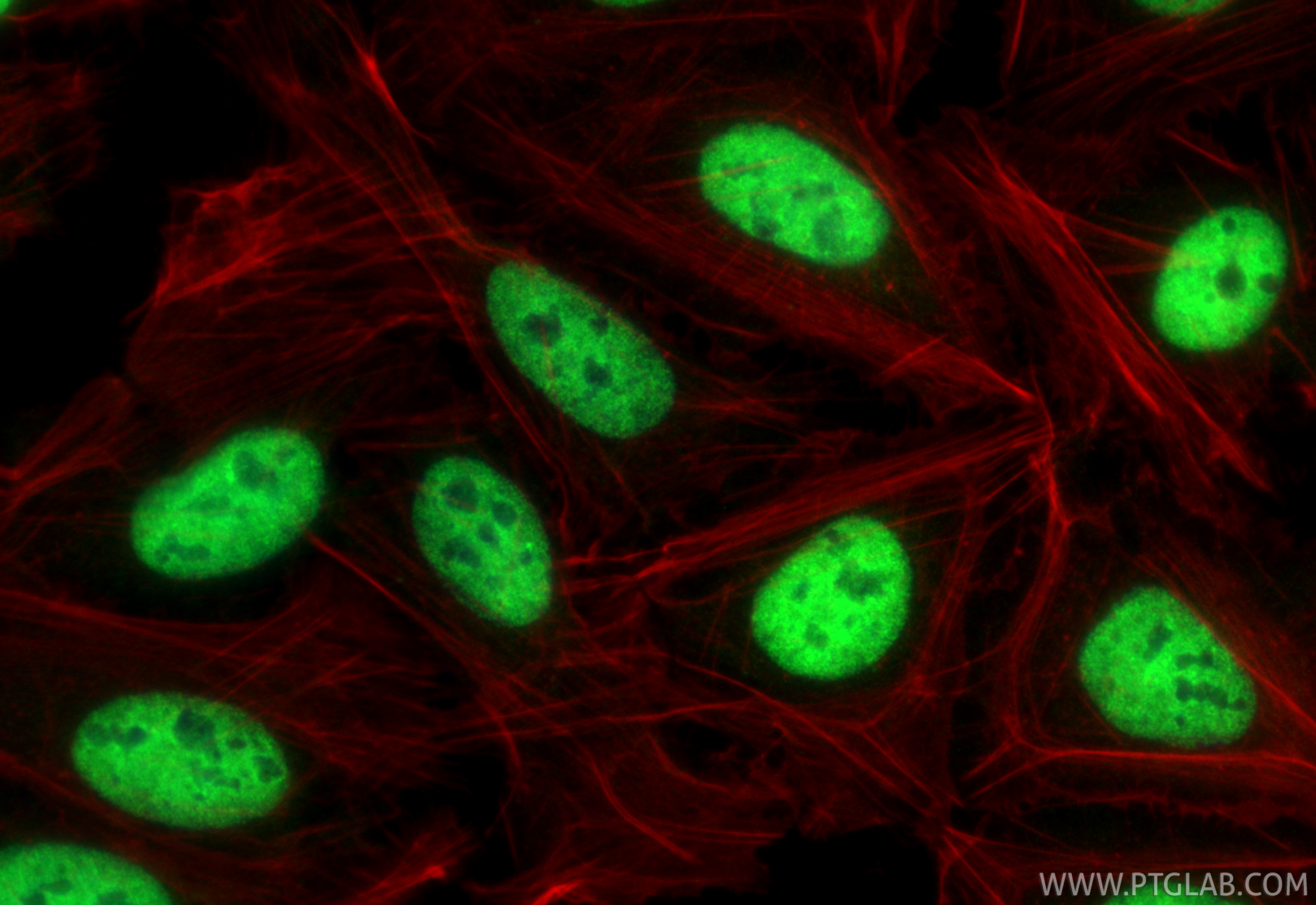
67835-1-PBS targets ELAVL4 in WB, IHC, IF/ICC, FC (Intra), Indirect ELISA applications and shows reactivity with human, mouse, rat, pig, rabbit samples.
| 经测试应用 | WB, IHC, IF/ICC, FC (Intra), Indirect ELISA Application Description |
| 经测试反应性 | human, mouse, rat, pig, rabbit |
| 免疫原 |
CatNo: Ag3678 Product name: Recombinant human ELAVL4 protein Source: e coli.-derived, PGEX-4T Tag: GST Domain: 1-366 aa of BC036071 Sequence: MVMIISTMEPQVSNGPTSNTSNGPSSNNRNCPSPMQTGATTDDSKTNLIVNYLPQNMTQEEFRSLFGSIGEIESCKLVRDKITGQSLGYGFVNYIDPKDAEKAINTLNGLRLQTKTIKVSYARPSSASIRDANLYVSGLPKTMTQKELEQLFSQYGRIITSRILVGQVTGVSRGVGFIRFDKRIEAEEAIKGLNGQKPSGATEPITVKFANNPSQKSSQALLSQLYQSPNRRYPGPLHHQAQRFRLDNLLNMAYGVKRFSPITIDGMTSLVGMNIPGHTGTGWCIFVYNLSPDSDESVLWQLFGPFGAVNNVKVIRDFNTNKCKGFGFVTMTNYDEAAMAITSLNGYRLGDRVLQVSFKTNKAHKS 种属同源性预测 |
| 宿主/亚型 | Mouse / IgG2b |
| 抗体类别 | Monoclonal |
| 产品类型 | Antibody |
| 全称 | ELAV (embryonic lethal, abnormal vision, Drosophila)-like 4 (Hu antigen D) |
| 别名 | HUD, 1B1F5, ELAV like protein 4, ELAV-like protein 4, Hu C/D |
| 计算分子量 | 380 aa, 42 kDa |
| 观测分子量 | 32-40 kDa |
| GenBank蛋白编号 | BC036071 |
| 基因名称 | ELAVL4 |
| Gene ID (NCBI) | 1996 |
| RRID | AB_2918597 |
| 偶联类型 | Unconjugated |
| 形式 | Liquid |
| 纯化方式 | Protein A purification |
| UNIPROT ID | P26378 |
| 储存缓冲液 | PBS only, pH 7.3. |
| 储存条件 | Store at -80°C. The product is shipped with ice packs. Upon receipt, store it immediately at -80°C |
背景介绍
ELAVL4, also named as HuD, is a 380 amino acid protein. The full name is neuronal embryonic lethal altered visual system-like(ELAVL) RNA-binding protein. ELAVL4 is expressed in brain and localized in the nucleus. PC12 cells expressing T7±HuD were treated with thio-specific (BMH) or amine-specific (DSS) chemical crosslinking reagents, and the resultant crosslinked complexes in the cell extracts were analyzed by immunoblotting with anti-T7 antibody. In addition to the monomeric HuD of 41 kDa, three specific crosslinked complexes could be detected using either of the crosslinkers. Two of the complexes had molecular masses of ~80 and 120 kDa, and were likely to be the dimer and trimer of HuD, respectively. (PMID: 12384599 )