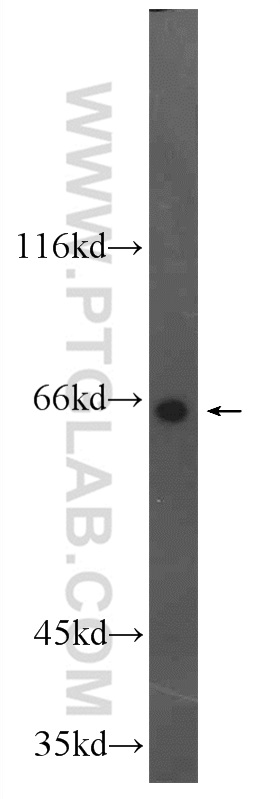
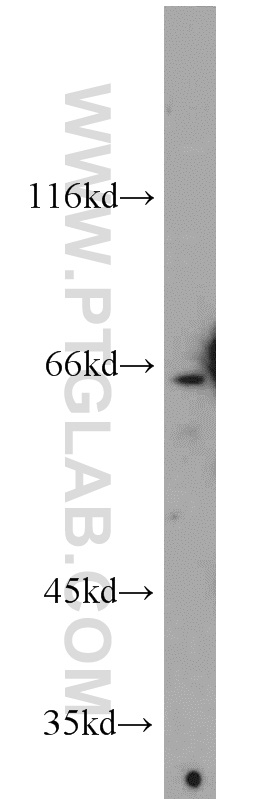
验证数据展示
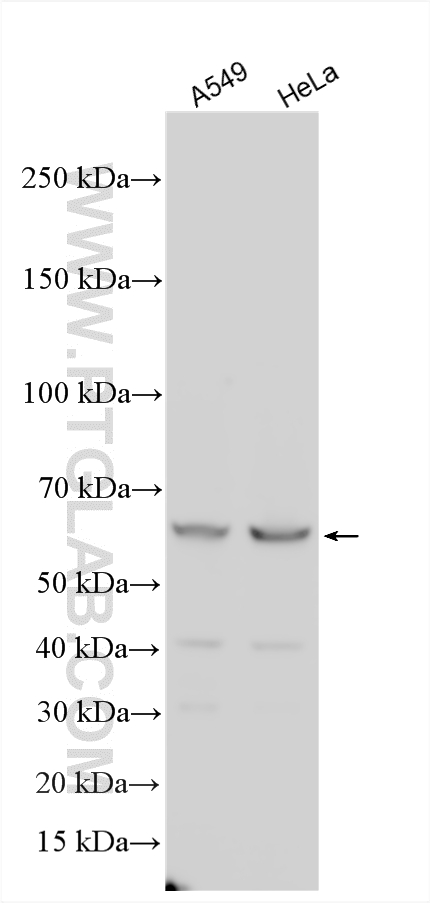
产品信息
21989-1-PBS targets DDX56 in WB, Indirect ELISA applications and shows reactivity with human, mouse samples.
| 经测试应用 | WB, Indirect ELISA Application Description |
| 经测试反应性 | human, mouse |
| 免疫原 |
CatNo: Ag17272 Product name: Recombinant human DDX56 protein Source: e coli.-derived, PGEX-4T Tag: GST Domain: 348-547 aa of BC001235 Sequence: GIDFHHVSAVLNFDLPPTPEAYIHRAGRTARANNPGIVLTFVLPTEQFHLGKIEELLSGENRGPILLPYQFRMEEIEGFRYRCRDAMRSVTKQAIREARLKEIKEELLHSEKLKTYFEDNPRDLQLLRHDLPLHPAVVKPHLGHVPDYLVPPALRGLVRPHKKRKKLSSSCRKAKRAKSQNPLRSFKHKGKKFRPTAKPS 种属同源性预测 |
| 宿主/亚型 | Rabbit / IgG |
| 抗体类别 | Polyclonal |
| 产品类型 | Antibody |
| 全称 | DEAD (Asp-Glu-Ala-Asp) box polypeptide 56 |
| 别名 | ATP-dependent 61 kDa nucleolar RNA helicase, DDX21, DDX26, DEAD box protein 21, DEAD box protein 56 |
| 计算分子量 | 62 kDa |
| 观测分子量 | 62 kDa |
| GenBank蛋白编号 | BC001235 |
| 基因名称 | DDX56 |
| Gene ID (NCBI) | 54606 |
| RRID | AB_2878964 |
| 偶联类型 | Unconjugated |
| 形式 | Liquid |
| 纯化方式 | Antigen affinity purification |
| UNIPROT ID | Q9NY93 |
| 储存缓冲液 | PBS only, pH 7.3. |
| 储存条件 | Store at -80°C. The product is shipped with ice packs. Upon receipt, store it immediately at -80°C |
背景介绍
DDX56 belongs to the ATP-dependent RNA helicase of DEAD‑box family. The protein is mainly located in nucleolus and has ATPase and RNA helicase activities. Its classic function is to participate in the assembly of ribosome 60S large subunit, regulate the processing of pre‑rRNA and the maturation of pre-ribosome particles, and maintain nucleolar homeostasis. DDX56 can negatively regulate the RLR-mediated type I interferon pathway, inhibit the antiviral immune response by preventing IRF3 from entering the nucleus, and has dual functions of promoting virus and resisting virus in different virus infections. The protein is abnormally highly expressed in many tumors, which plays the role of oncogene, promotes tumor proliferation, invasion and metastasis by regulating cell cycle, apoptosis and NF κ B signaling pathways, and is related to the poor prognosis of patients. It is expected to become a potential tumor marker and intervention target, but its RNA substrate and tissue-specific function in vivo need to be further studied.