验证数据展示
产品信息
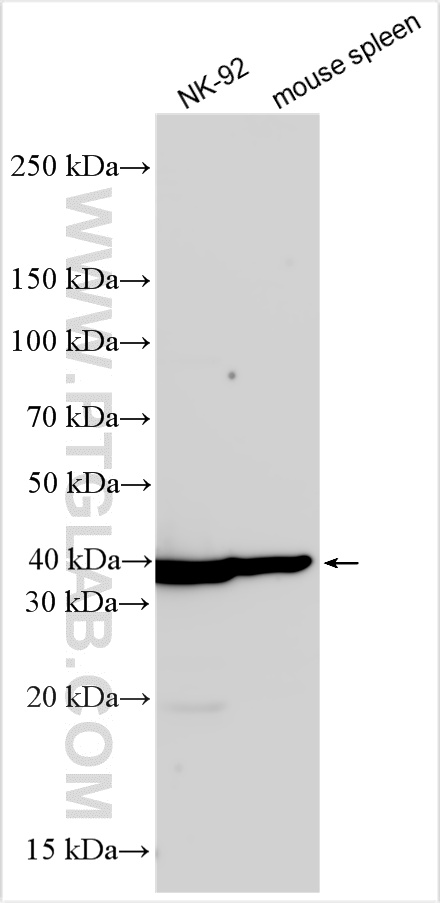
33010-1-PBS targets CD158K/KIR3DL2 in applications and shows reactivity with human, mouse samples.
| 经测试应用 | WB, Indirect ELISA Application Description |
| 经测试反应性 | human, mouse |
| 免疫原 |
CatNo: Eg4355 Product name: recombinant human CD158K/KIR3DL2 protein Source: mammalian cells-derived, V37 Tag: C-rFc Domain: 22-340 aa of NM_006737.4 Sequence: LMGGQDKPFLSARPSTVVPRGGHVALQCHYRRGFNNFMLYKEDRSHVPIFHGRIFQESFIMGPVTPAHAGTYRCRGSRPHSLTGWSAPSNPLVIMVTGNHRKPSLLAHPGPLLKSGETVILQCWSDVMFEHFFLHREGISEDPSRLVGQIHDGVSKANFSIGPLMPVLAGTYRCYGSVPHSPYQLSAPSDPLDIVITGLYEKPSLSAQPGPTVQAGENVTLSCSSWSSYDIYHLSREGEAHERRLRAVPKVNRTFQADFPLGPATHGGTYRCFGSFRALPCVWSNSSDPLLVSVTGNPSSSWPSPTEPSSKSGICRHLH 种属同源性预测 |
| 宿主/亚型 | Rabbit / IgG |
| 抗体类别 | Polyclonal |
| 产品类型 | Antibody |
| 全称 | killer cell immunoglobulin-like receptor, three domains, long cytoplasmic tail, 2 |
| 别名 | KIR3DL2, CD158K, MHC class I NK cell receptor, NKAT 4, NKAT4 |
| 计算分子量 | 50 kDa |
| 观测分子量 | 50-60 kda |
| GenBank蛋白编号 | NM_006737.4 |
| 基因名称 | KIR3DL2 |
| Gene ID (NCBI) | 3812 |
| RRID | AB_3742820 |
| 偶联类型 | Unconjugated |
| 形式 | Liquid |
| 纯化方式 | Antigen affinity Purification |
| UNIPROT ID | P43630-1 |
| 储存缓冲液 | PBS only, pH 7.3. |
| 储存条件 | Store at -80°C. The product is shipped with ice packs. Upon receipt, store it immediately at -80°C |
背景介绍
KIR3DL2, also known as CD158k, is an inhibitory receptor expressed by natural killer (NK) cells and a subset of CD8+ T cells. It plays a role in immune regulation by binding to HLA class I molecules, specifically HLA-A3 and HLA-A11, in a peptide-dependent fashion. KIR3DL2 can also function as an innate immune receptor for delivering CpG DNA to TLR9 in NK cells, highlighting its role in both adaptive and innate immunity. This protein is primarily expressed on the cell surface, particularly in NK cells and certain T cells. It has been implicated in various diseases, particularly in the context of hematological malignancies and autoimmune diseases. Aberrant expression of KIR3DL2 has been observed in neoplastic cells in transformed mycosis fungoides and Sézary syndrome, suggesting its potential as a therapeutic target in primary cutaneous anaplastic large-cell lymphoma (pcALCL).