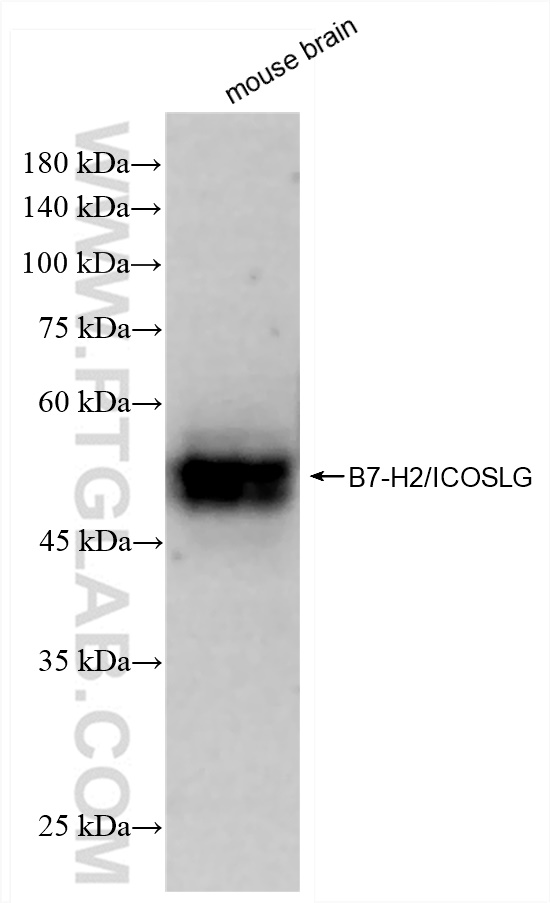
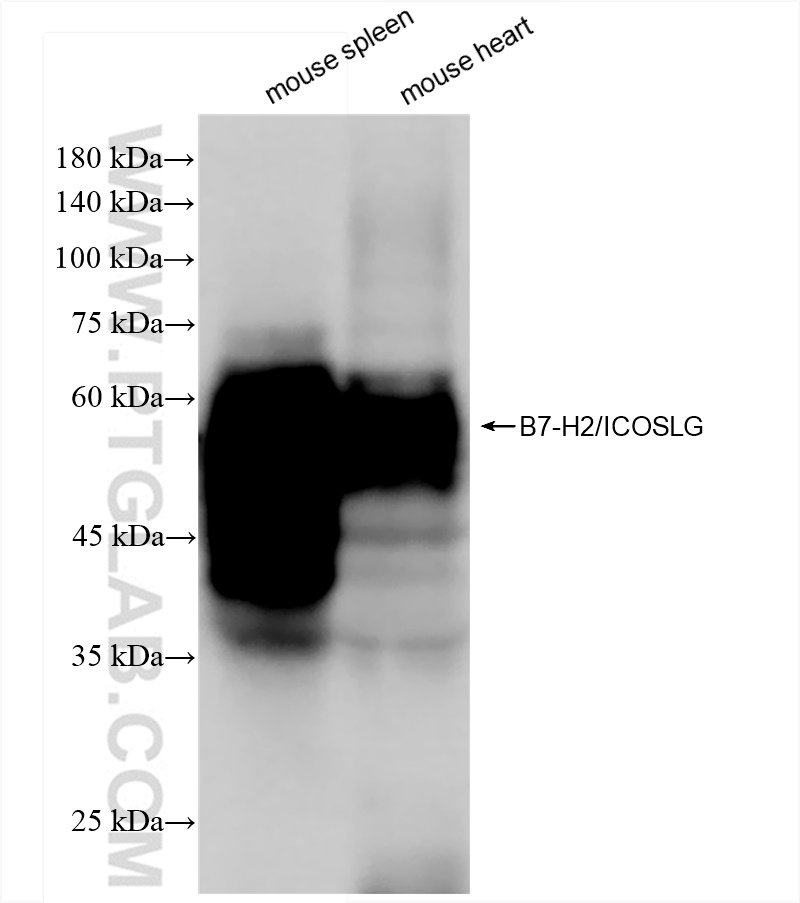
验证数据展示
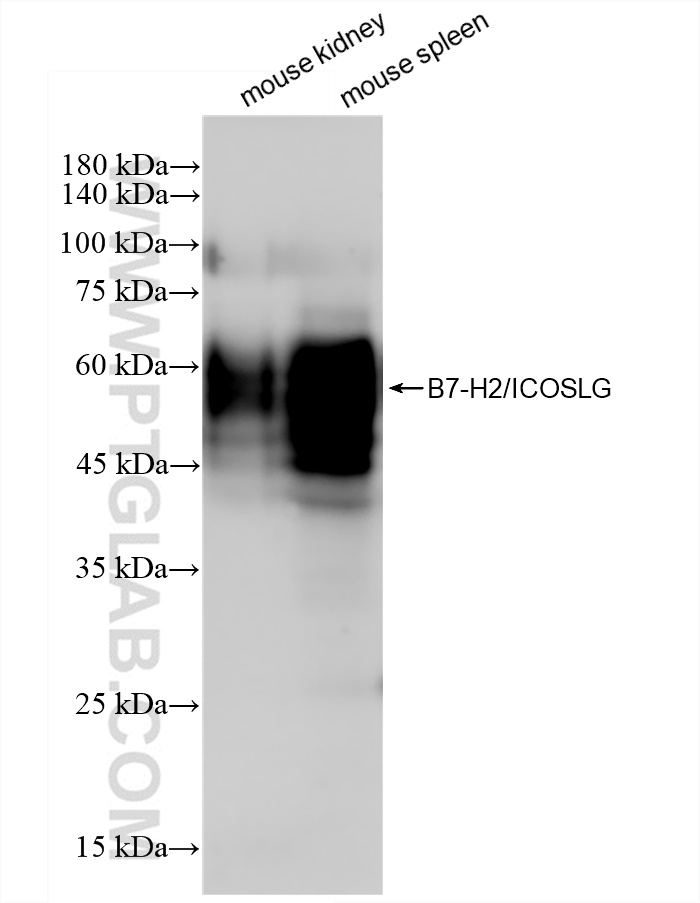
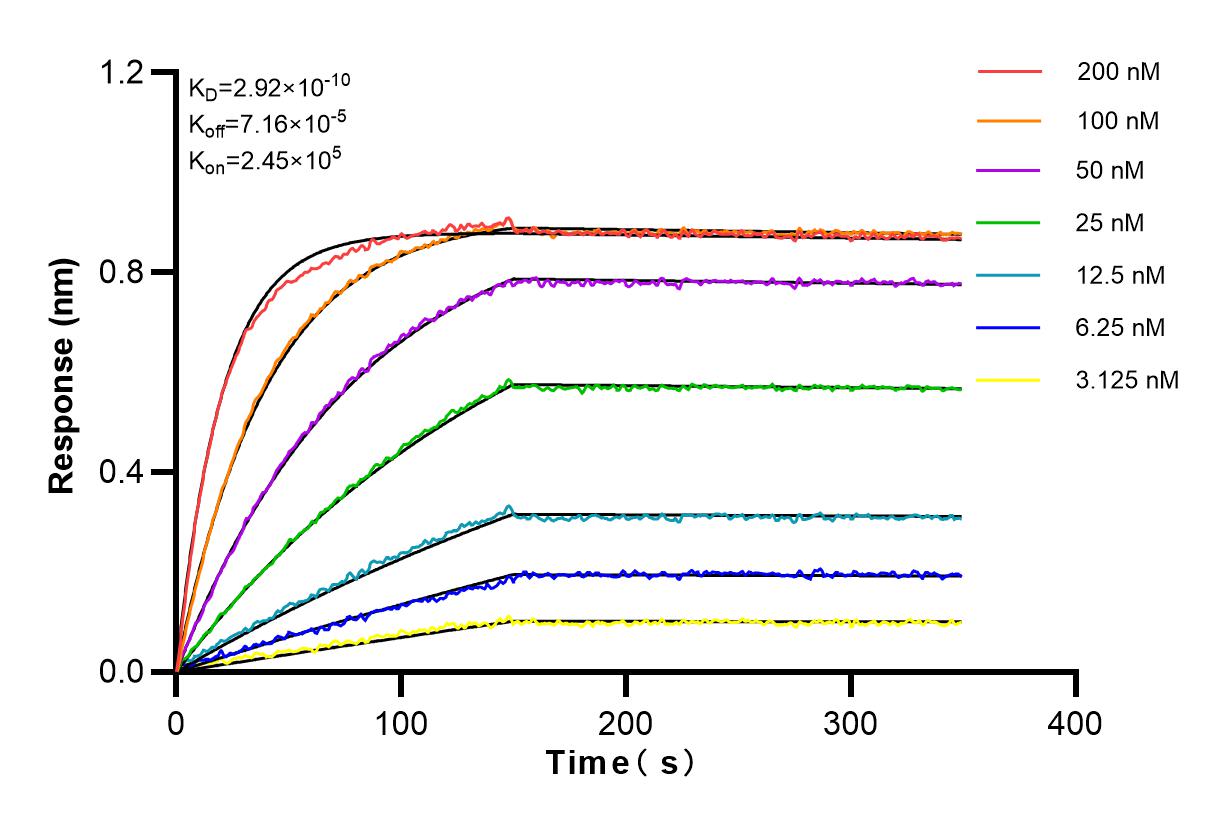
经过测试的应用
| Positive WB detected in | mouse kidney tissue, mouse brain tissue, mouse spleen tissue, mouse heart tissue |
推荐稀释比
| 应用 | 推荐稀释比 |
|---|---|
| Western Blot (WB) | WB : 1:500-1:1000 |
| It is recommended that this reagent should be titrated in each testing system to obtain optimal results. | |
| Sample-dependent, Check data in validation data gallery. | |
产品信息
83375-2-RR targets ICOSLG/B7-H2/CD275 in WB, ELISA applications and shows reactivity with Mouse samples.
| 经测试应用 | WB, ELISA Application Description |
| 经测试反应性 | Mouse |
| 免疫原 |
Fusion Protein 种属同源性预测 |
| 宿主/亚型 | Rabbit / IgG |
| 抗体类别 | Recombinant |
| 产品类型 | Antibody |
| 全称 | icos ligand |
| 别名 | B7-H2/ICOSLG, B7-H2, CD275, Icosl, GL50 |
| 计算分子量 | 36 kDa |
| 观测分子量 | 45-60 kDa |
| GenBank蛋白编号 | NM_015790.3 |
| 基因名称 | CD275 |
| Gene ID (NCBI) | 50723 |
| RRID | AB_3671027 |
| 偶联类型 | Unconjugated |
| 形式 | Liquid |
| 纯化方式 | Protein A purification |
| UNIPROT ID | Q9JHJ8-1 |
| 储存缓冲液 | PBS with 0.02% sodium azide and 50% glycerol, pH 7.3. |
| 储存条件 | Store at -20°C. Stable for one year after shipment. Aliquoting is unnecessary for -20oC storage. |
背景介绍
ICOSLG, also known as B7H2 or GL50, is a type I transmembrane glycoprotein belonging to the B7 ligand family. ICOSLG is extensively expressed on professional antigen-presenting cells including B cells, macrophages, and dendritic cells, as well as non-lymphoid cells including mesenchymal stem cells, endothelial cells, fibroblasts, and tumor cells (PMID: 33756276; 35800767). It is a specific ligand for the T-cell-specific cell surface receptor ICOS and acts as a co-stimulatory molecule (PMID: 11023515; 11007762). The interaction of ICOSLG and ICOS plays important roles in the activation, proliferation, differentiation, and cytokine production of T cells as well as in the antibody secretion from B cells during secondary immune responses (PMID: 21851236).
实验方案
| Product Specific Protocols | |
|---|---|
| WB protocol for ICOSLG/B7-H2/CD275 antibody 83375-2-RR | Download protocol |
| Standard Protocols | |
|---|---|
| Click here to view our Standard Protocols |