Recombinant Human IgM protein (rFc Tag)
种属
Human
纯度
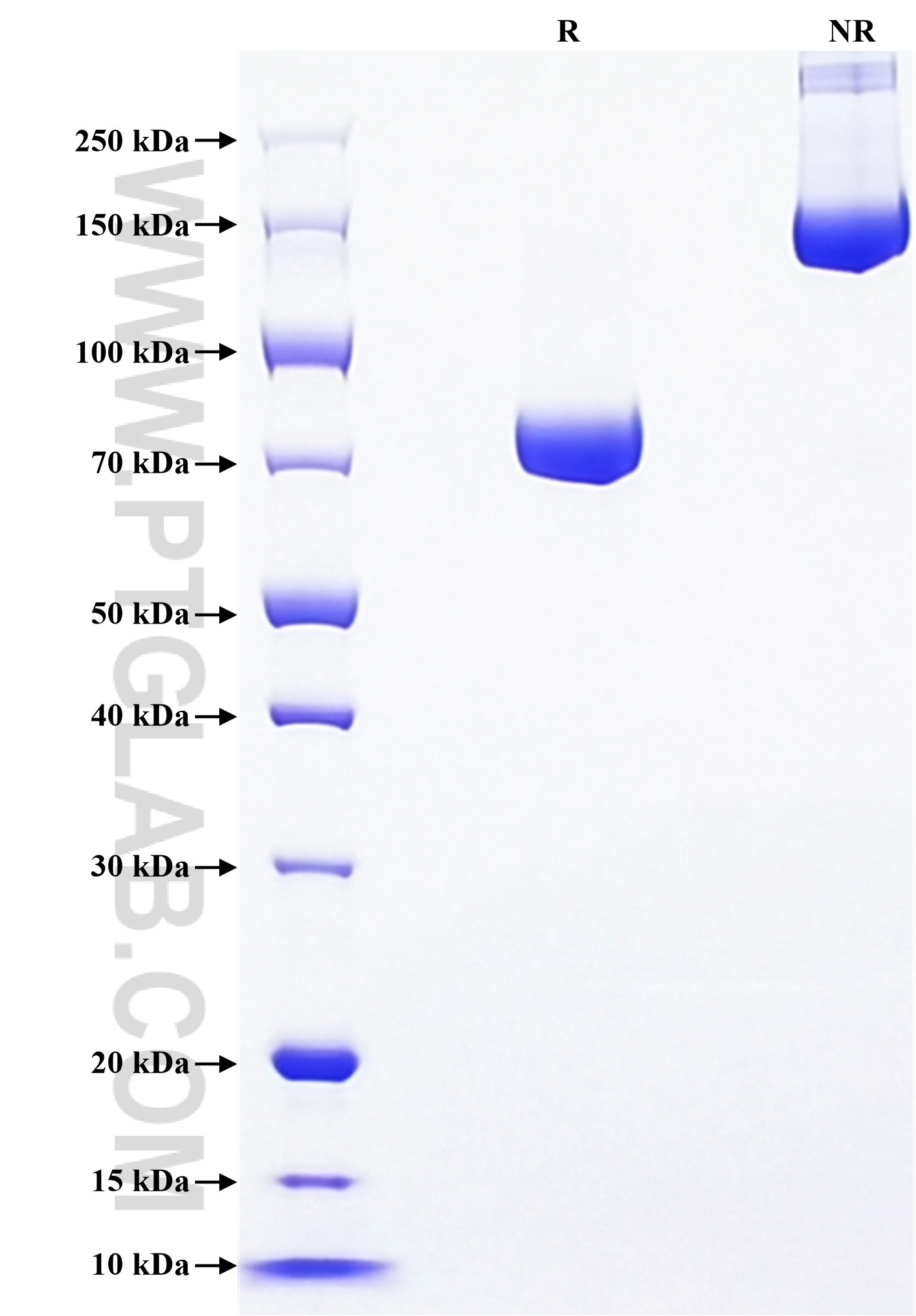
>90 %, SDS-PAGE
标签
rFc Tag
生物活性
未测试
验证数据展示
产品信息
| 纯度 | >90 %, SDS-PAGE |
| 内毒素 | <0.1 EU/μg protein, LAL method |
| 生物活性 |
Not tested |
| 来源 | HEK293-derived Human IgM protein Val105-Trp448 (Accession# P01871-2) with a rabbit IgG Fc tag at the C-terminus. |
| 基因ID | 3507 |
| 蛋白编号 | P01871-2 |
| 预测分子量 | 64.3 kDa |
| SDS-PAGE | 65-85 kDa, reducing (R) conditions |
| 组分 | Lyophilized from 0.22 μm filtered solution in PBS, pH 7.4. Normally 5% trehalose and 5% mannitol are added as protectants before lyophilization. |
| 复溶 | Briefly centrifuge the tube before opening. Reconstitute at 0.1-0.5 mg/mL in sterile water. |
| 储存条件 |
It is recommended that the protein be aliquoted for optimal storage. Avoid repeated freeze-thaw cycles.
|
| 运输条件 | The product is shipped at ambient temperature. Upon receipt, store it immediately at the recommended temperature. |
背景信息
Human IgM (Immunoglobulin M) is the largest antibody in the human humoral immune system and exists in two forms: membrane‑bound (mIgM) and secreted (sIgM). Membrane‑bound IgM is a monomer that serves as the antigen‑recognition component of the B‑cell receptor (BCR) expressed on the surface of B cells, mediating B‑cell activation and the initiation of immune responses. Secreted IgM is a pentameric structure (containing a J chain) that is abundantly secreted by plasma cells; it is the earliest antibody produced during a primary immune response and is highly efficient in activating the classical complement pathway, neutralizing pathogens, and promoting agglutination. Elevated serum IgM levels are observed in acute infections, Waldenström’s macroglobulinemia, and other conditions. Auto‑reactive IgM (e.g., rheumatoid factor) participates in the pathogenesis of autoimmune diseases such as rheumatoid arthritis. Membrane‑bound IgM is a target for CAR‑T therapy in B‑cell lymphomas, while secreted IgM serves as a therapeutic target for various immune‑related diseases.
参考文献:
1. Budeus, Bettina et al.  Frontiers in immunology vol. 14 (2023): 1308378.
2. Trevijano-Contador, Nuria et al. Infection and immunity vol. 88,4 (2020): e00046-20.
3. Chen, Qu et al. Nature communications vol. 13,1 (2022): 6314.
4. Saltukoglu, Deniz et al. The EMBO journal vol. 42,4 (2023): e112030.