Recombinant Human Alpha 1 antichymotrypsin protein (rFc Tag)
种属
Human
纯度
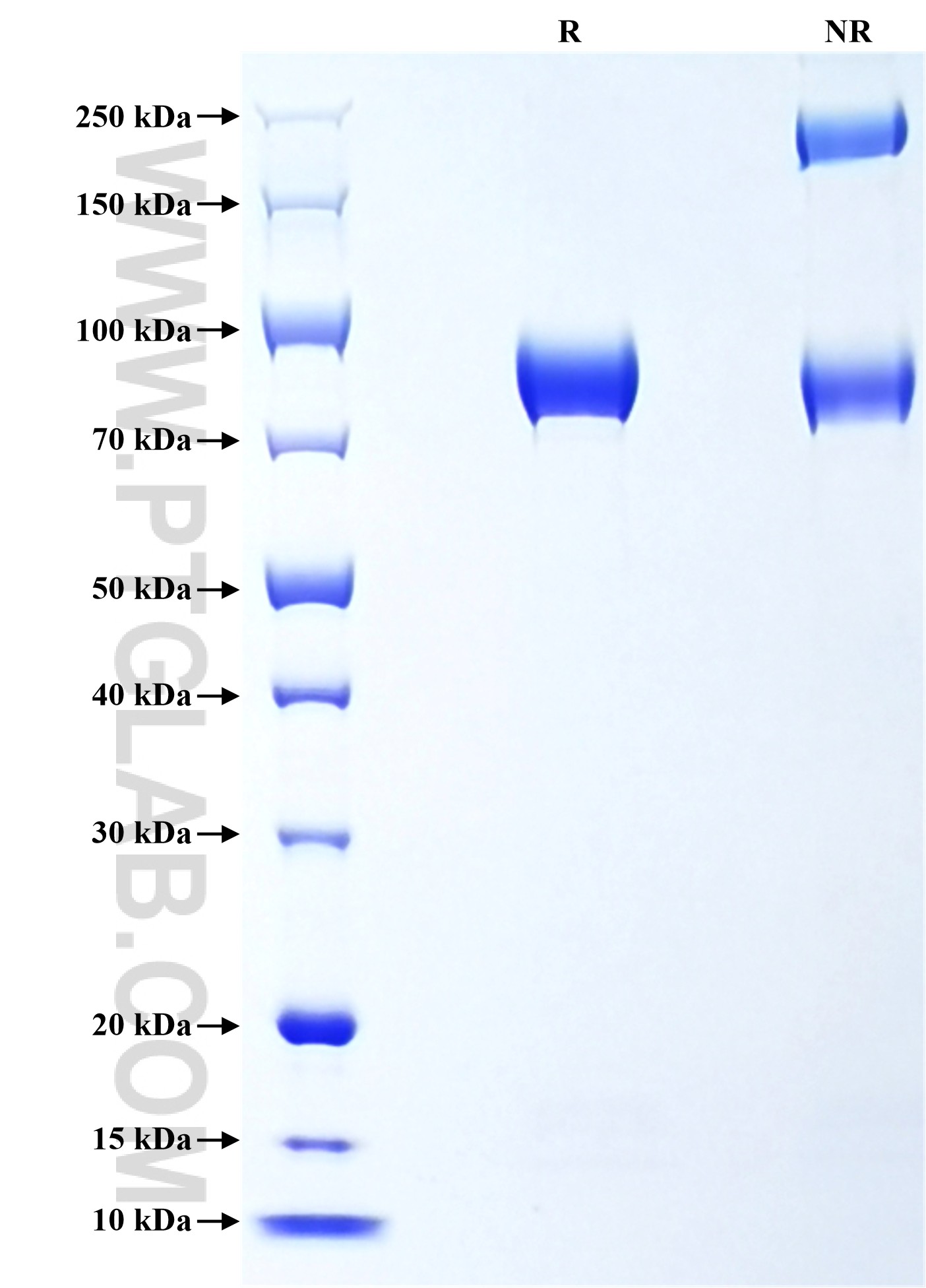
>90 %, SDS-PAGE
标签
rFc Tag
生物活性
未测试
验证数据展示
产品信息
| 纯度 | >90 %, SDS-PAGE |
| 内毒素 | <0.1 EU/μg protein, LAL method |
| 生物活性 |
Not tested |
| 来源 | HEK293-derived Human Alpha 1 antichymotrypsin protein Asn26-Ala423 (Accession# P01011-1) with a rabbit IgG Fc tag at the C-terminus. |
| 基因ID | 12 |
| 蛋白编号 | P01011-1 |
| 预测分子量 | 71.1 kDa |
| SDS-PAGE | 75-100 kDa, reducing (R) conditions |
| 组分 | Lyophilized from 0.22 μm filtered solution in PBS, pH 7.4. Normally 5% trehalose and 5% mannitol are added as protectants before lyophilization. |
| 复溶 | Briefly centrifuge the tube before opening. Reconstitute at 0.1-0.5 mg/mL in sterile water. |
| 储存条件 |
It is recommended that the protein be aliquoted for optimal storage. Avoid repeated freeze-thaw cycles.
|
| 运输条件 | The product is shipped at ambient temperature. Upon receipt, store it immediately at the recommended temperature. |
背景信息
Human SerpinA3, also known as Alpha 1-antichymotrypsin (AACT), is a member of the serine protease inhibitor class, and is a plasma alpha globulin glycoprotein which increases in the blood during the inflammatory process. SerpinA3, is also an inhibitor of neutrophil cathepsin G, mast cell chymases and pancreatic chymotrypsin. SerpinA3 is produced primarily in the liver, and is identified as an acute-phase inflammatory protein. SerpinA3 deficiency has been associated with liver disease. SerpinA3 has also been implicated in the pathology of a number of devastating human diseases including chronic obstructive pulmonary disease (COPD), Parkinson's disease (PD), Alzheimer's disease (AD), Stroke, Cystic Fibrosis, Cerebral Haemorrhage and Multiple System Atrophy.
参考文献:
1.Rabin, M et al. Somatic cell and molecular genetics vol. 12,2 (1986): 209-14.
2.Liu, Tao et al. Journal of proteome research vol. 4,6 (2005): 2070-80.
3.Hwang, S R et al. The Journal of biological chemistry vol. 274,3 (1999): 1821-7.
4.Travis, J et al. Biochemistry vol. 17,26 (1978): 5651-6.