Recombinant Mouse IGFBP6 protein (rFc Tag)
种属
Mouse
纯度
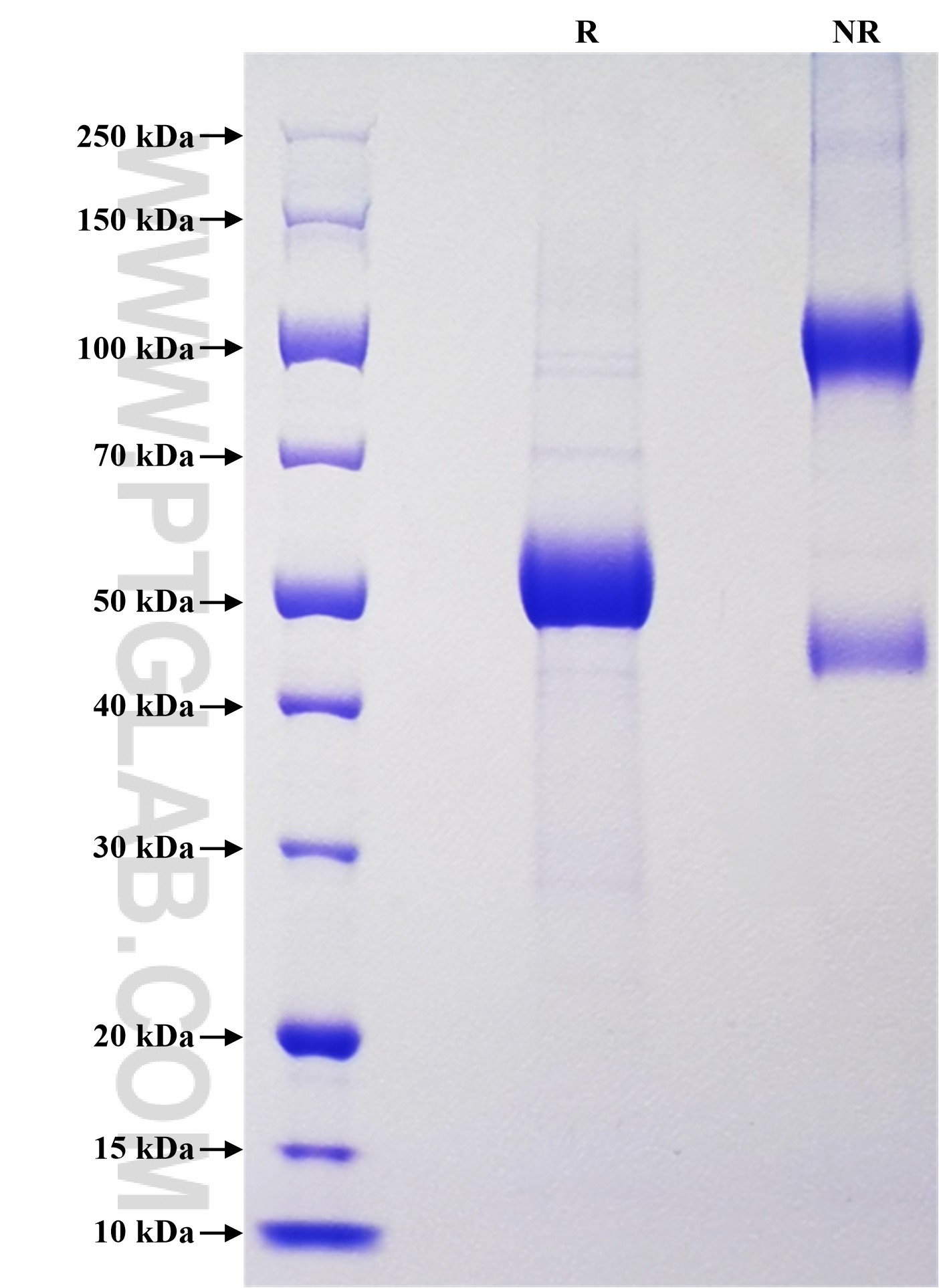
>90 %, SDS-PAGE
标签
rFc Tag
生物活性
未测试
验证数据展示
产品信息
| 纯度 | >90 %, SDS-PAGE |
| 内毒素 | <0.1 EU/μg protein, LAL method |
| 生物活性 |
Not tested |
| 来源 | HEK293-derived Mouse IGFBP6 protein Ala26-Gly238 (Accession# P47880) with a rabbit IgG Fc tag at the C-terminus. |
| 基因ID | 16012 |
| 蛋白编号 | P47880 |
| 预测分子量 | 48.3 kDa |
| SDS-PAGE | 48-60 kDa, reducing (R) conditions |
| 组分 | Lyophilized from 0.22 μm filtered solution in PBS, pH 7.4. Normally 5% trehalose and 5% mannitol are added as protectants before lyophilization. |
| 复溶 | Briefly centrifuge the tube before opening. Reconstitute at 0.1-0.5 mg/mL in sterile water. |
| 储存条件 |
It is recommended that the protein be aliquoted for optimal storage. Avoid repeated freeze-thaw cycles.
|
| 运输条件 | The product is shipped at ambient temperature. Upon receipt, store it immediately at the recommended temperature. |
背景信息
Insulin-like growth factor-binding protein 6 (IGFBP6) is a secreted protein with a uniquely high affinity for IGF-II, distinguishing it within the IGFBP family. Beyond its canonical role as an IGF-II antagonist, IGFBP6 possesses diverse IGF-independent functions, including the activation of MAPK and PI3K/Akt pathways to influence cell migration, survival, and metabolism. It can translocate to the nucleus to induce apoptosis and its activity is modulated by proteolytic cleavage via MMPs. Pathologically, IGFBP6 is a context-dependent regulator: it acts as a tumor suppressor in breast cancer (favorable prognosis), an anti-inflammatory factor in atherosclerosis, a driver of cardiac and hepatic fibrosis, an orchestrator of immune collapse in sepsis, and a predictor of reduced type 2 diabetes risk. Thus, IGFBP6 is a pleiotropic target with dual diagnostic and therapeutic potential across oncology, inflammation, metabolism, and cardiovascular disease.
参考文献:
1.Schwartz, Martin A. Nature cardiovascular research vol. 4,2 (2025): 122-123.
2.Wang, Zhecun et al. Journal of cellular physiology vol. 235,12 (2020): 9538-9556.
3.Jin, Zhengxin et al. Communications biology vol. 8,1 1127. 29 Jul. 2025,