Recombinant Human KLK3/PSA protein (His Tag)
种属
Human
纯度
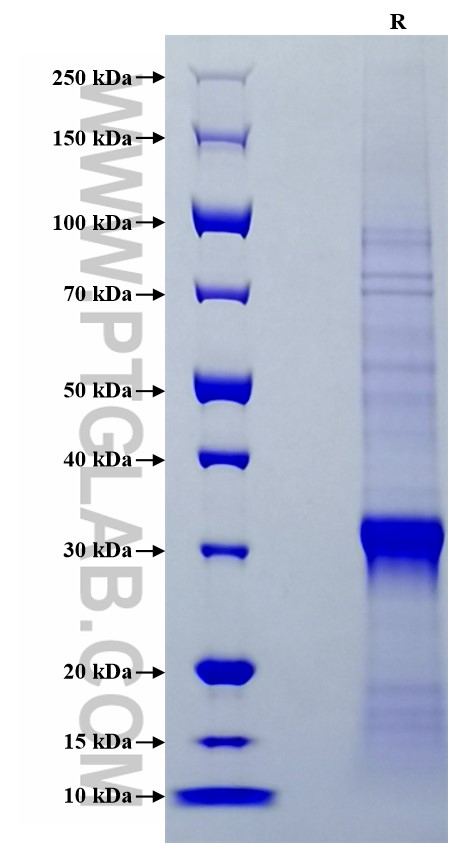
>90 %, SDS-PAGE
标签
His Tag
生物活性
未测试
验证数据展示
产品信息
| 纯度 | >90 %, SDS-PAGE |
| 内毒素 | <0.1 EU/μg protein, LAL method |
| 生物活性 |
Not tested |
| 来源 | HEK293-derived Human KLK3 protein Ala18-Pro261 (Accession# P07288-1) with a His tag at the C-terminus. |
| 基因ID | 354 |
| 蛋白编号 | P07288-1 |
| 预测分子量 | 28.5 kDa |
| SDS-PAGE | 28-34 kDa, reducing (R) conditions |
| 组分 | Lyophilized from 0.22 μm filtered solution in PBS, pH 7.4. Normally 5% trehalose and 5% mannitol are added as protectants before lyophilization. |
| 复溶 | Briefly centrifuge the tube before opening. Reconstitute at 0.1-0.5 mg/mL in sterile water. |
| 储存条件 |
It is recommended that the protein be aliquoted for optimal storage. Avoid repeated freeze-thaw cycles.
|
| 运输条件 | The product is shipped at ambient temperature. Upon receipt, store it immediately at the recommended temperature. |
背景信息
KLK3 also known as Prostate-Specific Antigen (PSA), is a 33 kDa glycoprotein primarily synthesized by the epithelial cells of the prostate gland. Its main physiological function is to cleave seminogelins I and II in semen, leading to the liquefaction of the seminal coagulum and the release of motile sperm. It is under tight regulation by androgens via the androgen receptor (AR). Serum PSA levels are elevated in prostate cancer due to disruption of the glandular architecture, allowing more PSA to enter the bloodstream. It is used alongside digital rectal exam (DRE) for early detection. Although termed "prostate-specific," PSA is not exclusively produced by the prostate. Very low levels can be produced in periurethral glands, breast tissue, and some other tissues. Its expression is highly abundant in prostatic tissue and seminal fluid.
参考文献:
1. Lilja, H. The Journal of clinical investigation vol. 76,5 (1985): 1899-903.
2. Stamey, T A et al. The New England journal of medicine vol. 317,15 (1987): 909-16.
3. Lilja, Hans et al. Nature reviews. Cancer vol. 8,4 (2008): 268-78.
4. Prensner, John R et al. Science translational medicine vol. 4,127 (2012): 127rv3.