
Recombinant Rat NGFR/TNFRSF16 protein (rFc Tag)(HPLC verified)
种属
Rat
纯度
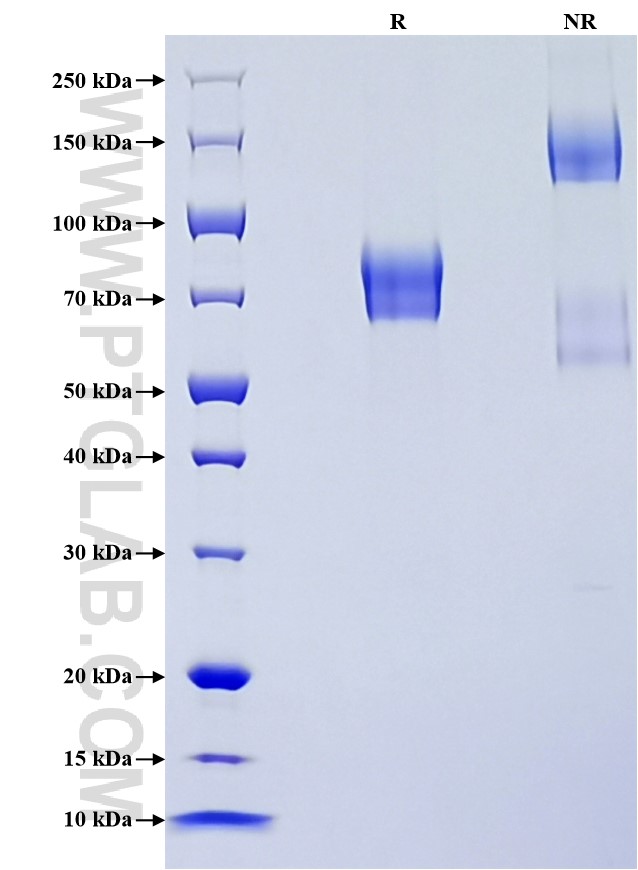
>90 %, SDS-PAGE
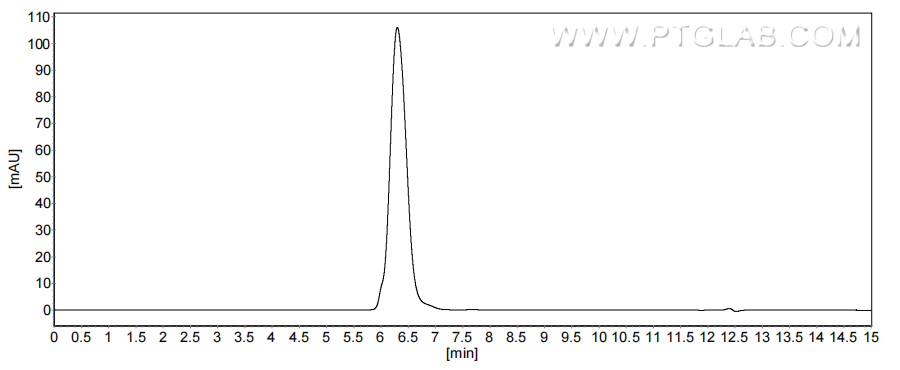
>90 %, SEC-HPLC
标签
rFc Tag
生物活性
未测试
验证数据展示
产品信息
| 纯度 | >90 %, SDS-PAGE >90 %, SEC-HPLC |
| 内毒素 | <0.1 EU/μg protein, LAL method |
| 生物活性 |
Not tested |
| 来源 | HEK293-derived Rat p75NTR protein Lys30-Ile253 (Accession# P07174) with a rabbit IgG Fc tag at the C-terminus. |
| 基因ID | 24596 |
| 蛋白编号 | P07174 |
| 预测分子量 | 50.2 kDa |
| SDS-PAGE | 65-90 kDa, reducing (R) conditions |
| 组分 | Lyophilized from 0.22 μm filtered solution in PBS, pH 7.4. Normally 5% trehalose and 5% mannitol are added as protectants before lyophilization. |
| 复溶 | Briefly centrifuge the tube before opening. Reconstitute at 0.1-0.5 mg/mL in sterile water. |
| 储存条件 |
It is recommended that the protein be aliquoted for optimal storage. Avoid repeated freeze-thaw cycles.
|
| 运输条件 | The product is shipped at ambient temperature. Upon receipt, store it immediately at the recommended temperature. |
背景信息
p75 neurotrophin receptor (p75NTR), a member of the tumor necrosis factor superfamily, is a transmembrane protein with 75 kDa molecular weight. p75NTR is highly expressed in both neurons and glial cells during CNS development and after brain injury, whereas in normal adulthood, it is present only in specific brain regions such as neurons and astrocytes of hippocampal and especially in the cholinergic neurons of the basal forebrain. p75NTR is an important receptor for the role of neurotrophins in survival and death of neurons during development and after nerve injury. p75NTR can mediate cell survival or cell death, can promote or inhibit axonal growth, and can facilitate or attenuate proliferation, depending on the cell context.
参考文献:
1.Cragnolini AB and Friedman WJ. (2008) Trends Neurosci. 31(2):99-104.
2.Chen M. et al. (2022) Cell Mol Neurobiol. 42(4):1153-1166.
3.Yang CR. et al. (2022) FASEB J. 36(3):e22180.
4. Ali NH. Et al. (2024) Mol Neurobiol. 61(5):2469-2480.
5. Xie B. et al. (2023) Front Cell Dev Biol. 11:1283878.
