
Recombinant Rat IL-1 alpha protein (rFc Tag) (HPLC verified)
种属
Rat
纯度
>90 %, SDS-PAGE
>90 %, SEC-HPLC
标签
rFc Tag
生物活性
未测试
验证数据展示
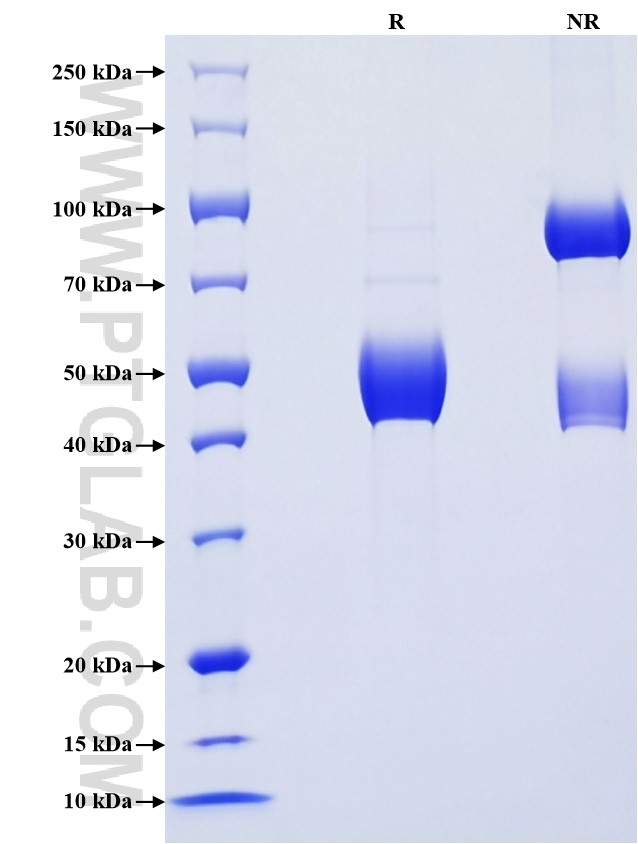
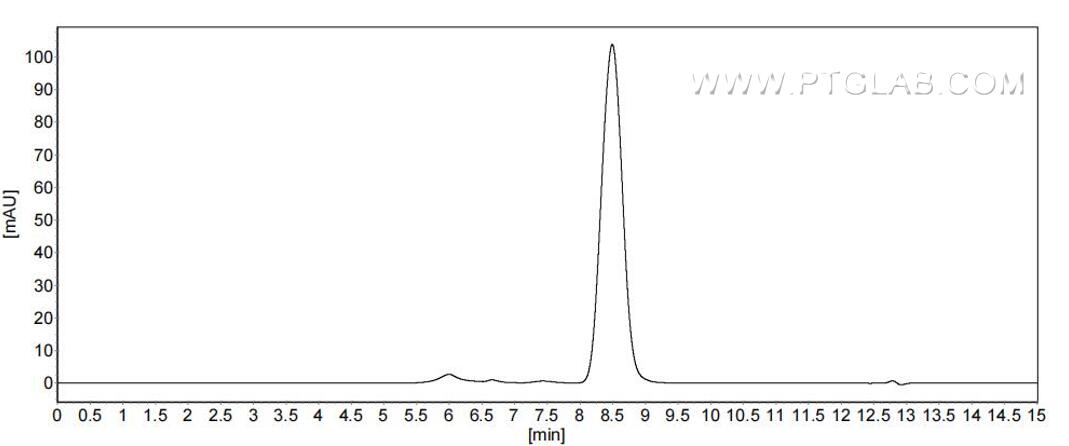
产品信息
| 纯度 | >90 %, SDS-PAGE >90 %, SEC-HPLC |
| 内毒素 | <0.1 EU/μg protein, LAL method |
| 生物活性 |
Not tested |
| 来源 | HEK293-derived Rat IL-1 alpha protein Ser115-Ser270 (Accession# P16598) with a rabbit IgG Fc tag at the N-terminus. |
| 基因ID | 24493 |
| 蛋白编号 | P16598 |
| 预测分子量 | 45.0 kDa |
| SDS-PAGE | 42-55 kDa, reducing (R) conditions |
| 组分 | Lyophilized from 0.22 μm filtered solution in PBS, pH 7.4. Normally 5% trehalose and 5% mannitol are added as protectants before lyophilization. |
| 复溶 | Briefly centrifuge the tube before opening. Reconstitute at 0.1-0.5 mg/mL in sterile water. |
| 储存条件 |
It is recommended that the protein be aliquoted for optimal storage. Avoid repeated freeze-thaw cycles.
|
| 运输条件 | The product is shipped at ambient temperature. Upon receipt, store it immediately at the recommended temperature. |
背景信息
Interleukin-1α (IL-1 alpha) is a protein that plays a crucial role in the regulation of a number of key cellular processes. IL-1 alpha is a cytokine and a potent mediator of body's response to inflammation, microbial invasion, tissue injury and immunological response. In addition, recent studies suggest that IL-1 alpha also has a role in wound healing, rheumatoid arthritis, Alzheimer's disease and tumor growth. IL-1 alpha functions as an alarmin during the process of sterile inflammation. It serves as a signal from dying cells to potentiate the inflammatory response, increasing the expression of other secreted factors like IL-6 and IL-8. IL-1 alpha was found to affect the cell cycle of osteosarcoma cell to reduce cell growth.
参考文献:
1. Dinarello CA. et al. (2009). Annu Rev Immunol. 27:519-50.
2. Dinarello CA. et al. (1998). Int Rev Immunol. 16:457-99.
3. Infante J. et al. (2007). Dement Geriatr Cogn Disord. 23:215-8.
4. Apte RN. et al. (2008). Immunol Rev. 222:222-41.
5. Palmer G. et al. (2005). Cytokine. 31(2):153-60.
6. Rider P. et al. (2013). Semin Immunol. 25(6):430-8.
7. Orjalo AV. et al. (2009). Proc Natl Acad Sci U S A. 106(40):17031-6.
