
Recombinant Pig IL-6 protein (rFc Tag)
种属
Pig
纯度
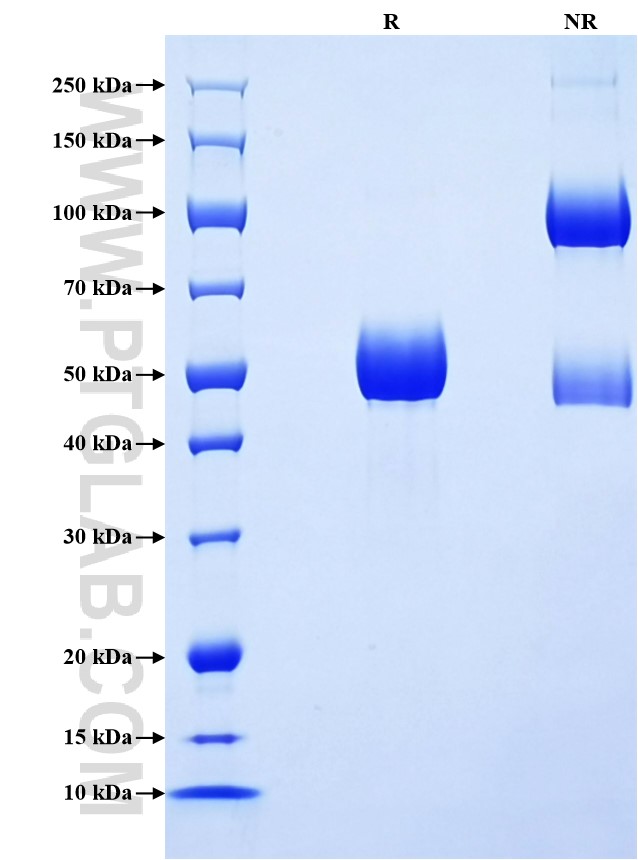
>90 %, SDS-PAGE
标签
rFc Tag
生物活性
未测试
验证数据展示
产品信息
| 纯度 | >90 %, SDS-PAGE |
| 内毒素 | <0.1 EU/μg protein, LAL method |
| 生物活性 |
Not tested |
| 来源 | HEK293-derived Pig IL-6 protein Glu30-Met212 (Accession# P26893) with a rabbit IgG Fc tag at the N-terminus. |
| 基因ID | 399500 |
| 蛋白编号 | P26893 |
| 预测分子量 | 48.2 kDa |
| SDS-PAGE | 48-55 kDa, reducing (R) conditions |
| 组分 | Lyophilized from 0.22 μm filtered solution in PBS, pH 7.4. Normally 5% trehalose and 5% mannitol are added as protectants before lyophilization. |
| 复溶 | Briefly centrifuge the tube before opening. Reconstitute at 0.1-0.5 mg/mL in sterile water. |
| 储存条件 |
It is recommended that the protein be aliquoted for optimal storage. Avoid repeated freeze-thaw cycles.
|
| 运输条件 | The product is shipped at ambient temperature. Upon receipt, store it immediately at the recommended temperature. |
背景信息
Interleukin-6 (IL6) is an interleukin that acts as both a pro-inflammatory and anti-inflammatory cytokine. IL6 protein is secreted by a variety of cell types including T cells and macrophages as phosphorylated and variably glycosylated molecule. IL6 Plays an essential role in the final differentiation of B-cells into Ig-secreting cells involved in lymphocyte and monocyte differentiation. It induces myeloma and plasmacytoma growth and induces nerve cells differentiation Acts on B-cells, T-cells, hepatocytes, hematopoietic progenitor cells and cells of the CNS. IL6 is also considered a myokine, a cytokine produced from muscle, and is elevated in response to muscle contraction. IL6 has been shown to interact with interleukin-6 receptor and glycoprotein 130. Additionally, IL6 is involved in hematopoiesis, bone metabolism, and cancer progression, and has been defined an essential role in directing transition from innate to acquired immunity.
参考文献:
1. Scheller J. et al. (1988). Behring Inst Mitt. Behring Inst Mitt. (83):40-7.
2. Heinrich PC. et al. (2003). Biochem J. 374: 1-20.
3. Rose-John S. et al. (2007). Expert Opin Ther Targets. 11: 613-24.
4. Ming JE. et al. (1989). J Mol Cell Immunol. 4: 203-11.
5. Febbraio MA. et al. (2005). Exerc Sport Sci Rev. 33:114-9.
6. J Appl Physiol. et al. (2005). J Appl Physiol. 98:1154-62.
