Recombinant Mouse IFN-alpha 2/IFNA2 protein (rFc Tag) (HPLC verified)
种属
Mouse
纯度
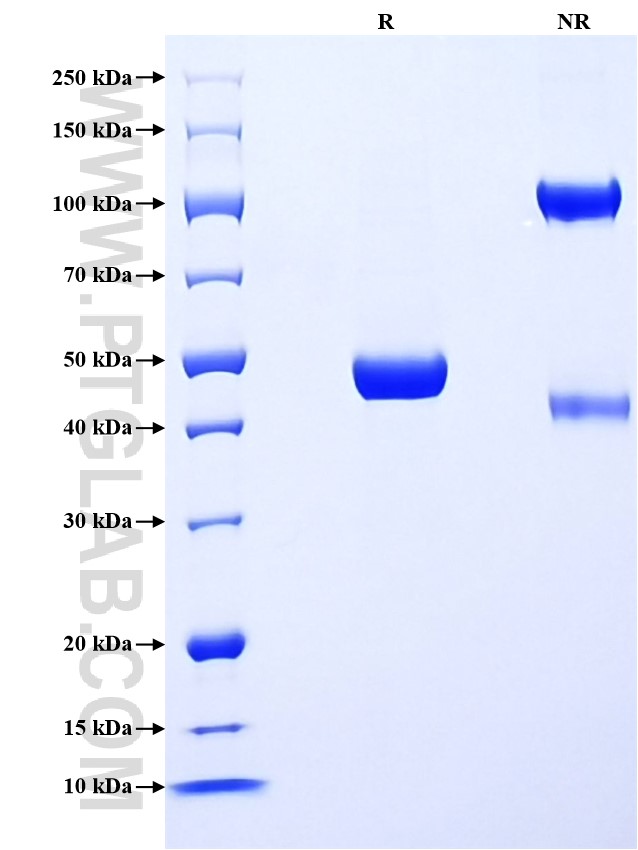
>90 %, SDS-PAGE
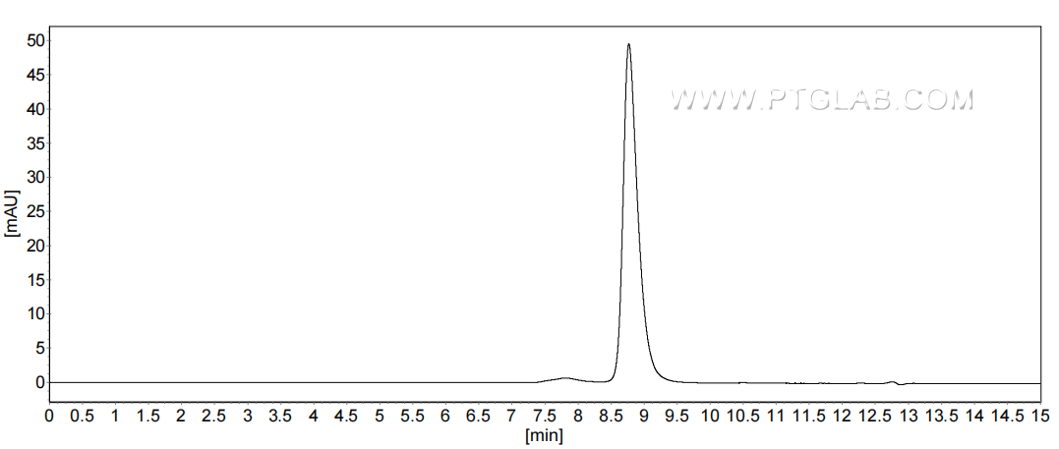
>90 %, SEC-HPLC
标签
rFc Tag
生物活性
未测试
验证数据展示
产品信息
| 纯度 | >90 %, SDS-PAGE >90 %, SEC-HPLC |
| 内毒素 | <0.1 EU/μg protein, LAL method |
| 生物活性 |
Not tested |
| 来源 | HEK293-derived Mouse IFN-alpha 2 protein Cys24-Glu190 (Accession# P01573) with a rabbit IgG Fc tag at the C-terminus. |
| 基因ID | 15965 |
| 蛋白编号 | P01573 |
| 预测分子量 | 45.4 kDa |
| SDS-PAGE | 45-50 kDa, reducing (R) conditions |
| 组分 | Lyophilized from 0.22 μm filtered solution in PBS, pH 7.4. Normally 5% trehalose and 5% mannitol are added as protectants before lyophilization. |
| 复溶 | Briefly centrifuge the tube before opening. Reconstitute at 0.1-0.5 mg/mL in sterile water. |
| 储存条件 |
It is recommended that the protein be aliquoted for optimal storage. Avoid repeated freeze-thaw cycles.
|
| 运输条件 | The product is shipped at ambient temperature. Upon receipt, store it immediately at the recommended temperature. |
背景信息
Interferon-alpha (IFN-α) is a type I interferon that plays a crucial role in the immune response. It is produced by various cell types in response to viral infections and other stimuli. IFN-α has multiple functions, including the activation of immune cells, enhancement of antigen presentation, and the induction of antiviral states in cells. In mice, the Ifna2 gene encodes a specific isoform of IFN-α, which is involved in the regulation of the immune system and the defense against pathogens. The expression and function of Ifna2 in mice can be studied using various experimental models, including transgenic and knockout mice. These models help researchers understand the role of IFN-α in immune responses and the development of diseases such as viral infections and autoimmune disorders.
参考文献:
1. Huang C, Jin Y, et al. (2024). Acta Pharm Sin B. 14(11):4914-4933.
2. Narovlyansky A, et al. (2024). Viruses. 16(11):1718.