Recombinant Mouse DPP4/CD26 protein (His Tag)
种属
Mouse
纯度
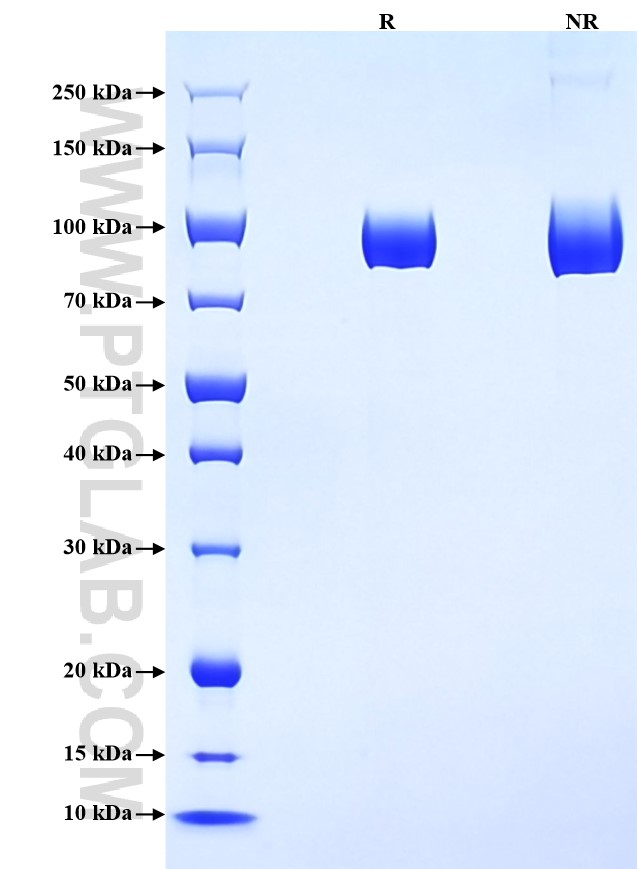
>90 %, SDS-PAGE
标签
His Tag
生物活性
未测试
验证数据展示
产品信息
| 纯度 | >90 %, SDS-PAGE |
| 内毒素 | <0.1 EU/μg protein, LAL method |
| 生物活性 |
Not tested |
| 来源 | HEK293-derived Mouse DPP4 protein Ser29-His760 (Accession# Accession P28843) with a His tag at the C-terminus. |
| 基因ID | 13482 |
| 蛋白编号 | P28843 |
| 预测分子量 | 85.6 kDa |
| SDS-PAGE | 85-110 kDa, reducing (R) conditions |
| 组分 | Lyophilized from 0.22 μm filtered solution in PBS, pH 7.4. Normally 5% trehalose and 5% mannitol are added as protectants before lyophilization. |
| 复溶 | Briefly centrifuge the tube before opening. Reconstitute at 0.1-0.5 mg/mL in sterile water. |
| 储存条件 |
It is recommended that the protein be aliquoted for optimal storage. Avoid repeated freeze-thaw cycles.
|
| 运输条件 | The product is shipped at ambient temperature. Upon receipt, store it immediately at the recommended temperature. |
背景信息
Dipeptidyl peptidase 4 (DPP4, also known as CD26) is a serine exopeptidase that cleaves X-proline dipeptides from the N terminus of polypeptides. It is a type II membrane protein consisting of a short cytoplasmic tail, a transmembrane domain, and a large extracellular domain comprised of a flexible stalk, glycosylation-rich region, cysteine-rich region and catalytic region. DPP4 is widely expressed on T cells, activated B cells, activated NK cells and myeloid cells as well as on epithelial, endothelial cells of a variety of tissues. A soluble form of DPP4 lacking the intracellular part and the transmembrane region is found in body fluids. Altered levels of serum soluble DPP4 have been reported in many diseases including inflammatory and infectious diseases, and tumors.
参考文献:
1. Anne-Marie Lambeir. et al. (2003). Crit Rev Clin Lab Sci. 40(3):209-94.
2. Oscar J Cordero. et al. (2009). Cancer Immunol Immunother. 58(11):1723-47.
3. C Klemann. et al. (2016). Clin Exp Immunol. 185(1):1-21.