Recombinant Human GHR protein (mFc Tag)
种属
Human
纯度
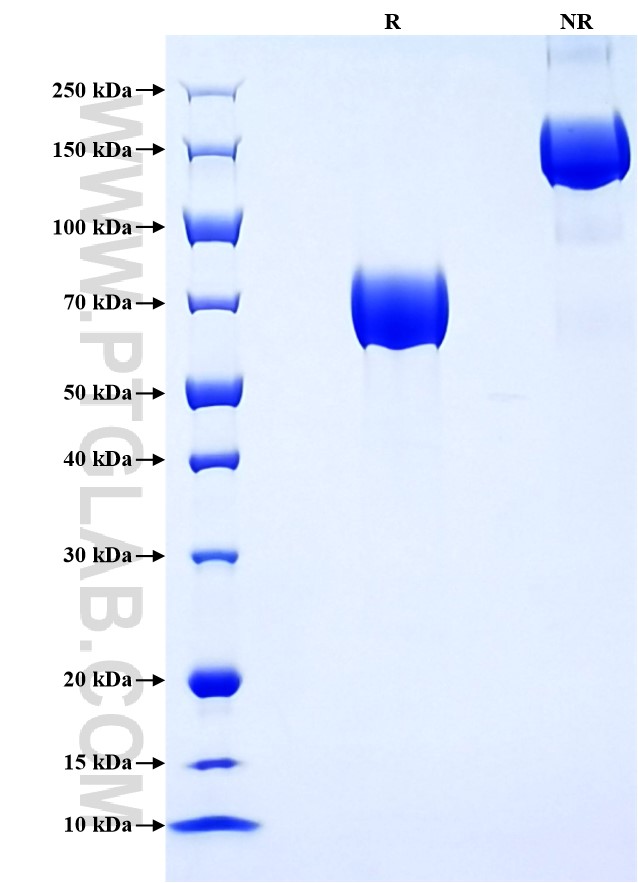
>90 %, SDS-PAGE
标签
mFc Tag
生物活性
未测试
验证数据展示
产品信息
| 纯度 | >90 %, SDS-PAGE |
| 内毒素 | <0.1 EU/μg protein, LAL method |
| 生物活性 |
Not tested |
| 来源 | HEK293-Human GHR protein Ala27-Tyr264 (Accession# P10912-1) with a mosue IgG Fc tag at the C-terminus. |
| 基因ID | 2690 |
| 蛋白编号 | P10912-1 |
| 预测分子量 | 54.3 kDa |
| SDS-PAGE | 60-80 kDa, reducing (R) conditions |
| 组分 | Lyophilized from 0.22 μm filtered solution in PBS, pH 7.4. Normally 5% trehalose and 5% mannitol are added as protectants before lyophilization. |
| 复溶 | Briefly centrifuge the tube before opening. Reconstitute at 0.1-0.5 mg/mL in sterile water. |
| 储存条件 |
It is recommended that the protein be aliquoted for optimal storage. Avoid repeated freeze-thaw cycles.
|
| 运输条件 | The product is shipped at ambient temperature. Upon receipt, store it immediately at the recommended temperature. |
背景信息
GH is a peptide hormone with many pleiotropic actions, including the regulation of metabolism, postnatal growth, cognition, immune, cardiac and renal systems and gut function. GH exerts these actions primarily through alterations in gene expression, initiated by activation of its membrane receptor GHR and the resultant activation of the associated JAK2 and Src family kinases. GH receptor (GHR) is a member of the cytokine receptor family. Mutations in GHR gene have been associated with Laron syndrome, also known as the GH insensitivity syndrome (GHIS), a disorder characterized by short stature.
参考文献:
1.	Panaro MA, Calvello R, et al. (2022) Methods Protoc. 5(4):53.
2.	Erman A, Wabitsch M, et al. (2011) Int J Obes (Lond). 35(12):1520-9.
3.	Glad CAM, Svensson PA, et al. (2019) J Clin Endocrinol Metab. 104(5):1459-1470.
4.	Erman A, Veilleux A, et al. (2011) Int J Obes (Lond). 35(12):1511-9.
5.	Stróżewska W, Durda-Masny M, et al. (2022) Genes (Basel). 13(5):856.