
Recombinant Human BACE1 protein (rFc Tag)
种属
Human
纯度
>90 %, SDS-PAGE
标签
rFc Tag
生物活性
未测试
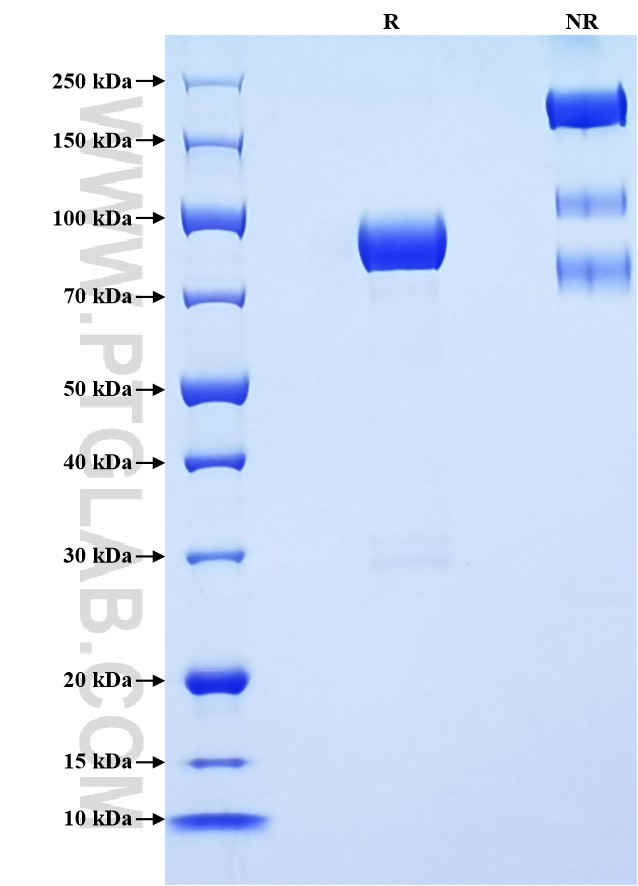
验证数据展示
产品信息
| 纯度 | >90 %, SDS-PAGE |
| 内毒素 | <0.1 EU/μg protein, LAL method |
| 生物活性 |
Not tested |
| 来源 | HEK293-derived Human BACE1 protein Thr22-Thr457 (Accession# P56817-1) with a rabbit IgG Fc tag at the C-terminus. |
| 基因ID | 23621 |
| 蛋白编号 | P56817-1 |
| 预测分子量 | 74.7 kDa |
| SDS-PAGE | 85-95 kDa, reducing (R) conditions |
| 组分 | Lyophilized from 0.22 μm filtered solution in PBS, pH 7.4. Normally 5% trehalose and 5% mannitol are added as protectants before lyophilization. |
| 复溶 | Briefly centrifuge the tube before opening. Reconstitute at 0.1-0.5 mg/mL in sterile water. |
| 储存条件 |
It is recommended that the protein be aliquoted for optimal storage. Avoid repeated freeze-thaw cycles.
|
| 运输条件 | The product is shipped at ambient temperature. Upon receipt, store it immediately at the recommended temperature. |
背景信息
BACE1 is a gene that encodes for an enzyme, also known as Beta-secretase 1. It belongs to the protein class of enzymes and transporters and is predicted to be located in the membrane and intracellular regions. It has several splice variants with different lengths and masses, ranging from 267 to 501 amino acids in length. BACE1 is responsible for the proteolytic processing of the amyloid precursor protein (APP). It cleaves at the N-terminus of the A-beta peptide sequence, leading to the generation and extracellular release of beta-cleaved soluble APP, and a corresponding cell-associated C-terminal fragment. This process is a key step in the formation of amyloid beta peptide from amyloid precursor protein, which is central to the development of Alzheimer's disease.
参考文献:
1.Araki W. (2016) Brain Res Bull. 126(Pt 2):170-177.
2.Motoki K. et al. (2012) Brain Behav. 2(3):270-82.
3.Griffiths HH. et al. (2011) J Biol Chem. 286(38):33489-500.
