
Recombinant Human Apolipoprotein AI protein (His Tag)
种属
Human
纯度
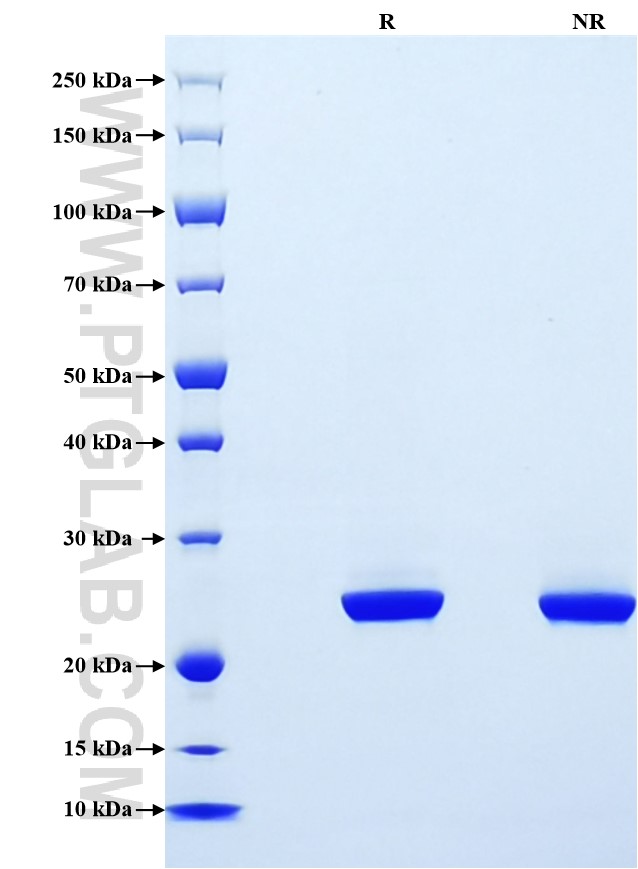
>90 %, SDS-PAGE
标签
His Tag
生物活性
未测试
验证数据展示
产品信息
| 纯度 | >90 %, SDS-PAGE |
| 内毒素 | <0.1 EU/μg protein, LAL method |
| 生物活性 |
Not tested |
| 来源 | HEK293-derived Human Apolipoprotein AI protein Asp25-Gln267 (Accession# P02647) with a His tag at the N-terminus. |
| 基因ID | 335 |
| 蛋白编号 | P02647 |
| 预测分子量 | 29.2 kDa |
| SDS-PAGE | 23-26 kDa, reducing (R) conditions |
| 组分 | Lyophilized from 0.22 μm filtered solution in PBS, pH 7.4. Normally 5% trehalose and 5% mannitol are added as protectants before lyophilization. |
| 复溶 | Briefly centrifuge the tube before opening. Reconstitute at 0.1-0.5 mg/mL in sterile water. |
| 储存条件 |
It is recommended that the protein be aliquoted for optimal storage. Avoid repeated freeze-thaw cycles.
|
| 运输条件 | The product is shipped at ambient temperature. Upon receipt, store it immediately at the recommended temperature. |
背景信息
Apolipoprotein AI(ApoA-I) is a member of blood apolipoproteins, it is the main component of High density lipoprotein(HDL). ApoA-I undergoes a series of complex processes from its generation to its composition as spherical HDL. It not only has a cholesterol reversal transport function, but also has a function in modulating the inflammatory response.The inverse relationship between high density lipoprotein (HDL) plasma levels and coronary heart disease has been attributed to the role that HDL and its major constituent, apolipoprotein A-I (apoA-I), play in reverse cholesterol transport (RCT). The efficiency of RCT depends on the specific ability of apoA-I to promote cellular cholesterol efflux, bind lipids, activate lecithin:cholesterol acyltransferase (LCAT), and form mature HDL that interact with specific receptors and lipid transfer proteins.
参考文献:
1.Tao, Xia et al. (2024) Front Immunol.15:1417270.
2.Rosales, Corina et al. (2015) Biochemistry.54(14):2295-2302.
3.Frank, P G, and Y L Marcel. (2000) Biochemistry.41(6):853-872.
