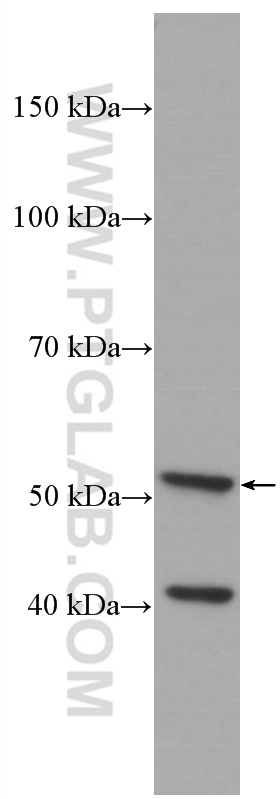
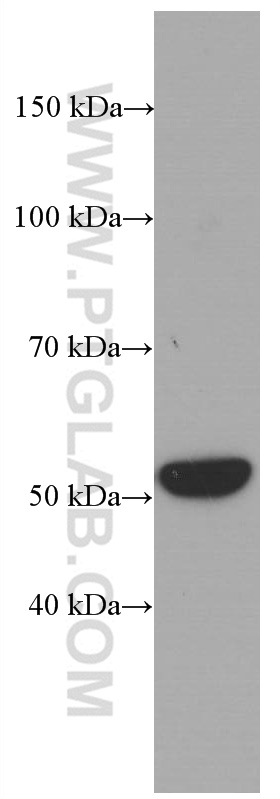
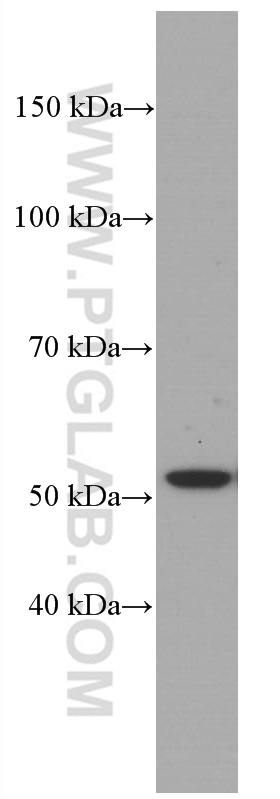
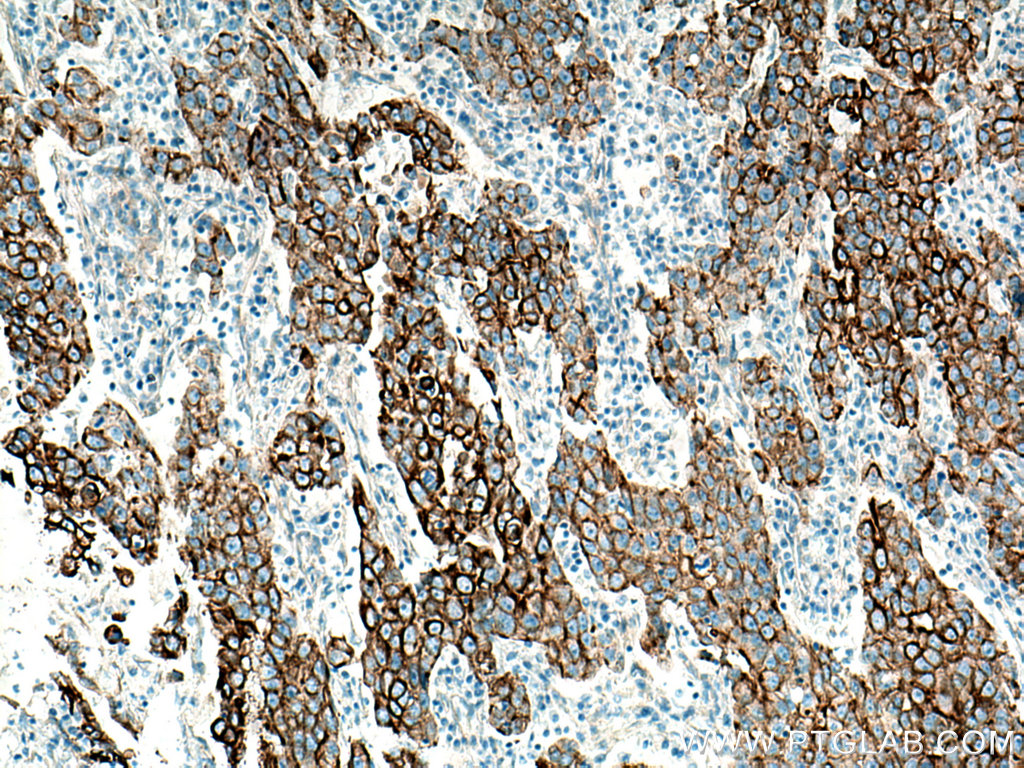
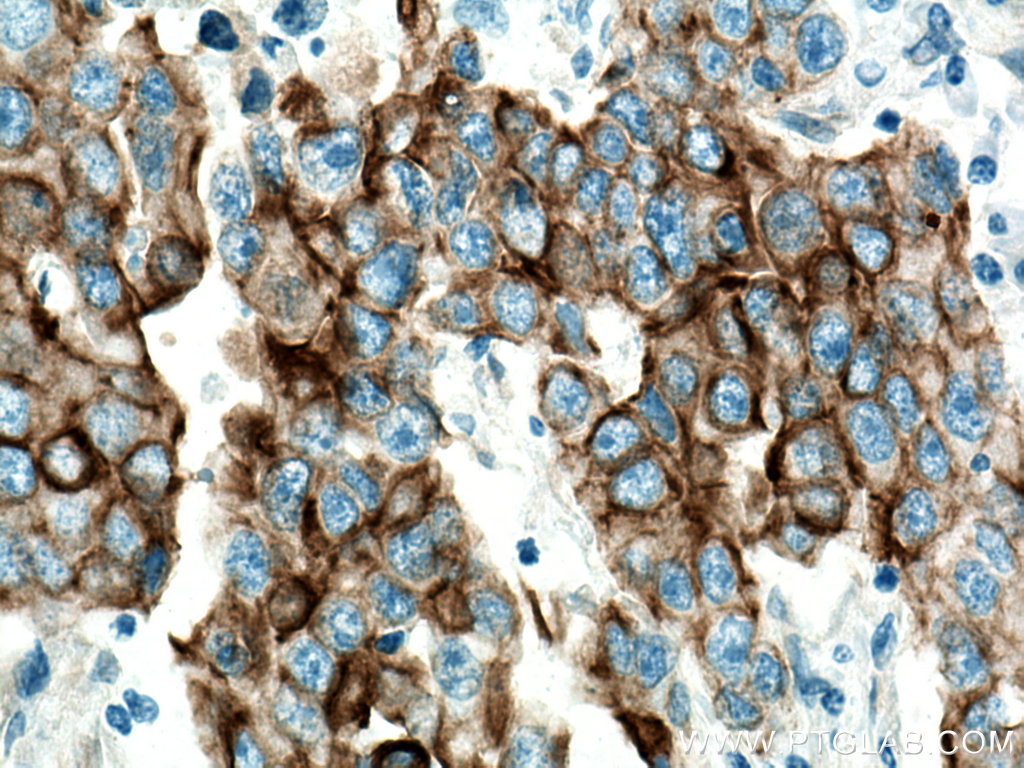
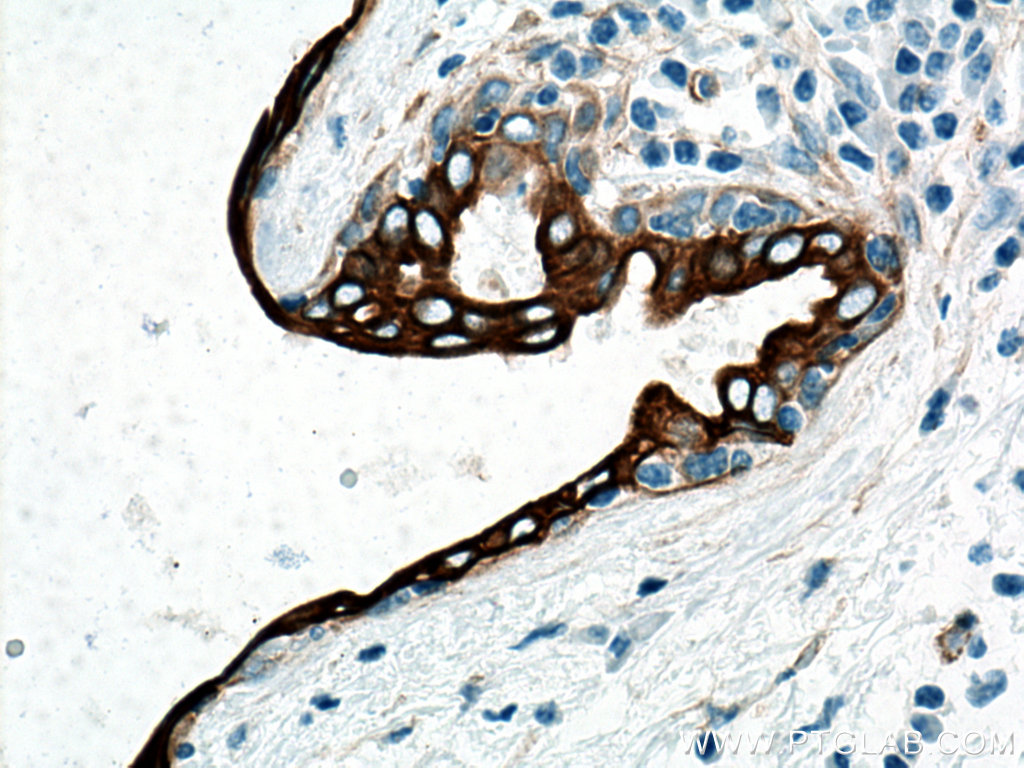
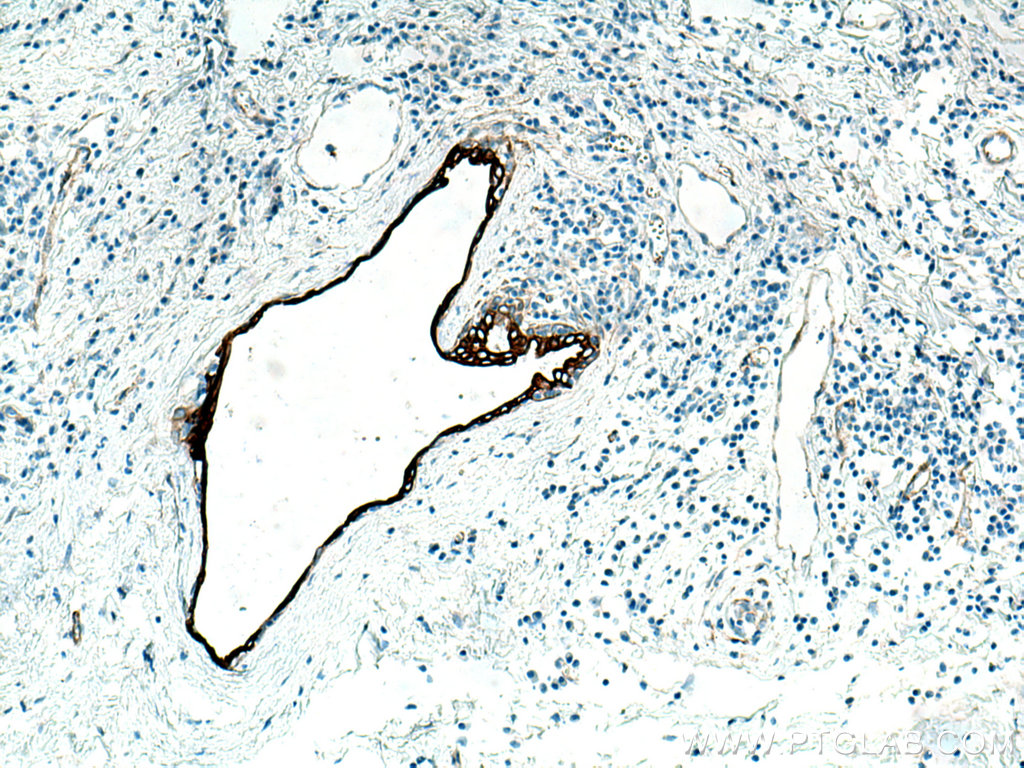
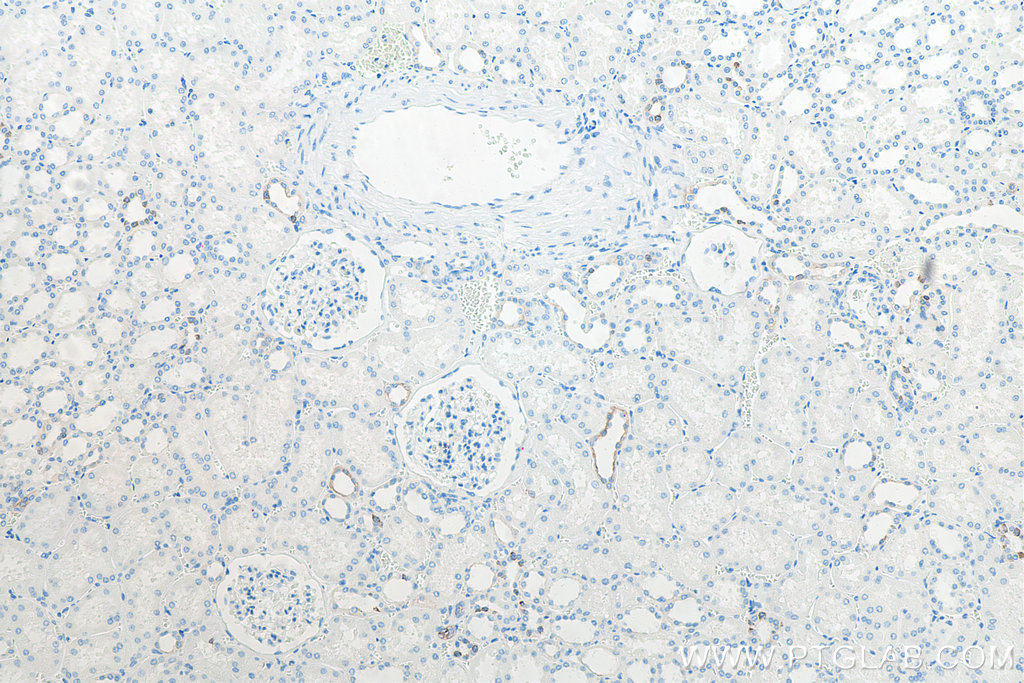
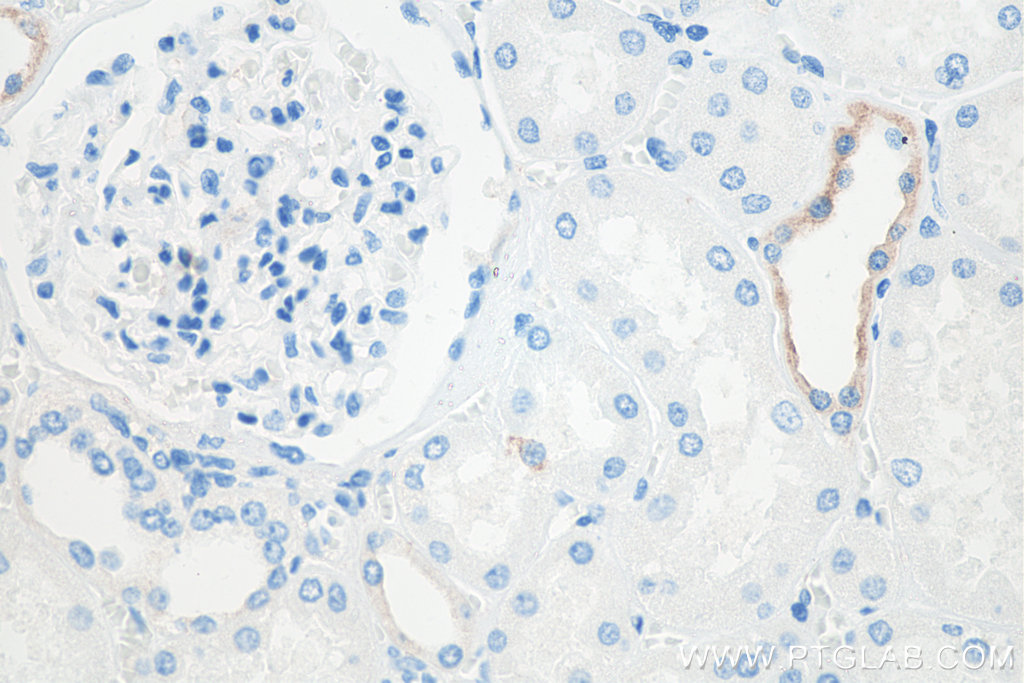
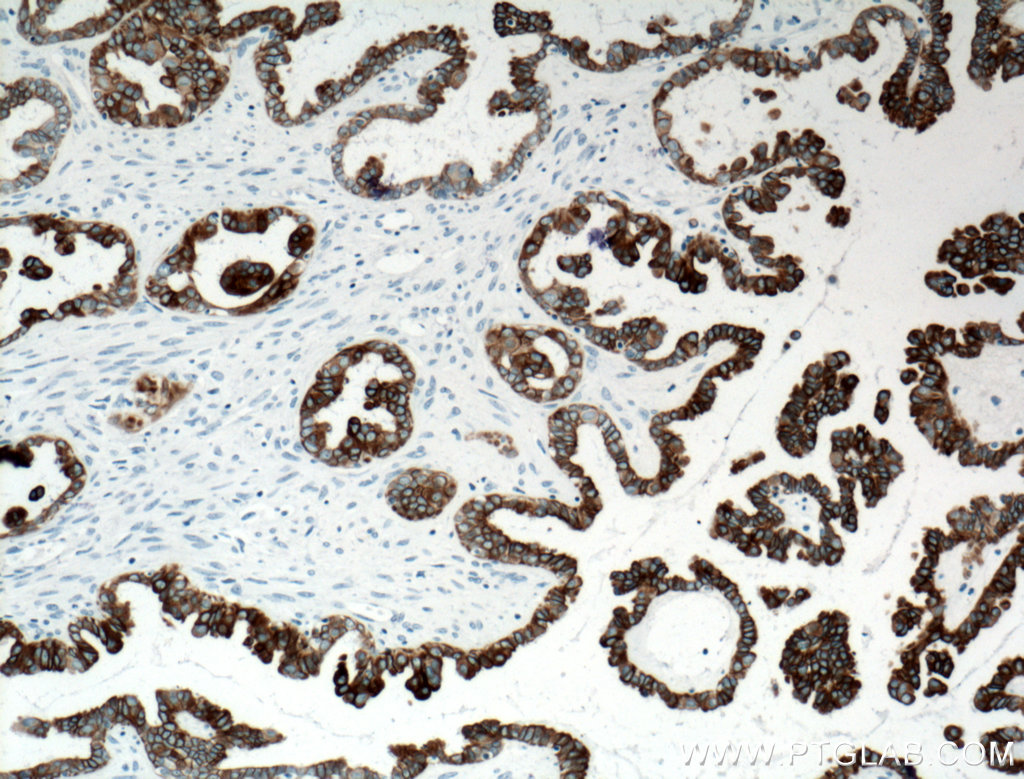
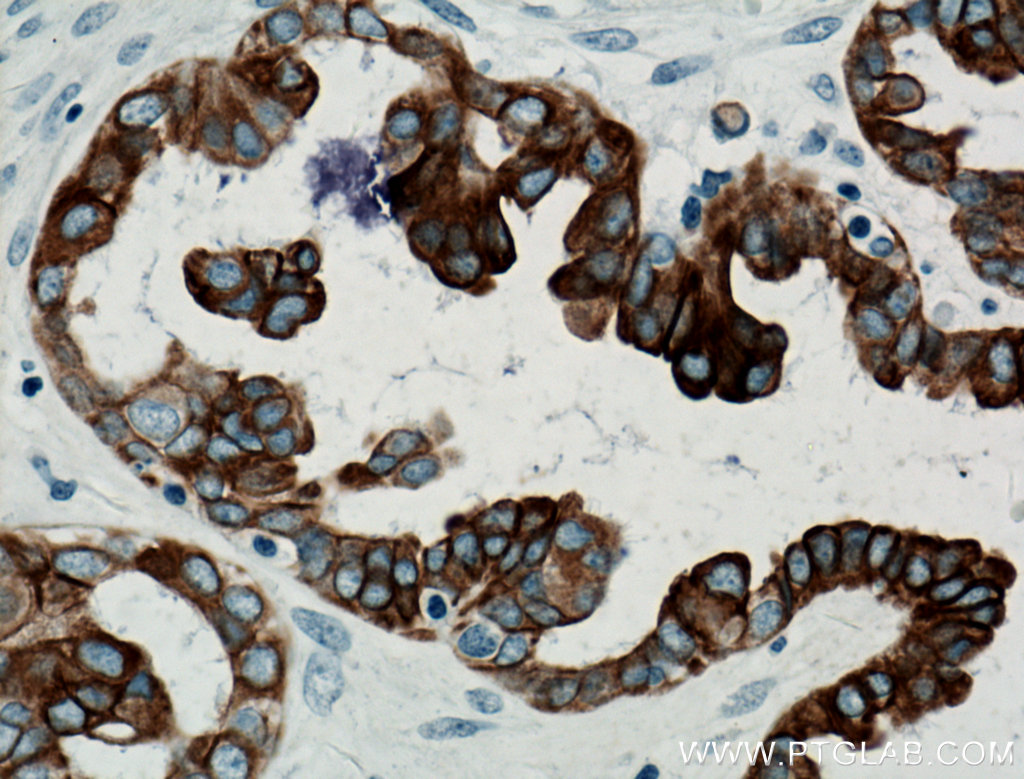
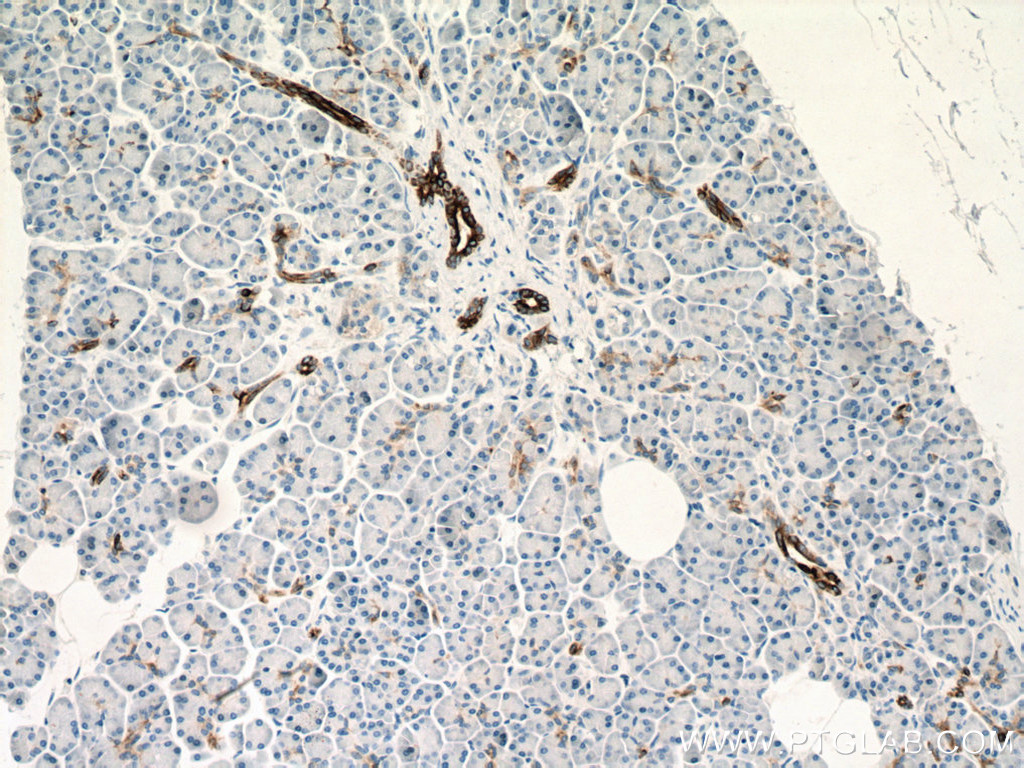
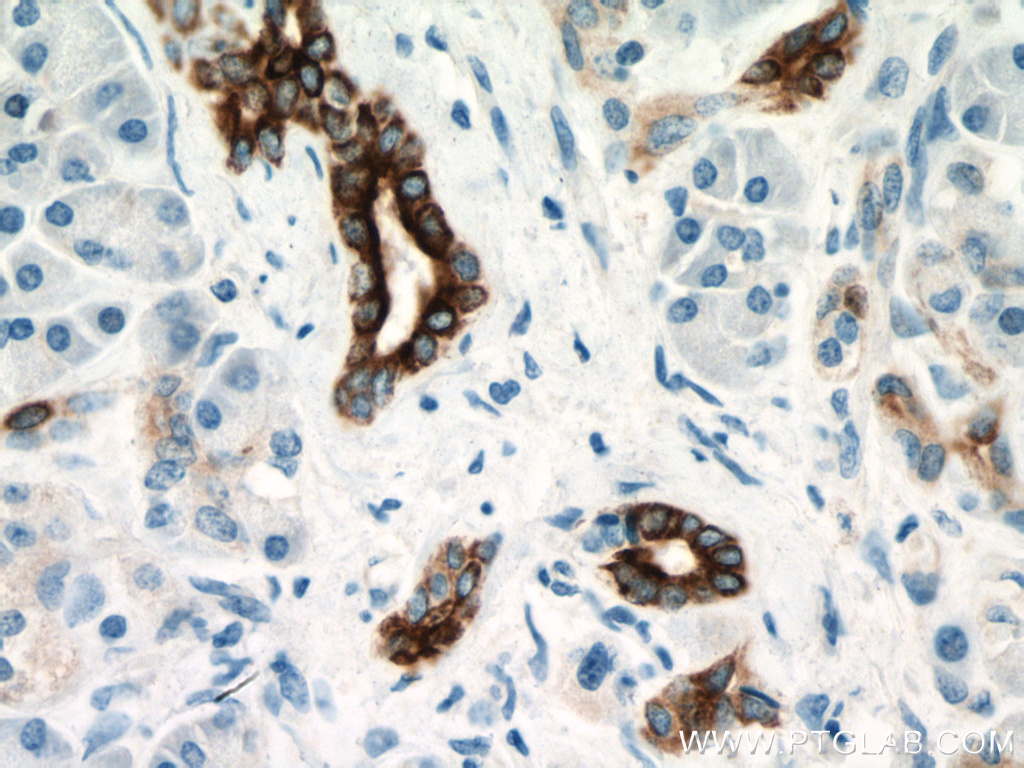
验证数据展示
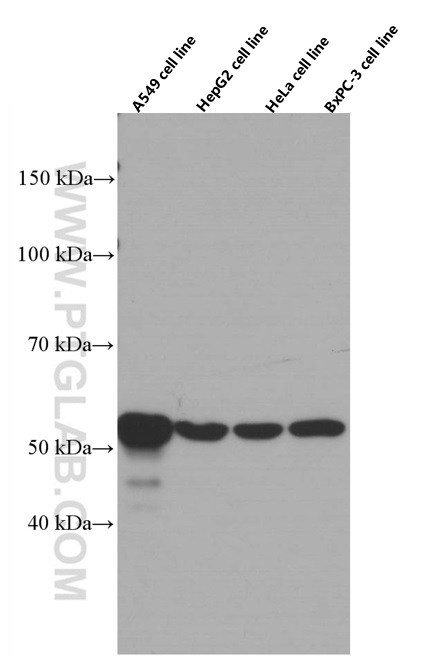
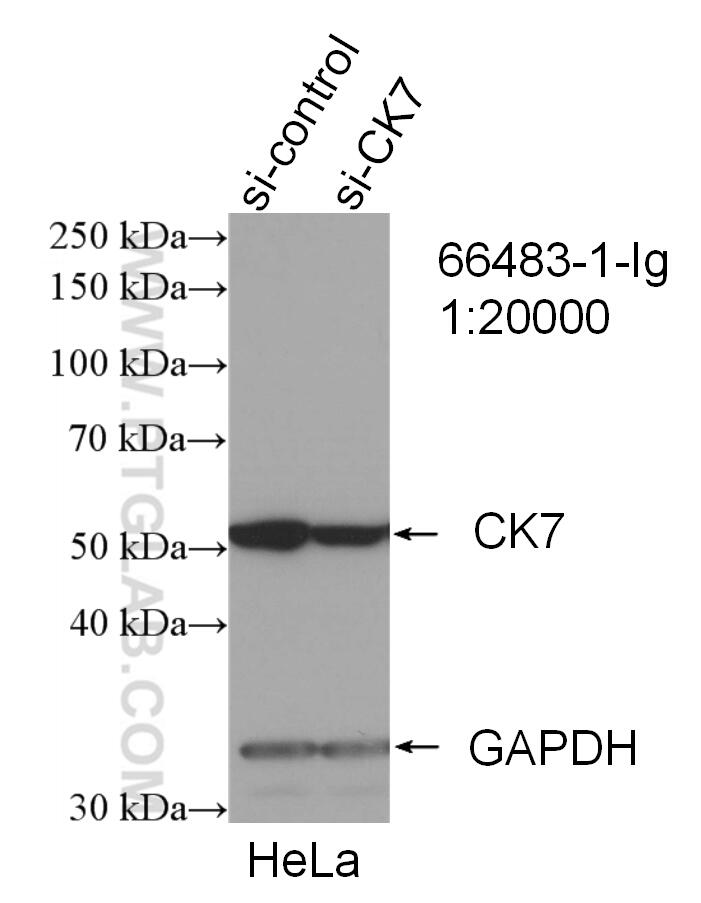
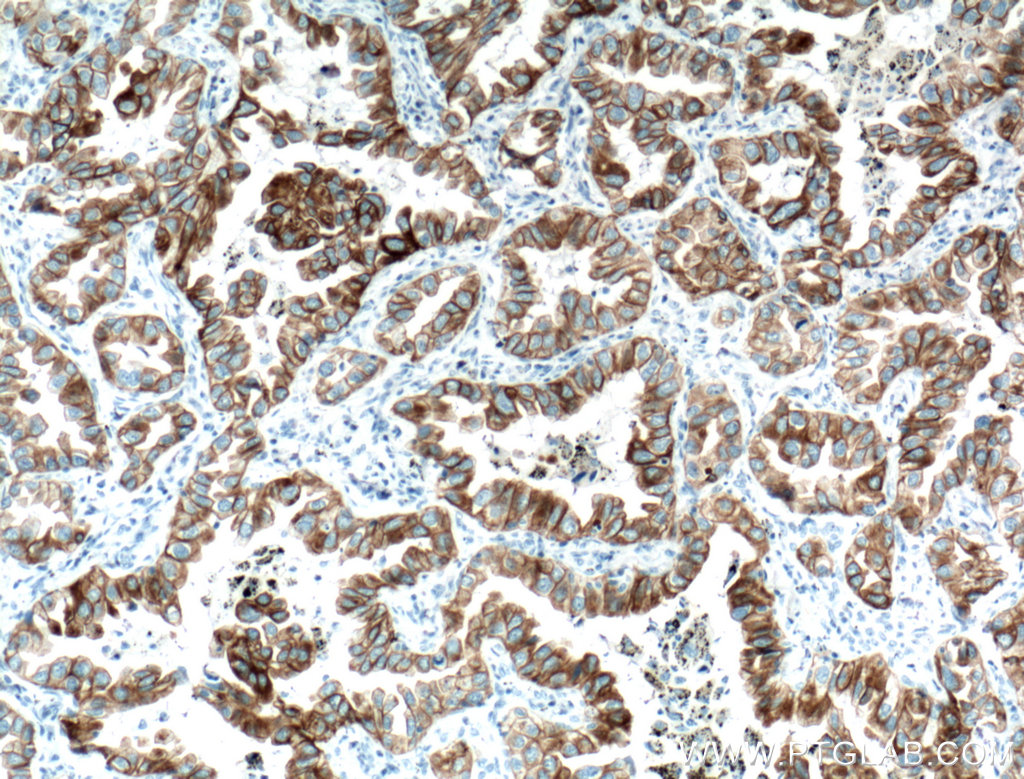
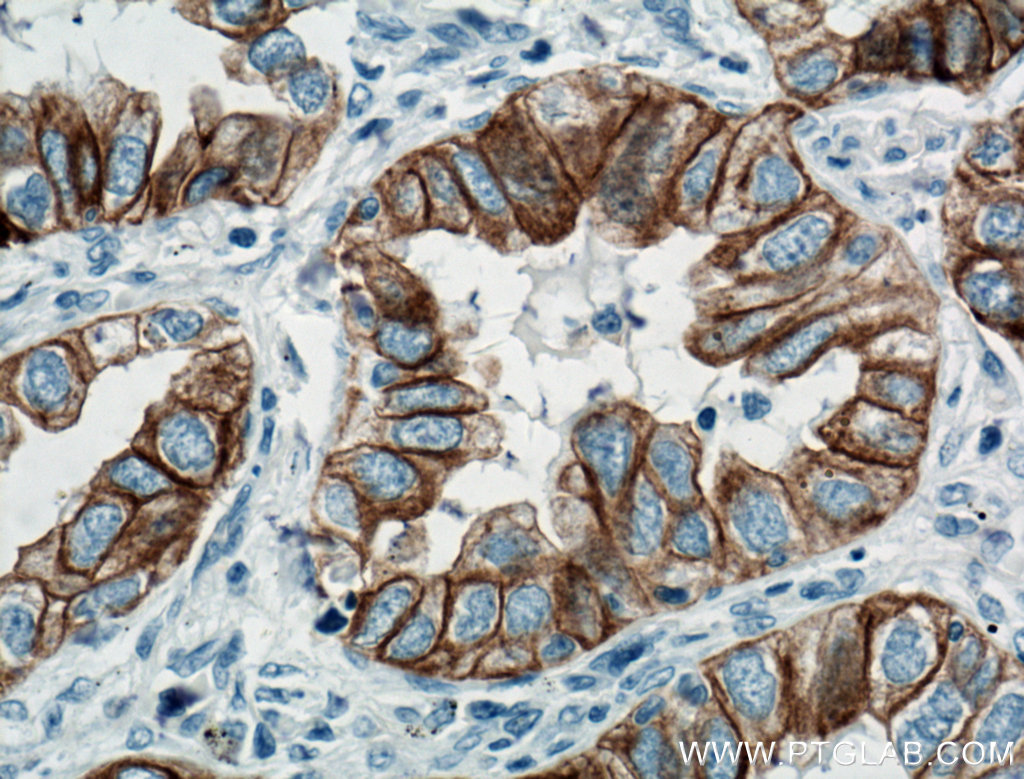
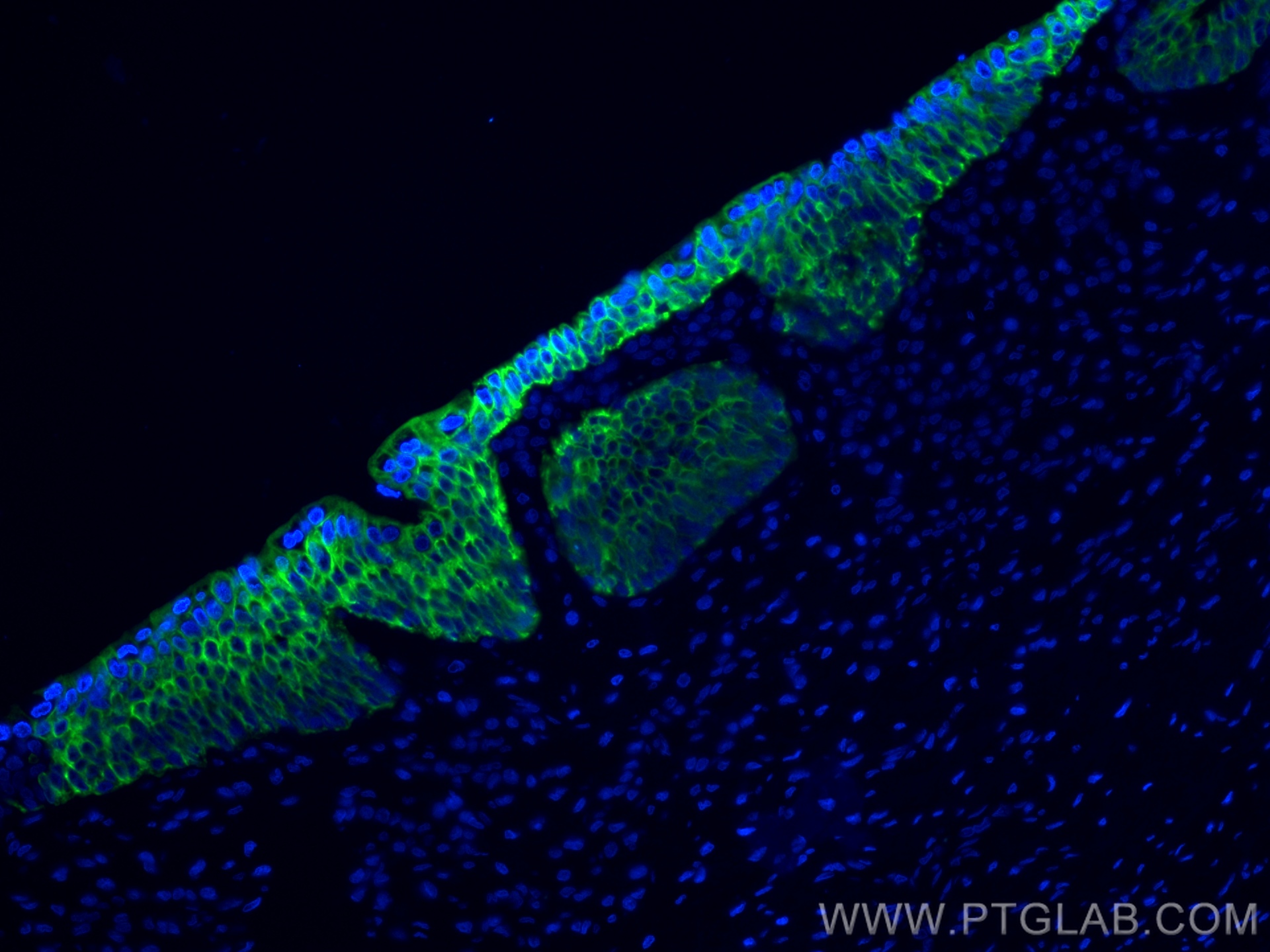
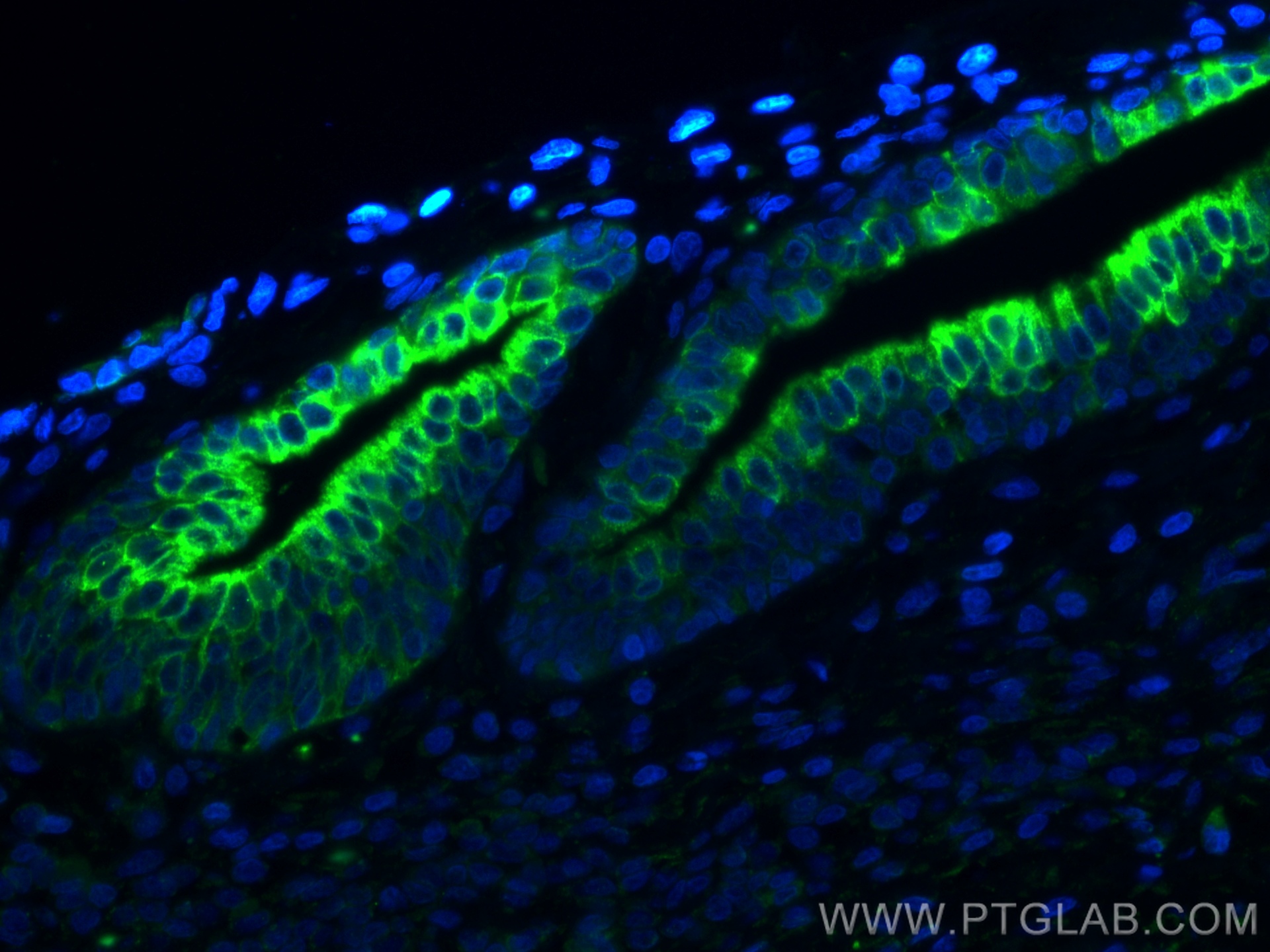
经过测试的应用
| Positive WB detected in | A549 cells, A431 cells, T-47D cells, PC-3 cells, HeLa cells, HepG2 cells, BxPC-3 cells |
| Positive IHC detected in | human lung cancer tissue, human ovary tumor tissue, human kidney tissue, human pancreas tissue, human breast cancer tissue Note: suggested antigen retrieval with TE buffer pH 9.0; (*) Alternatively, antigen retrieval may be performed with citrate buffer pH 6.0 |
| Positive IF-P detected in | human prostate cancer tissue |
推荐稀释比
| 应用 | 推荐稀释比 |
|---|---|
| Western Blot (WB) | WB : 1:10000-1:40000 |
| Immunohistochemistry (IHC) | IHC : 1:500-1:2000 |
| Immunofluorescence (IF)-P | IF-P : 1:200-1:800 |
| It is recommended that this reagent should be titrated in each testing system to obtain optimal results. | |
| Sample-dependent, Check data in validation data gallery. | |
产品信息
66483-1-Ig targets Cytokeratin 7 in WB, IHC, IF-P, ELISA applications and shows reactivity with human samples.
| 经测试应用 | WB, IHC, IF-P, ELISA Application Description |
| 文献引用应用 | WB, IHC, IF |
| 经测试反应性 | human |
| 文献引用反应性 | human, mouse |
| 免疫原 |
CatNo: Ag7895 Product name: Recombinant human CK7 protein Source: e coli.-derived, PGEX-4T Tag: GST Domain: 1-351 aa of BC002700 Sequence: MSIHFSSPVFTSRSAAFSGRGAQVRLSSARPGGLGSSSLYGLGASRPRVAVRSAYGGPVGAGIREVTINQSLLAPLRLDADPSLQRVRQEESEQIKTLNNKFASFIDKVRFLEQQNKLLETKWTLLQEQKSAKSSRLPDIFEAQIAGLRGQLEALQVDGGRLEAELRSMQDVVEDFKNKYEDEINRRTAAENEFVVLKKDVDAAYMSKVELEAKVDALNDEINFLRTLNETELTELQSQISDTSVVLSMDNSRSLDLDGIIAEVKAQYEEMAKCSRAEAEAWYQTKFETLQAQAGKHGDDLRNTRNEISEMNRAIQRLQAEIDNIKNQRAKLEAAIAEAEERGELALKDAR 种属同源性预测 |
| 宿主/亚型 | Mouse / IgG2a |
| 抗体类别 | Monoclonal |
| 产品类型 | Antibody |
| 全称 | keratin 7 |
| 别名 | KRT7, 2E1G5, CK 7, CK7, CK-7 |
| 计算分子量 | 469 aa, 51 kDa |
| 观测分子量 | 51 kDa |
| GenBank蛋白编号 | BC002700 |
| 基因名称 | Cytokeratin 7 |
| Gene ID (NCBI) | 3855 |
| RRID | AB_2881849 |
| 偶联类型 | Unconjugated |
| 形式 | Liquid |
| 纯化方式 | Protein A purification |
| UNIPROT ID | P08729 |
| 储存缓冲液 | PBS with 0.02% sodium azide and 50% glycerol, pH 7.3. |
| 储存条件 | Store at -20°C. Stable for one year after shipment. Aliquoting is unnecessary for -20oC storage. |
背景介绍
Keratins are a large family of proteins that form the intermediate filament cytoskeleton of epithelial cells, which are classified into two major sequence types. Type I keratins are a group of acidic intermediate filament proteins, including K9-K23, and the hair keratins Ha1-Ha8. Type II keratins are the basic or neutral courterparts to the acidic type I keratins, including K1-K8, and the hair keratins, Hb1-Hb6. KRT7, also named as cytokeratin 7, is one member of type II basic cytokeratin. It is specifically expressed in the simple epithelia lining the cavities of the internal organs and in the gland ducts and blood vessels, and their neoplasms. KRT7 is marker of epithelial tissues, but not present in carcinomas of stratified squamous cell origin.This antibody is specifically against KRT7.
实验方案
| Product Specific Protocols | |
|---|---|
| IF protocol for Cytokeratin 7 antibody 66483-1-Ig | Download protocol |
| IHC protocol for Cytokeratin 7 antibody 66483-1-Ig | Download protocol |
| WB protocol for Cytokeratin 7 antibody 66483-1-Ig | Download protocol |
| Standard Protocols | |
|---|---|
| Click here to view our Standard Protocols |
发表文章
| Species | Application | Title |
|---|---|---|
Drug Resist Updat Targeting the USP5-HSPB1 axis overcomes ferroptosis resistance in intrahepatic cholangiocarcinoma. | ||
Nat Commun Enrichment of decidual CD11c + CD8 + T cells with altered immune function in early pregnancy loss | ||
Nat Commun Integrated molecular and clinical characterization of pulmonary large cell neuroendocrine carcinoma | ||
J Exp Clin Cancer Res IKBKE downregulation increases chemosensitivity through pyroptosis mediated by the caspase-3/GSDME pathway in pancreatic cancer. | ||
EBioMedicine Significance of integrated clinical and proteomic characteristics analysis for pathogenesis and management of Crohn's disease with concomitant psoriasis. | ||
Adv Healthc Mater In Situ Synthesis of Glycosaminoglycan-Mimicking Coatings Driven by Local Pathological Microenvironment: Boosting Bladder Mucosal Regeneration and Barrier Function. |