
Recombinant Human MRC2 protein (rFc Tag)
种属
Human
纯度
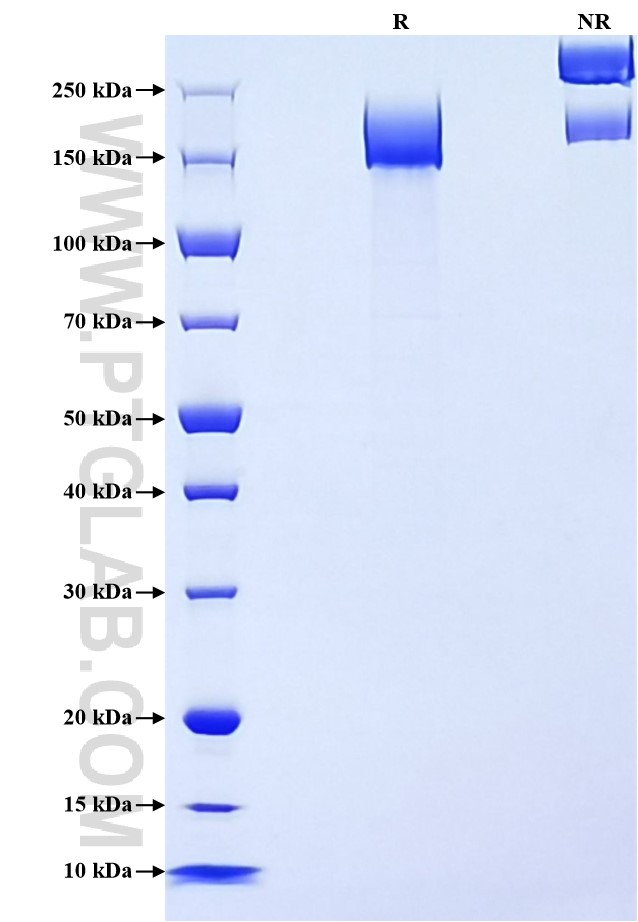
>90 %, SDS-PAGE
标签
rFc Tag
生物活性
未测试
验证数据展示
产品信息
| 纯度 | >90 %, SDS-PAGE |
| 内毒素 | <0.1 EU/μg protein, LAL method |
| 生物活性 |
Not tested |
| 来源 | HEK293-derived Human MRC2 protein Gly31-Ala1414 (Accession# Q9UBG0) with a rabbit IgG Fc tag at the C-terminus. |
| 基因ID | 9902 |
| 蛋白编号 | Q9UBG0 |
| 预测分子量 | 182.1 kDa |
| SDS-PAGE | 150-200 kDa, reducing (R) conditions |
| 组分 | Lyophilized from 0.22 μm filtered solution in PBS, pH 7.4. Normally 5% trehalose and 5% mannitol are added as protectants before lyophilization. |
| 复溶 | Briefly centrifuge the tube before opening. Reconstitute at 0.1-0.5 mg/mL in sterile water. |
| 储存条件 |
It is recommended that the protein be aliquoted for optimal storage. Avoid repeated freeze-thaw cycles.
|
| 运输条件 | The product is shipped at ambient temperature. Upon receipt, store it immediately at the recommended temperature. |
背景信息
C-type mannose receptor 2 (MRC2), also known as CD280, CLEC13E, ENDO180, KIAA0709, or UPARAP, is a type I transmembrane glycoprotein that belongs to the macrophage mannose receptor protein family. It contains an N-terminal cysteine-rich domain, a fibronectin type II domain (FNII), eight C-type-lectin-like domains, and a transmembrane region followed by a small cytoplasmic domain. MRC2 is a recycling endocytic receptor that functions in both these cellular activities by promoting cell migration and uptake of collagens for intracellular degradation. MRC2 is expressed in several cells and organs including fibroblasts, endothelial cells, and macrophages. Altered MRC2 expression has been associated with the development and progression of different cancers, including head and neck squamous cell carcinoma, breast cancer, hepatocellular cancer, and prostate cancer.
参考文献:
1.Sheikh H, et al. (2000) J Cell Sci. 113 ( Pt 6):1021-32.
2.Behrendt N, et al. (2000) J Biol Chem. 275(3):1993-2002.
3.Ishikawa K, et al. (1998) DNA Res. 5(3):169-76.
4.Li L, et al. (2021) Anal Cell Pathol (Amst). 2021:6619870.
5.Wienke D, et al. (2007) Cancer Res. 67(21):10230-40.
6.Zhao Z, et al. (2022) Front Mol Biosci. 9:951636.
7.Gopalakrishnan KV, et al. (2023) J Stomatol Oral Maxillofac Surg. 124(6S):101617.
8.Gai X, et al. (2014) Int J Mol Sci. 15(9):15011-25.
