
Recombinant Human CD158K/KIR3DL2 protein (rFc Tag)
种属
Human
纯度
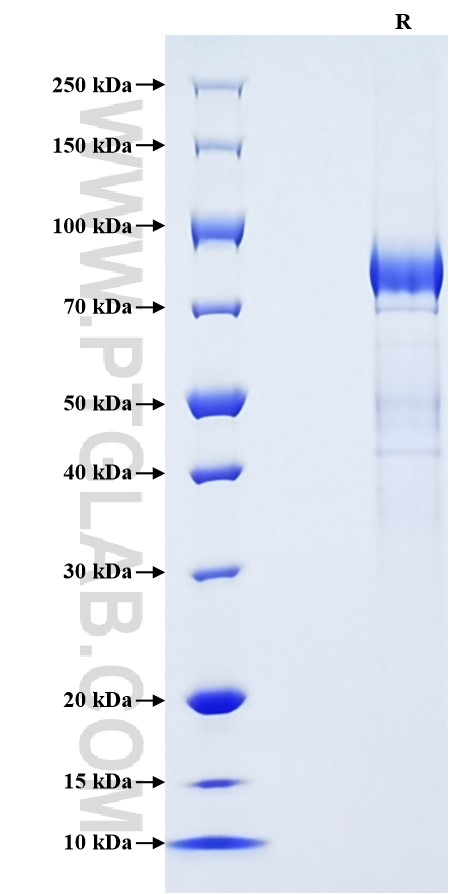
>90 %, SDS-PAGE
标签
rFc Tag
生物活性
未测试
验证数据展示
产品信息
| 纯度 | >90 %, SDS-PAGE |
| 内毒素 | <0.1 EU/μg protein, LAL method |
| 生物活性 |
Not tested |
| 来源 | HEK293-derived Human KIR3DL2 protein Leu22-His340 (Accession# P43630-1) with a rabbit IgG Fc tag at the C-terminus. |
| 基因ID | 3812 |
| 蛋白编号 | P43630-1 |
| 预测分子量 | 61.3 kDa |
| SDS-PAGE | 75-85 kDa, reducing (R) conditions |
| 组分 | Lyophilized from 0.22 μm filtered solution in PBS, pH 7.4. Normally 5% trehalose and 5% mannitol are added as protectants before lyophilization. |
| 复溶 | Briefly centrifuge the tube before opening. Reconstitute at 0.1-0.5 mg/mL in sterile water. |
| 储存条件 |
It is recommended that the protein be aliquoted for optimal storage. Avoid repeated freeze-thaw cycles.
|
| 运输条件 | The product is shipped at ambient temperature. Upon receipt, store it immediately at the recommended temperature. |
背景信息
KIR3DL2, also known as CD158k, is an inhibitory receptor expressed by natural killer (NK) cells and a subset of CD8+ T cells. It plays a role in immune regulation by binding to HLA class I molecules, specifically HLA-A3 and HLA-A11, in a peptide-dependent fashion. KIR3DL2 can also function as an innate immune receptor for delivering CpG DNA to TLR9 in NK cells, highlighting its role in both adaptive and innate immunity. This protein is primarily expressed on the cell surface, particularly in NK cells and certain T cells. It has been implicated in various diseases, particularly in the context of hematological malignancies and autoimmune diseases. Aberrant expression of KIR3DL2 has been observed in neoplastic cells in transformed mycosis fungoides and Sézary syndrome, suggesting its potential as a therapeutic target in primary cutaneous anaplastic large-cell lymphoma (pcALCL).
参考文献:
1.Shaw J. et al. (2012). Front Immunol. 3:339.
2.Battistella M. et al. (2016). Br J Dermatol. 175(2):325-333.
3.Battistella M. et al. (2017). Blood. 130(26):2900-2902.
4.Chan AT. et al. (2005). Arthritis Rheum. 52(11):3586-3595.
Hurabielle C. et al. (2018). Br J Dermatol. 179(1):197-199.
