验证数据展示
产品信息
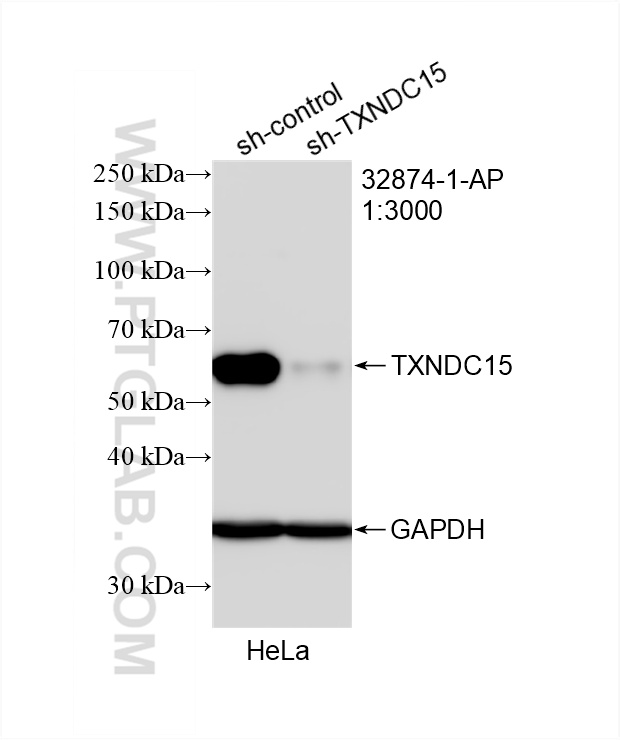
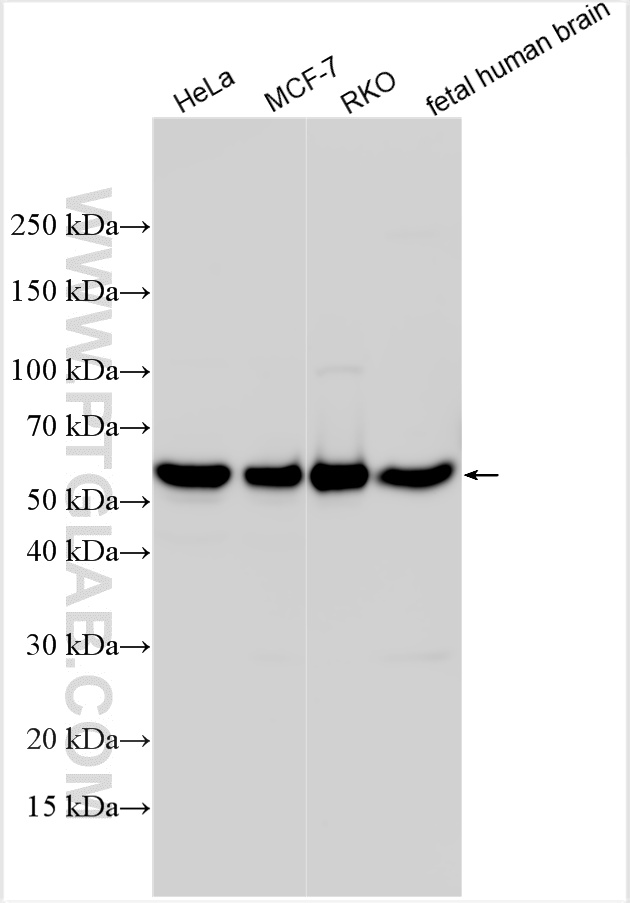
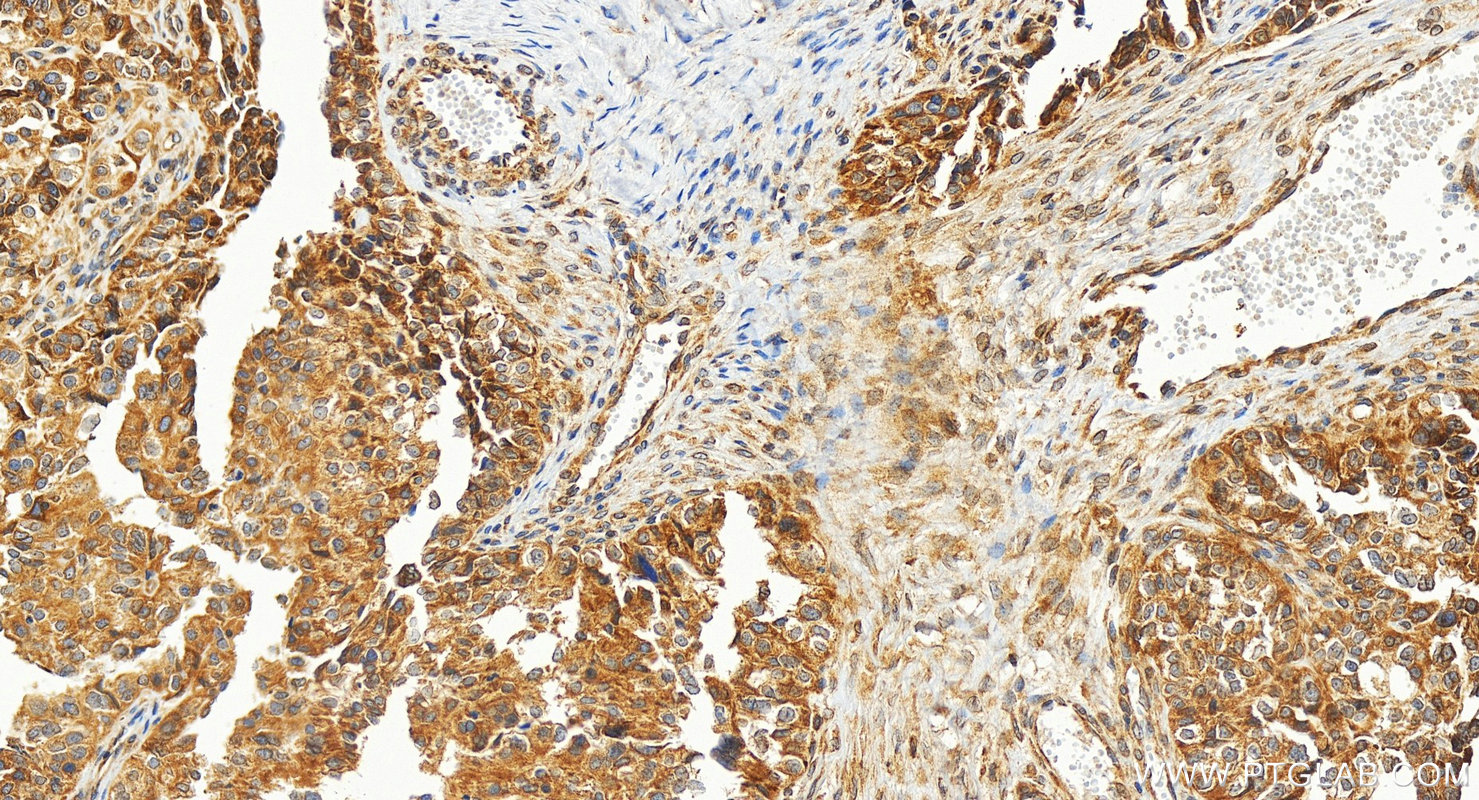
32874-1-PBS targets TXNDC15 in WB, IHC, Indirect ELISA applications and shows reactivity with human samples.
| 经测试应用 | WB, IHC, Indirect ELISA Application Description |
| 经测试反应性 | human |
| 免疫原 |
CatNo: Ag37138 Product name: Recombinant human TXNDC15 protein Source: e coli.-derived, PGEX-4T Tag: GST Domain: 33-321 aa of BC032568 Sequence: VEVAEESGRLWSEEQPAHPLQVGAVYLGEEELLHDPMGQDRAAEEANAVLGLDTQGDHMVMLSVIPGEAEDKVSSEPSGVTCGAGGAEDSRCNVRESLFSLDGAGAHFPDREEEYYTEPEVAESDAAPTEDSNNTESLKSPKVNCEERNITGLENFTLKILNMSQDLMDFLNPNGSDCTLVLFYTPWCRFSASLAPHFNSLPRAFPALHFLALDASQHSSLSTRFGTVAVPNILLFQGAKPMARFNHTDRTLETLKIFIFNQTGIEAKKNVVVTQADQIGPLPSTLIKS 种属同源性预测 |
| 宿主/亚型 | Rabbit / IgG |
| 抗体类别 | Polyclonal |
| 产品类型 | Antibody |
| 全称 | thioredoxin domain containing 15 |
| 别名 | C5orf14, Thioredoxin Domain Containing 15, Thioredoxin domain-containing protein 15, UNQ335/PRO534 |
| 观测分子量 | 55 kDa |
| GenBank蛋白编号 | BC032568 |
| 基因名称 | TXNDC15 |
| Gene ID (NCBI) | 79770 |
| RRID | AB_3742773 |
| 偶联类型 | Unconjugated |
| 形式 | Liquid |
| 纯化方式 | Antigen affinity Purification |
| UNIPROT ID | Q96J42 |
| 储存缓冲液 | PBS only, pH 7.3. |
| 储存条件 | Store at -80°C. The product is shipped with ice packs. Upon receipt, store it immediately at -80°C |
背景介绍
TXNDC15 (thioredoxin domain-containing protein 15) is a single-pass type I transmembrane protein that contains a thioredoxin domain and is primarily localized in the cytoplasm. It plays a positive regulatory role in the Hedgehog signaling pathway within cilia and actively participates in the process of ciliogenesis, exerting significant influence on the structure and function of cilia-an essential cellular organelle. Additionally, TXNDC15 has been found to form mixed disulfide complexes with endoplasmic reticulum-resident protein disulfide isomerase (PDI) family members, such as ERp57, PDI, and ERp44, suggesting its involvement in protein folding and quality control processes. Notably, mutations in the TXNDC15 gene are associated with a rare and lethal genetic disorder known as Meckel-Gruber syndrome, which is caused by defects in ciliogenesis.