Recombinant Mouse Vitamin D binding protein (rFc Tag)
种属
Mouse
纯度
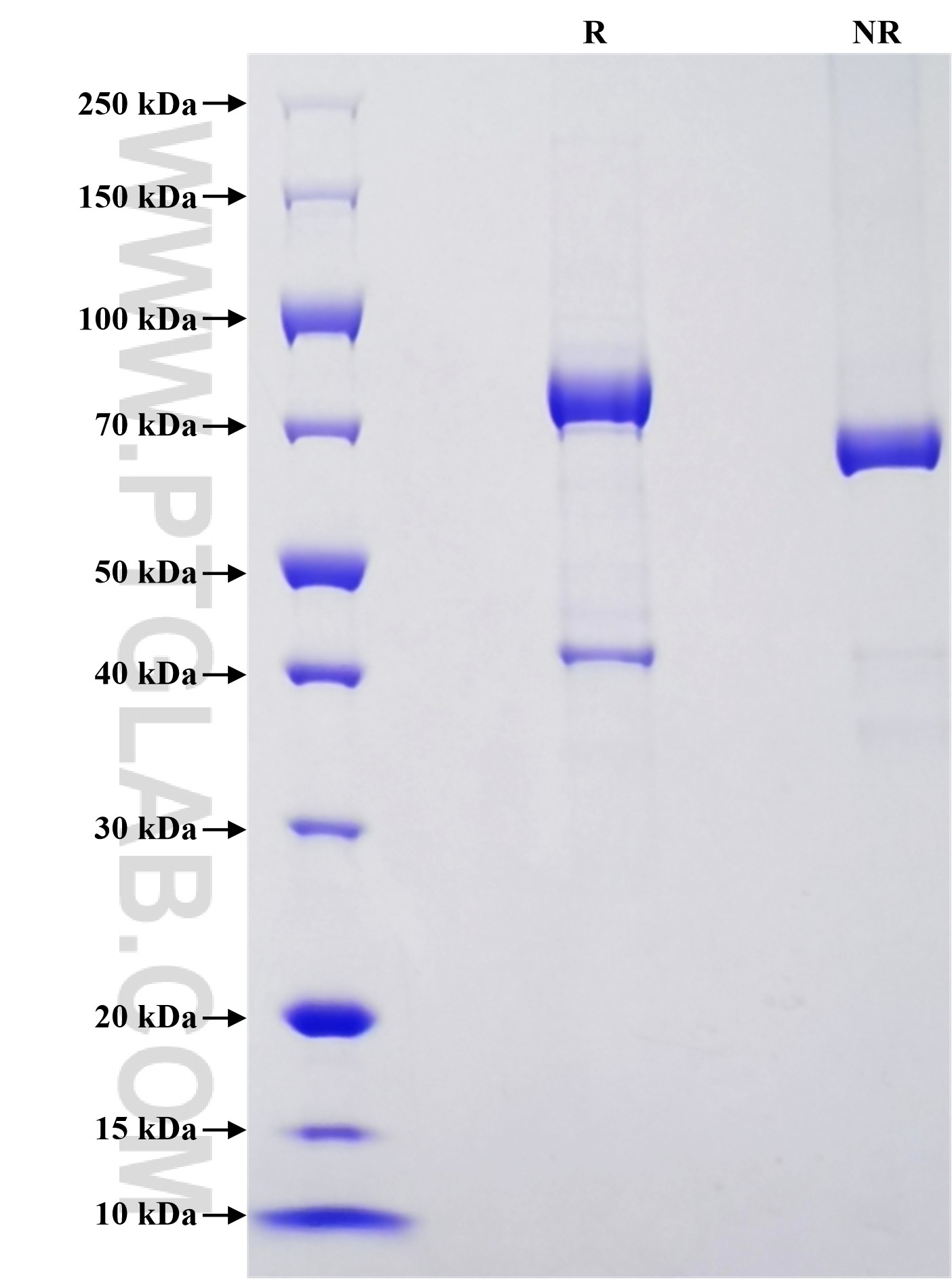
>90 %, SDS-PAGE
标签
rFc Tag
生物活性
未测试
验证数据展示
产品信息
| 纯度 | >90 %, SDS-PAGE |
| 内毒素 | <0.1 EU/μg protein, LAL method |
| 生物活性 |
Not tested |
| 来源 | HEK293-derived Mouse Vitamin D binding protein Leu17-Ser476 (Accession# P21614) with a rabbit IgG Fc tag at the N-terminus. |
| 基因ID | 14473 |
| 蛋白编号 | P21614 |
| 预测分子量 | 77.9 kDa |
| SDS-PAGE | 70-87 kDa, reducing (R) conditions |
| 组分 | Lyophilized from 0.22 μm filtered solution in PBS, pH 7.4. Normally 5% trehalose and 5% mannitol are added as protectants before lyophilization. |
| 复溶 | Briefly centrifuge the tube before opening. Reconstitute at 0.1-0.5 mg/mL in sterile water. |
| 储存条件 |
It is recommended that the protein be aliquoted for optimal storage. Avoid repeated freeze-thaw cycles.
|
| 运输条件 | The product is shipped at ambient temperature. Upon receipt, store it immediately at the recommended temperature. |
背景信息
Vitamin D binding protein (DBP), also known as group-specific component (GC-globulin), is a glycosylated alpha-globulin produced primarily by the liver. It is a multifunctional, highly expressed, polymorphic serum protein. And it is involved in vitamin D transport and storage, scavenges of extracellular G-actin, and enhances of the chemotactic activity of C5 alpha for neutrophils in inflammation and macrophage activation. The presence of genetic variants in the Vitamin D BP gene are related to certain diseases, mostly concerning cancers (breast, prostate, pancreatic, lung, colorectal, basal cell carcinoma cancer and cutaneous melanoma) or other related diseases (thyroid autoimmunity disorders, obesity, diabetes mellitus, bone metabolism, rheumatoid arthritis, ankylosing spondylitis, asthma, chronic obstructive pulmonary disease, tuberculosis and coronary artery diseases).
参考文献:
1.White, P, and N Cooke. Trends in endocrinology and metabolism: TEM vol. 11,8 (2000): 320-7.
2.Bhan, Ishir. International journal of endocrinology vol. 2014 (2014): 561214.
3.Nagasawa, Hideko et al. Anticancer research vol. 25,6A (2005): 3689-95.
4.Rozmus, Dominika et al. International journal of molecular sciences vol. 21,21 7822. 22 Oct. 2020, doi:10.3390/ijms21217822.