Recombinant Mouse Oncostatin M protein (rFc Tag)
种属
Mouse
纯度
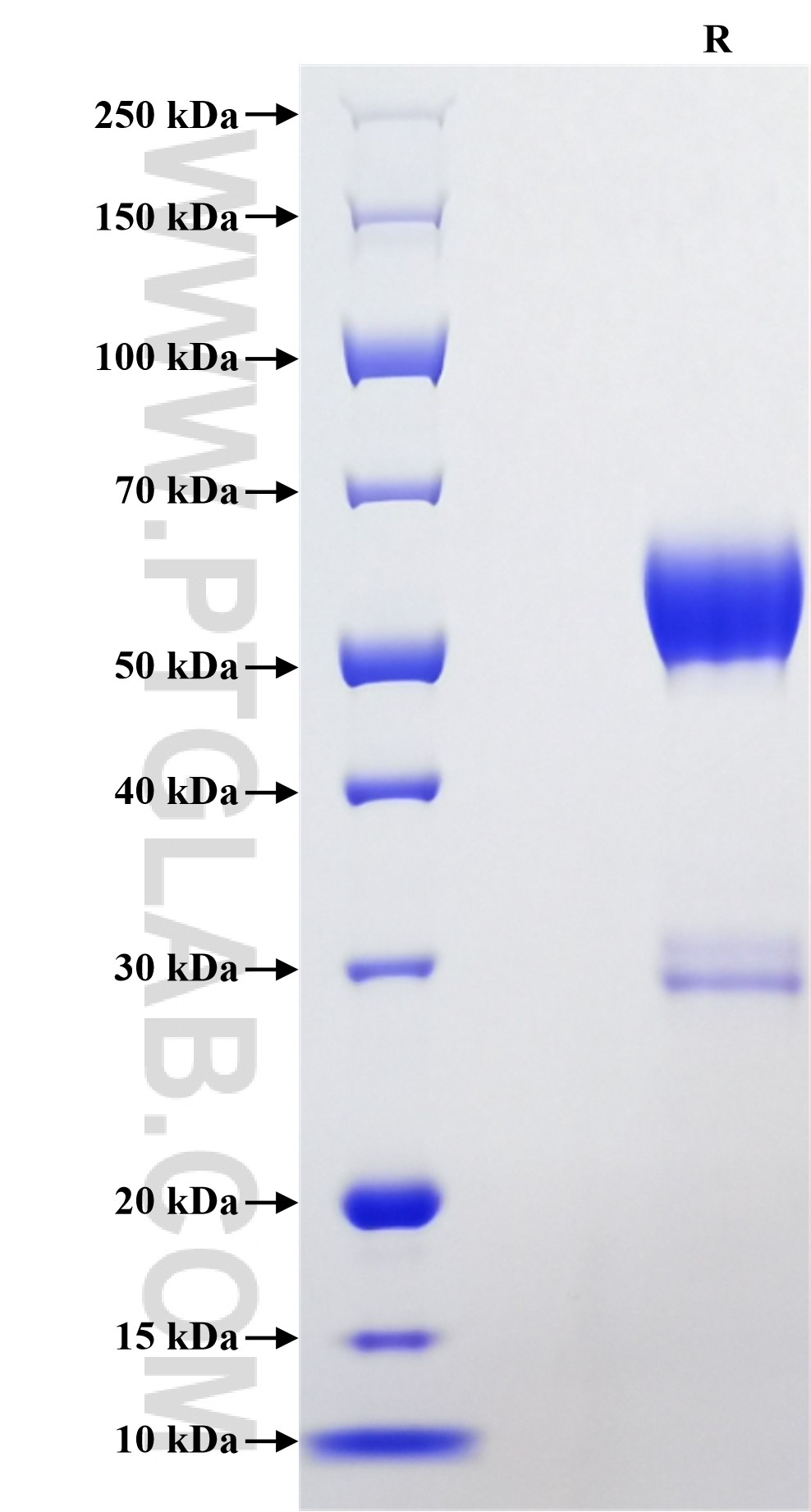
>90 %, SDS-PAGE
标签
rFc Tag
生物活性
未测试
验证数据展示
产品信息
| 纯度 | >90 %, SDS-PAGE |
| 内毒素 | <0.1 EU/μg protein, LAL method |
| 生物活性 |
Not tested |
| 来源 | HEK293-derived Mouse Oncostatin M protein Asn25-Arg206 (Accession# P53347) with a rabbit IgG Fc tag at the C-terminus. |
| 基因ID | 18413 |
| 蛋白编号 | P53347 |
| 预测分子量 | 46.1 kDa |
| SDS-PAGE | 50-65 kDa, reducing (R) conditions |
| 组分 | Lyophilized from 0.22 μm filtered solution in PBS, pH 7.4. Normally 5% trehalose and 5% mannitol are added as protectants before lyophilization. |
| 复溶 | Briefly centrifuge the tube before opening. Reconstitute at 0.1-0.5 mg/mL in sterile water. |
| 储存条件 |
It is recommended that the protein be aliquoted for optimal storage. Avoid repeated freeze-thaw cycles.
|
| 运输条件 | The product is shipped at ambient temperature. Upon receipt, store it immediately at the recommended temperature. |
背景信息
Oncostatin M (OSM) is a multifunctional cytokine that belongs to the interleukin-6 (IL-6) family. It is primarily secreted by activated T lymphocytes and macrophages as a 28 kDa glycoprotein. OSM shares properties with all members of this cytokine family, but is most closely related in structure and function to leukemia inhibitory factor (LIF). OSM acts on a variety of cells and is involved in regulating gene activation, cell growth, and inflammatory processes. It is a potent inducer of anti-proteases, has anti-inflammatory properties, acts as an immune modifier, and promotes the deposition of extracellular matrix proteins. In the context of respiratory diseases, OSM may play a significant role in normal wound healing, as well as in remodeling and pathological fibrosis.
参考文献:
1.Tanaka, M, and A Miyajima. Reviews of physiology, biochemistry and pharmacology vol. 149 (2003): 39-52.
2.Tran, T A et al. Modern pathology : an official journal of the United States and Canadian Academy of Pathology, Inc vol. 13,4 (2000): 427-32.
3.Tiffen, Paul G et al. Molecular endocrinology (Baltimore, Md.) vol. 22,12 (2008): 2677-88.
4.Baker, Brandi J et al. Glia vol. 56,11 (2008): 1250-62.
5.West, Nathaniel R et al. Scandinavian journal of immunology vol. 88,3 (2018): e12694.
6.Huguier, Vincent et al. Scientific reports vol. 9,1 (2019): 2113.