Recombinant Mouse CD72 protein (rFc Tag)
种属
Mouse
纯度
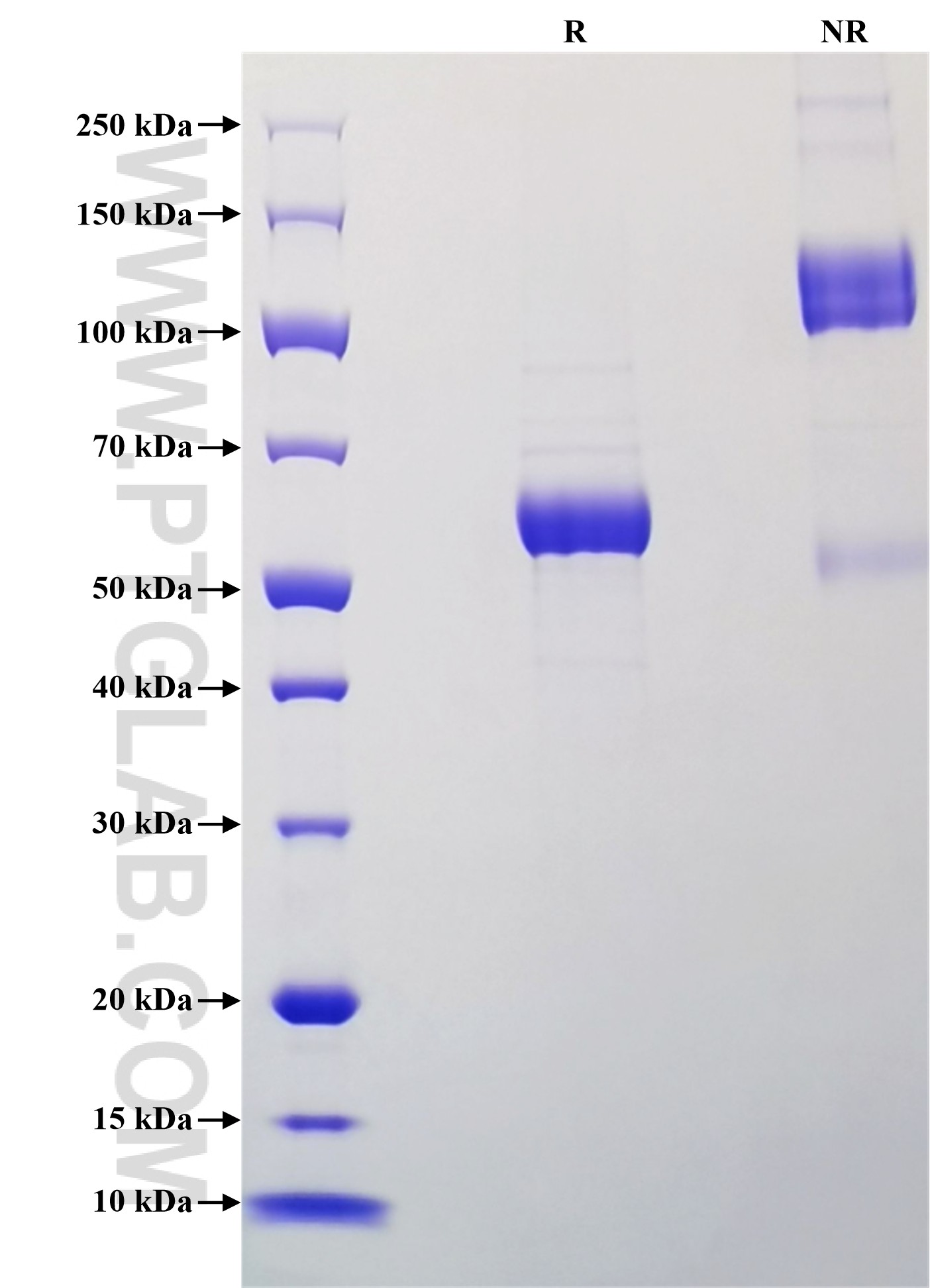
>90 %, SDS-PAGE
标签
rFc Tag
生物活性
未测试
验证数据展示
产品信息
| 纯度 | >90 %, SDS-PAGE |
| 内毒素 | <0.1 EU/μg protein, LAL method |
| 生物活性 |
Not tested |
| 来源 | HEK293-derived Mouse CD72 protein Arg117-Asn354 (Accession# P21855) with a rabbit IgG Fc tag at the C-terminus. |
| 基因ID | 12517 |
| 蛋白编号 | P21855 |
| 预测分子量 | 54.9 kDa |
| SDS-PAGE | 55-65 kDa, reducing (R) conditions |
| 组分 | Lyophilized from 0.22 μm filtered solution in PBS, pH 7.4. Normally 5% trehalose and 5% mannitol are added as protectants before lyophilization. |
| 复溶 | Briefly centrifuge the tube before opening. Reconstitute at 0.1-0.5 mg/mL in sterile water. |
| 储存条件 |
It is recommended that the protein be aliquoted for optimal storage. Avoid repeated freeze-thaw cycles.
|
| 运输条件 | The product is shipped at ambient temperature. Upon receipt, store it immediately at the recommended temperature. |
背景信息
CD72 is a type II transmembrane co-receptor expressed on B cells, playing a crucial role in regulating B cell activation and immune responses. It contains immunoreceptor tyrosine-based inhibitory motifs (ITIMs) that negatively regulate B cell receptor (BCR) signaling by recruiting the tyrosine phosphatase SHP-1. CD72 also interacts with CD5 on T cells, supporting its role in T-dependent B cell activation. In autoimmune diseases like systemic lupus erythematosus (SLE) and primary Sjögren’s syndrome, CD72 expression is dysregulated, with increased levels of soluble CD72 correlating with disease activity. Additionally, CD72-deficient mice exhibit hyper-responsive B cells, highlighting its importance in maintaining immune homeostasis. These findings suggest that CD72 is a potential therapeutic target for modulating B cell activity in autoimmune and inflammatory conditions.
参考文献:
1. Parnes, J R, and C Pan. Immunological reviews vol. 176 (2000): 75-85.
2. Tsubata, Takeshi. Immune network vol. 19,1 (2019): e1.
3. Temple, William C et al. Journal for immunotherapy of cancer vol. 11,11 (2023): e006985.
4. Eiza, Nasren et al. Frontiers in immunology vol. 15 (2024): 1367120.