Recombinant Human PLXNC1 protein (rFc Tag)
种属
Human
纯度
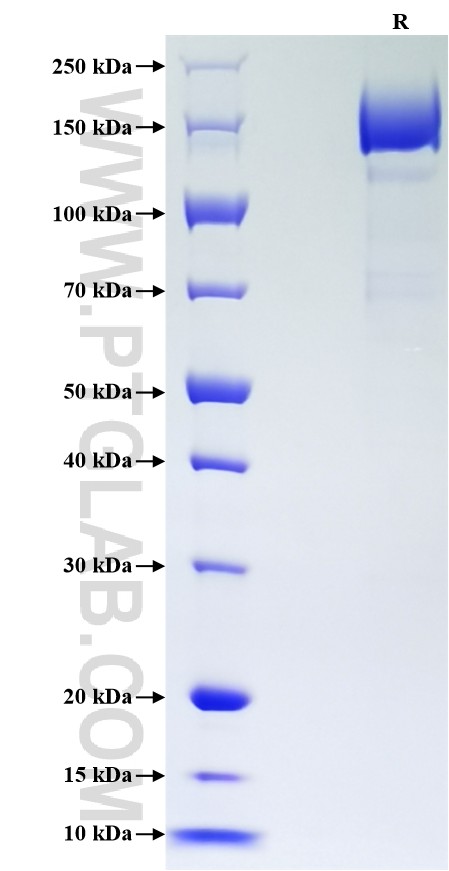
>90 %, SDS-PAGE
标签
rFc Tag
生物活性
未测试
验证数据展示
产品信息
| 纯度 | >90 %, SDS-PAGE |
| 内毒素 | <0.1 EU/μg protein, LAL method |
| 生物活性 |
Not tested |
| 来源 | HEK293-derived Human PLXNC1 protein Ala35-Thr944 (Accession# O60486) with a rabbit IgG Fc tag at the C-terminus. |
| 基因ID | 10154 |
| 蛋白编号 | O60486 |
| 预测分子量 | 126.2 kDa |
| SDS-PAGE | 130-200 kDa, reducing (R) conditions |
| 组分 | Lyophilized from 0.22 μm filtered solution in PBS, pH 7.4. Normally 5% trehalose and 5% mannitol are added as protectants before lyophilization. |
| 复溶 | Briefly centrifuge the tube before opening. Reconstitute at 0.1-0.5 mg/mL in sterile water. |
| 储存条件 |
It is recommended that the protein be aliquoted for optimal storage. Avoid repeated freeze-thaw cycles.
|
| 运输条件 | The product is shipped at ambient temperature. Upon receipt, store it immediately at the recommended temperature. |
背景信息
PLXNC1 (Plexin-C1)is asemaphorin receptorthat bridgesextracellular guidance cuestointracellular GTPase signaling, influencingcell adhesion, migration, and immune modulation. Predominantly expressed inneuronal, epithelial, and immune tissues, it regulatesaxon guidanceandinflammatory balanceviaSEMA7A-dependent pathways. Dysregulated PLXNC1 signaling contributes tocancer progression,immune dysregulation, andneuronal pathologies, highlighting its versatile role incell communication and morphogenesis.
参考文献:
1. Ni, Zhizhan et al. Frontiers in cell and developmental biology vol. 9 662707. 2 Jul. 2021, doi:10.3389/fcell.2021.662707
2. Bernard, Alice et al. Journal of biomedical science vol. 31,1 82. 21 Aug. 2024, doi:10.1186/s12929-024-01074-x
3. Fink, Steffen et al. Molecular vision vol. 18 (2012): 2229-40.
4. Yi, Jianfeng et al. Phytomedicine : international journal of phytotherapy and phytopharmacology vol. 135 (2024): 156137. doi:10.1016/j.phymed.2024.156137
5. Meng, Nan et al. Journal of orthopaedic surgery and research vol. 18,1 784. 18 Oct. 2023, doi:10.1186/s13018-023-04207-4
6. Chen, Jie et al. Frontiers in oncology vol. 10 33. 4 Feb. 2020, doi:10.3389/fonc.2020.00033