Recombinant Human NRAC protein (rFc Tag)
种属
Human
纯度
>90 %, SDS-PAGE
标签
rFc Tag
生物活性
未测试
验证数据展示
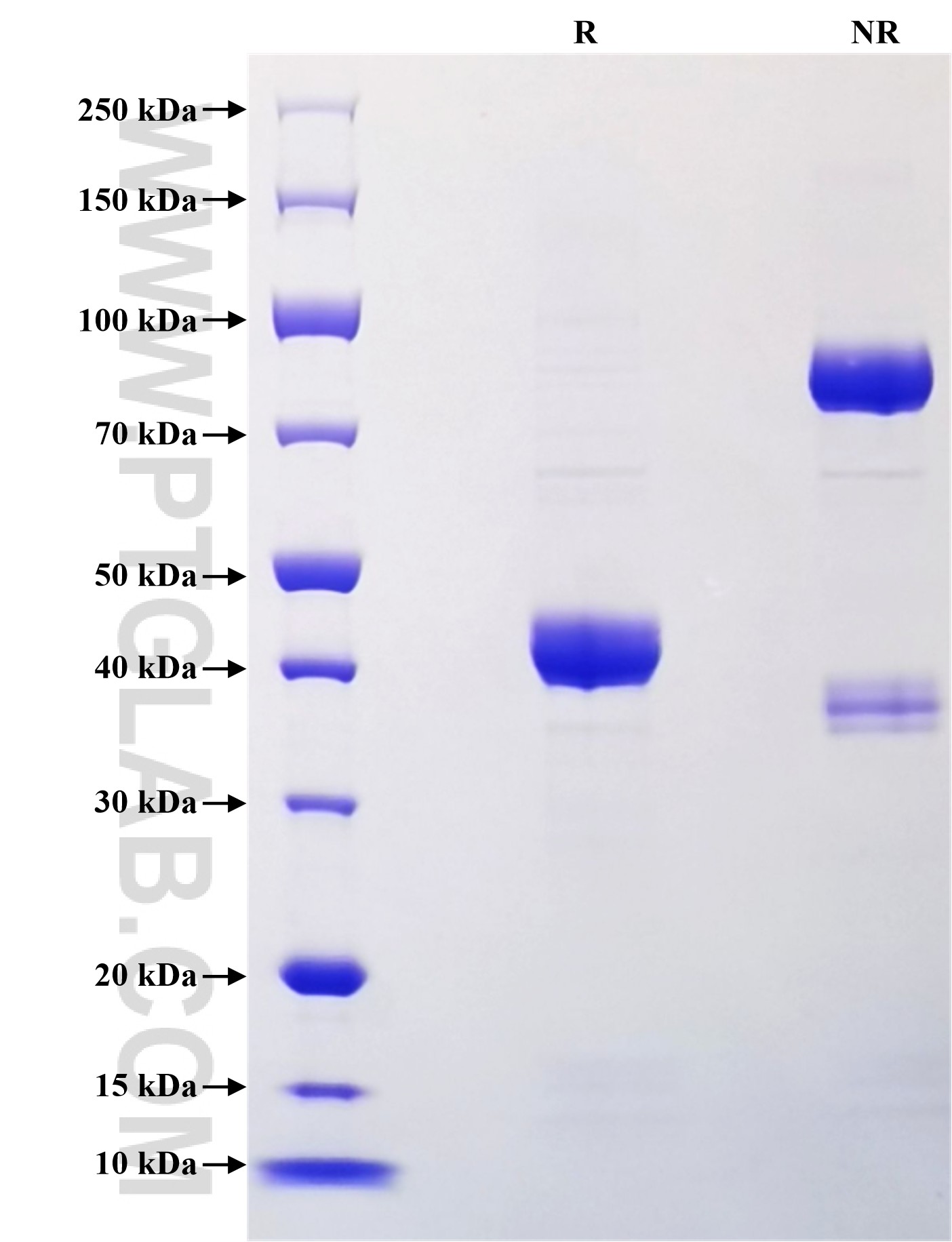
产品信息
| 纯度 | >90 %, SDS-PAGE |
| 内毒素 | <0.1 EU/μg protein, LAL method |
| 生物活性 |
Not tested |
| 来源 | HEK293-derived Human NRAC protein Met1-His100 (Accession# Q8N912) with a rabbit IgG Fc tag at the C-terminus. |
| 基因ID | 400258 |
| 蛋白编号 | Q8N912 |
| 预测分子量 | 37.8 kDa |
| SDS-PAGE | 38-45 kDa, reducing (R) conditions |
| 组分 | Lyophilized from 0.22 μm filtered solution in PBS, pH 7.4. Normally 5% trehalose and 5% mannitol are added as protectants before lyophilization. |
| 复溶 | Briefly centrifuge the tube before opening. Reconstitute at 0.1-0.5 mg/mL in sterile water. |
| 储存条件 |
It is recommended that the protein be aliquoted for optimal storage. Avoid repeated freeze-thaw cycles.
|
| 运输条件 | The product is shipped at ambient temperature. Upon receipt, store it immediately at the recommended temperature. |
背景信息
NRAC (Nutritionally Regulated Adipose and Cardiac enriched protein, with the human homologous gene designated as C14ORF180) is a recently identified adipocyte-specific double-pass transmembrane protein. Both its N- and C-termini are located intracellularly, containing only a short extracellular loop and no known enzymatic domains. Its expression is significantly induced during the differentiation of white and brown adipocytes and is regulated by nutritional status: fasting and obesity both downregulate its mRNA levels, suggesting its role as a "fat sensor" in energy homeostasis. Mechanistically, NRAC forms a trimeric complex via its first transmembrane domain with the fatty acid transporter core protein CD36 and the membrane microdomain protein caveolin-1. When extracellular fatty acid concentrations increase, NRAC undergoes ubiquitination and internalization, causing CD36 to dissociate from caveolin-1 and switch to clathrin-mediated endocytosis. This process enhances fatty acid uptake, leading to adipocyte hypertrophy and increased overall adipose mass.
参考文献:
1. Singh I, et al. (2025) EMBO J. 44(18):5037-5065.
2. Zhang R, et al. (2012) PLoS One. 7(9):e46254.
3. Yang W, et al. (2023) Neural Netw. 165:135-149.
4. Rocha LM, et al. (2013) J Anim Sci. 91(8):3965-3977.
5. Cole JB, et al. (2014) J Dairy Sci. 97(5):3156-3172.